%2520(350%2520x%2520150%2520px)%2520(90%2520x%252040%2520px)%2520(4).png%3Falt%3Dmedia%26token%3Dbed5580f-de12-4061-ac20-36c16b313f14&w=384&q=75)
Vitamin B12 Explained: Low vs High, Optimal Range & At-Home Testing in Dubai

TL;DR: Vitamin B12 is essential for nerve function, red blood cells, and energy metabolism. Absorption declines with age, certain medications, and plant-based diets. If you live in Dubai or the wider UAE, you can test your levels at home with xlr8well — a DHA-licensed nurse collects your sample and results appear in your private dashboard within 24–48 hours.
What Is Vitamin B12?
Vitamin B12 (cobalamin) is a water-soluble vitamin that the body cannot manufacture on its own. It must come entirely from food or supplements, making dietary habits and digestive health central to whether your levels stay adequate.
B12 plays a role in several critical processes:
- Nerve health: It supports the formation and maintenance of myelin, the protective sheath around nerve fibres. Without adequate B12, nerve signals can slow or become disrupted.
- Red blood cell production: B12 works alongside folate to help produce healthy, normally sized red blood cells. A shortfall can lead to megaloblastic anaemia — a condition where red blood cells become abnormally large and less efficient at carrying oxygen.
- DNA synthesis: Every dividing cell in the body needs B12 to replicate DNA correctly, making it particularly important during periods of rapid growth or repair.
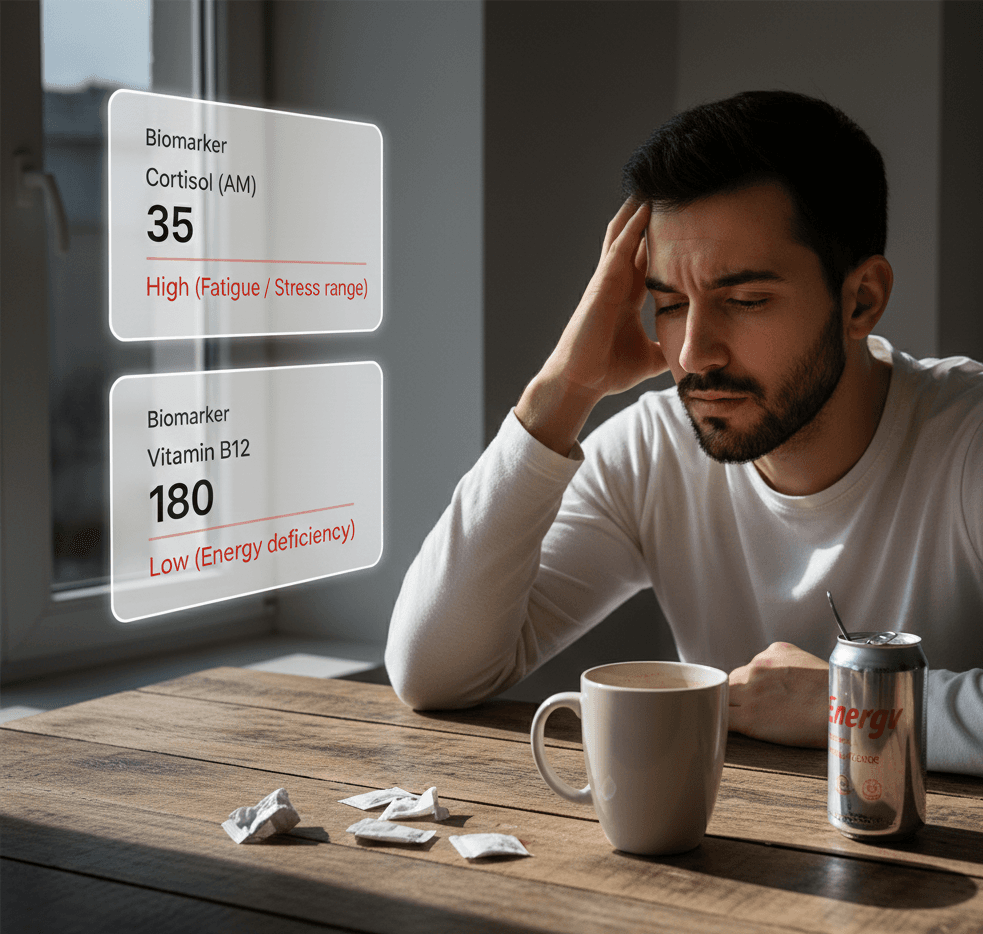
- Energy metabolism: B12 participates in converting food into usable energy, which is why fatigue is one of the earliest and most common signs of deficiency.
- Mood and cognition: B12 is involved in producing neurotransmitters such as serotonin and dopamine, and low levels have been associated with low mood and cognitive difficulties in some individuals.
Who Is at Risk of Low B12 in the UAE?
Deficiency is more widespread than many people realise. In the UAE, several population groups may be at elevated risk:
- Vegetarians and vegans: B12 is found almost exclusively in animal-derived foods — meat, fish, eggs, and dairy. A significant portion of the UAE's South Asian expatriate community follows vegetarian diets, making this a particularly relevant concern locally.
- Older adults: The stomach produces less intrinsic factor (a protein essential for B12 absorption) as we age, meaning even a diet rich in B12-containing foods may not translate into adequate blood levels.
- People taking antacids or proton pump inhibitors (PPIs): Medications used to manage acid reflux — extremely common in the UAE — reduce stomach acid, which is needed to release B12 from food proteins.
- Those with metformin use: Metformin, widely prescribed for type 2 diabetes, can reduce B12 absorption over time. Given the UAE's elevated rates of diabetes, this is an important consideration.
- People with digestive conditions: Conditions such as Crohn's disease, coeliac disease, or previous gastrointestinal surgery can impair absorption regardless of dietary intake.
- Pregnant and breastfeeding women: Demand increases during pregnancy and lactation; inadequate B12 in pregnancy has been linked to neural tube complications in the developing foetus.
What Low Vitamin B12 Means
Because B12 affects so many systems, deficiency can present in a range of ways — and symptoms can develop gradually over months or years before a blood test reveals a problem. Common signs include:
- Persistent fatigue and weakness that does not improve with rest
- Tingling, numbness, or a "pins and needles" sensation in the hands, feet, or legs
- Brain fog, difficulty concentrating, or memory lapses
- Low mood, irritability, or feelings of depression
- Breathlessness or a pale or slightly yellowed complexion
- Sore or inflamed tongue (glossitis)
- Balance or coordination difficulties in more severe or long-standing cases
It is worth noting that some of these symptoms — particularly fatigue and brain fog — overlap with many other conditions. Testing is the only reliable way to confirm whether B12 is the underlying cause. If you experience sudden or severe neurological symptoms, please consult a doctor promptly; if symptoms are an emergency, call 999.
What High Vitamin B12 Means
Elevated B12 on a blood test is far less commonly discussed but does warrant attention in certain circumstances. The most frequent explanation is recent supplementation or a diet very high in animal products — in these cases, elevated readings are generally not a cause for concern, as the body excretes excess water-soluble vitamins.
However, persistently very high B12 levels without obvious dietary or supplementation reasons can occasionally be associated with underlying liver conditions, certain blood disorders, or other medical issues. If your result is significantly elevated and you are not taking B12 supplements, it is sensible to discuss the finding with a licensed doctor rather than dismissing it.
Understanding the Optimal Range
Standard laboratory reference ranges for B12 typically span roughly 200–900 pg/mL (picograms per millilitre), though exact cut-offs can vary slightly between laboratories and the units used. Being "within range" does not automatically mean your levels are optimal for your health.
Many functional medicine practitioners and research findings suggest that levels above approximately 500 pg/mL are associated with better neurological and cognitive outcomes, while levels below 300 pg/mL — even if technically within a laboratory's normal range — may still warrant clinical attention, particularly if symptoms are present.
This distinction between a "reference range" and an "optimal range" is important. Reference intervals are typically derived from the tested population, meaning they reflect what is statistically common, not necessarily what is healthiest. When reviewing your result, context matters: your symptoms, diet, age, and any medications you take should all inform how a borderline reading is interpreted.
How to Test Vitamin B12 at Home in Dubai
Arranging a B12 test used to mean navigating a clinic appointment or a walk-in laboratory — not always easy around a busy UAE schedule. xlr8well brings the process to your door. A DHA-licensed nurse visits at a time that suits you, collects your blood sample using standard venepuncture, and your results appear in your private, secure online dashboard within 24–48 hours.
Flagged values are explained in plain language rather than medical shorthand, so you can understand what your result means straight away. A doctor review call can be added to any test if you would like a clinician to contextualise your results and advise on next steps.
Most clients choose to test B12 as part of a broader panel — pairing it with other markers such as folate, ferritin, vitamin D, thyroid hormones, or a full blood count gives a more complete picture of energy, mood, and overall wellbeing. You can explore our at-home blood testing menu or build a custom test with exactly the markers that matter to you.
Preparation: Do You Need to Fast?
Vitamin B12 testing does not typically require fasting — eating before your test will not meaningfully affect your result. However, if your B12 test is being run alongside metabolic markers, lipid panels, or fasting glucose, an 8–12 hour fast may be requested for those specific markers. Your booking confirmation from xlr8well will include exact preparation instructions for your chosen panel.
It is also worth noting that very recent high-dose B12 supplementation or a B12 injection in the preceding days could temporarily elevate your reading. If you are trying to assess your underlying status rather than your supplemented level, discuss timing with your healthcare provider before testing.
Safety, Limitations, and When to See a Doctor
At-home blood testing is a practical and accessible tool for monitoring health markers, but it works best when used alongside — not instead of — clinical care. A single blood test is a snapshot, not a diagnosis. If your result is low, very high, or accompanied by significant symptoms, please consult a licensed doctor who can take a full clinical history and, where necessary, arrange further investigations.
B12 deficiency that has been present for an extended period — particularly where neurological symptoms have developed — requires proper medical management. Oral supplementation, high-dose therapy, or intramuscular injections may be appropriate depending on the cause and severity; a doctor is best placed to advise on the right approach for your individual situation.