%2520(350%2520x%2520150%2520px)%2520(90%2520x%252040%2520px)%2520(4).png%3Falt%3Dmedia%26token%3Dbed5580f-de12-4061-ac20-36c16b313f14&w=384&q=75)
Cortisol:DHEA Ratio Explained: Low vs High, Optimal Range & At-Home Testing in Dubai

What Is the Cortisol:DHEA Ratio?
The cortisol:DHEA ratio is a functional biomarker that captures the balance between two key adrenal hormones: cortisol, the body's primary stress hormone, and DHEA (dehydroepiandrosterone), a hormone associated with vitality, resilience, and anabolic (building) processes. Rather than looking at either hormone in isolation, the ratio offers a dynamic picture of how your stress-response system is holding up over time.
Both hormones are produced by the adrenal glands, which sit just above the kidneys. Under normal conditions, the body maintains a working balance — cortisol rises to meet challenges and then falls back, while DHEA supports recovery, immune function, and a sense of well-being. When chronic stress, poor sleep, or lifestyle strain tip this balance persistently in cortisol's favour, the ratio shifts — and that shift is associated with a range of functional health concerns.
Clinicians and functional medicine practitioners sometimes describe this ratio as a "burnout trajectory" marker: it does not diagnose a disease, but it can indicate how far along the path toward adrenal exhaustion or stress-related dysfunction someone may be travelling.
Cortisol and DHEA: What Each Hormone Does
Cortisol
Cortisol is released in response to perceived stress — physical, psychological, or inflammatory. In short bursts, it is essential: it mobilises energy, sharpens alertness, and modulates immune responses. Problems arise when cortisol remains chronically elevated, a pattern increasingly common in high-demand urban environments like Dubai, where long working hours, heat stress, disrupted sleep, and time-zone travel can all act as sustained stressors.
DHEA and DHEA-S
DHEA is often referred to as a "counter-regulatory" hormone to cortisol. It is a precursor to sex hormones including oestrogen and testosterone, and it plays a role in muscle maintenance, cognitive function, mood regulation, and immune health. DHEA levels naturally decline with age — significantly so from the mid-thirties onwards — which is one reason the cortisol:DHEA ratio tends to worsen with age even if cortisol itself remains stable. In blood testing, DHEA is most commonly measured as DHEA-sulphate (DHEA-S), its more stable, longer-lasting form in the bloodstream.
What a Low Cortisol:DHEA Ratio Means
A low ratio — meaning DHEA is relatively high compared to cortisol — is generally considered a favourable finding. It suggests the body's resilience and recovery systems are well-supported and that the stress hormone is not dominating the hormonal environment. In practice, people with a lower ratio often report better energy, more stable mood, and faster recovery from physical and mental exertion.
However, context matters. An unusually low ratio due to abnormally low cortisol (rather than high DHEA) may warrant further investigation, as very low cortisol can sometimes indicate adrenal insufficiency — a condition that should be evaluated by a licensed doctor.
What a High Cortisol:DHEA Ratio Means
A high ratio — cortisol dominance relative to DHEA — is the pattern most practitioners are concerned about. It is associated with a range of functional complaints and longer-term health considerations, including:
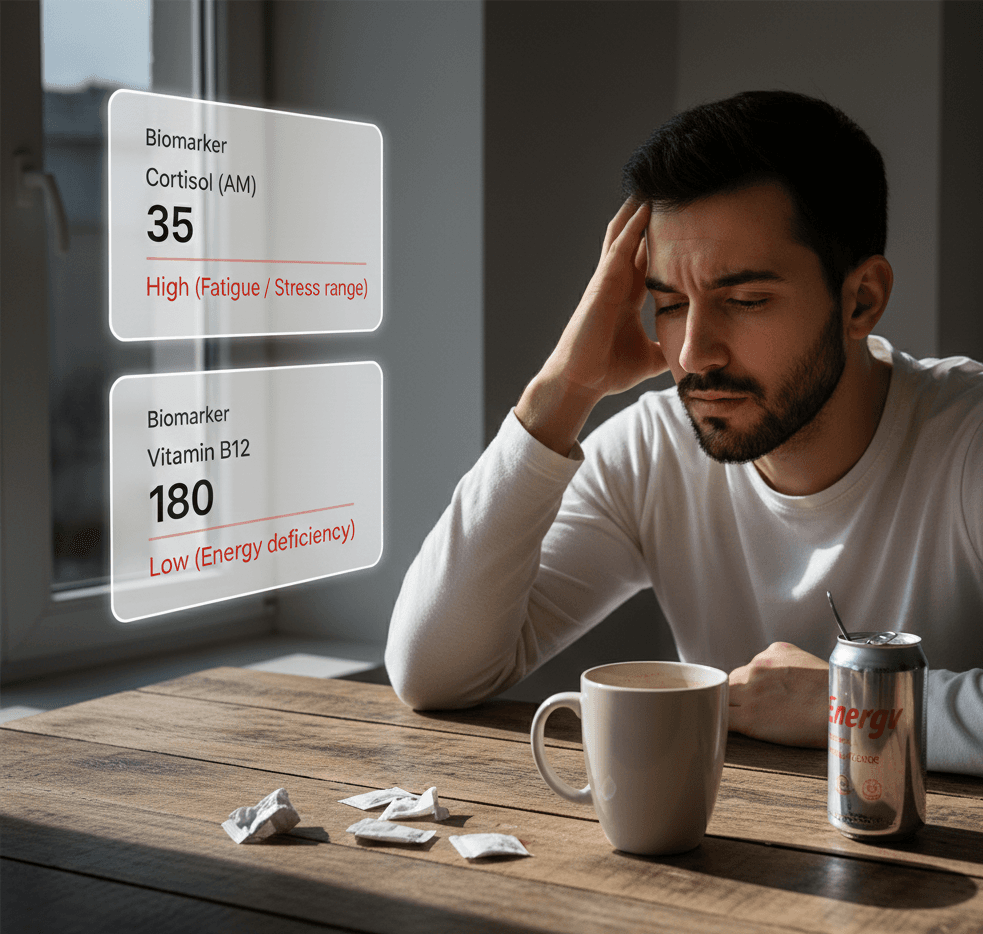
- Burnout and fatigue: Persistent cortisol dominance can impair the quality of sleep, reduce motivation, and contribute to the flat, exhausted feeling many people describe as burnout.
- Poor recovery: Elevated cortisol is catabolic — it breaks down tissue rather than building it — which can slow recovery from exercise, illness, or injury.
- Immune dysregulation: Chronic cortisol elevation may suppress immune defences over time, potentially increasing vulnerability to infections.
- Accelerated ageing patterns: Some research suggests that a persistently high cortisol:DHEA ratio may be associated with markers of accelerated biological ageing, though this is an active area of study and no definitive causal conclusions should be drawn.
- Mood and cognitive changes: Anxiety, low mood, and difficulty concentrating are commonly reported alongside cortisol dominance.
It is worth emphasising that a single high result is not diagnostic of any condition. Results should always be interpreted in the context of symptoms, lifestyle, and — where appropriate — a full clinical assessment with a licensed healthcare professional.
What Is the Optimal Range?
There is no single universally agreed optimal number for the cortisol:DHEA ratio, as reference ranges can vary between laboratories and testing methods (blood vs. saliva vs. urine). What practitioners generally look for is a balanced ratio with healthy absolute values of both hormones — not just a ratio that looks acceptable because one hormone has dropped abnormally low.
This is an important nuance: a standard laboratory report may flag your result as "within range" based on population reference intervals. However, population-derived reference ranges describe the spread of values seen in the people tested — they are not the same as health-optimisation targets. Functional medicine practitioners often use tighter, more context-sensitive interpretations.
Age, sex, time of day of sample collection, and recent stress levels all influence where an individual's result should ideally sit. Morning cortisol, for instance, is naturally higher than afternoon cortisol due to the diurnal rhythm — a well-timed sample is part of a meaningful result.
Who Should Consider Testing the Cortisol:DHEA Ratio?
This biomarker can be particularly informative for people who:
- Experience persistent fatigue that does not resolve with adequate sleep
- Are navigating high-pressure work environments or prolonged periods of stress
- Notice a decline in exercise recovery or physical performance
- Experience mood instability, low motivation, or a sense of "running on empty"
- Are over 35 and want a baseline read on their adrenal hormonal balance
- Are already tracking other longevity or performance biomarkers and want a fuller picture
It is not a replacement for medical consultation, particularly if you have symptoms that may indicate an underlying endocrine condition such as Cushing's syndrome or Addison's disease. In those cases, please seek assessment from a licensed physician.
How to Prepare for the Test
Preparation can influence results, especially for cortisol, which is highly sensitive to immediate stressors. General guidance includes:
- Schedule your blood draw in the morning, ideally between 7 am and 9 am, to capture the natural cortisol peak (the cortisol awakening response)
- Avoid intense exercise for 24 hours before the test, as vigorous physical activity acutely raises cortisol
- Try to ensure a reasonably normal night's sleep before the draw
- Avoid caffeine on the morning of the test if possible, as it can stimulate cortisol release
- DHEA-S does not typically require fasting, though your booking confirmation will include any specific preparation steps relevant to your chosen panel
At-Home Testing in Dubai with xlr8well
For residents of Dubai and the wider UAE, xlr8well offers at-home blood testing that brings the process to your door. A DHA-licensed nurse visits your home or office to collect the sample — no clinic queues, no early-morning drives across the city. Results appear in your private xlr8well dashboard within 24–48 hours, with flagged values explained in plain language rather than clinical shorthand.
Most clients test the cortisol:DHEA ratio as part of a broader hormonal or performance panel rather than as a standalone marker, since the ratio gains meaning alongside related biomarkers such as testosterone, thyroid hormones, and inflammatory markers. You can explore the at-home blood testing menu or build a custom test with exactly the markers most relevant to your health goals. A doctor review call can be added to any test, and the team will highlight any values outside optimal ranges automatically.