%2520(350%2520x%2520150%2520px)%2520(90%2520x%252040%2520px)%2520(4).png%3Falt%3Dmedia%26token%3Dbed5580f-de12-4061-ac20-36c16b313f14&w=384&q=75)
Early Signs of Autism Parents Often Miss — And What To Do Next
First: Take a Breath
If you are reading this at midnight after a worrying Google session — pause. Noticing differences in your child's development does not mean a diagnosis, and even where autism is present, early support changes trajectories dramatically. The research on early intervention is among the most hopeful in all of child development. This article is intended to help you move from anxiety to informed action, one step at a time.
Understanding Autism Spectrum Disorder (ASD)
Autism Spectrum Disorder is a neurodevelopmental condition that affects how a person communicates, interacts socially, and processes sensory information. The word "spectrum" is important — it reflects the enormous range of how autism presents. Some children are highly verbal and academically able; others have significant support needs. No two autistic people are alike, which is one reason why early, individualised assessment matters so much.
ASD is typically identified in early childhood, though many individuals — particularly girls and those with subtler presentations — are not diagnosed until much later. The earlier support begins, the more opportunity there is to build on a child's natural strengths during the years when the brain is at its most adaptable.
Signs Worth Paying Attention To
Every child develops at their own pace, and variation is entirely normal. That said, clinicians and developmental paediatricians look for certain patterns across several areas, typically before the age of three. If you notice a cluster of the following — persisting over weeks or months, rather than a one-off — it is worth discussing with a professional.
Communication and Language
- Few or no babbling sounds by around 12 months
- No single meaningful words by 16–18 months
- No two-word phrases (without copying or prompting) by 24 months
- Not responding consistently to their own name when called
- Loss of previously acquired words or social skills at any age — known as regression, this is always worth investigating promptly
- Speaking in an unusually flat, sing-song, or scripted way; repeating phrases from TV or other people (echolalia)
Social Connection and Interaction
- Limited or inconsistent eye contact, particularly during interaction
- Not pointing to share interest in objects or events by 12–14 months (known as "joint attention")
- Reduced smiling in response to a parent's smile
- Preferring to play alone; appearing indifferent to other children
- Difficulty understanding or using facial expressions and gestures
- Seeming "in their own world" for extended periods
Behaviour, Routines, and Sensory Responses
- Repetitive body movements such as hand-flapping, rocking, spinning, or toe-walking
- Intense distress when small routines are changed — a different route to nursery, a new cup, a shifted bedtime
- Unusual and persistent preoccupations with specific objects, topics, or patterns
- Strong reactions to sensory input: covering ears at ordinary sounds, refusing certain food textures, or conversely, seeking intense physical sensations
- Arranging objects in lines or patterns repeatedly, rather than using them imaginatively in play
One sign alone rarely means anything. A cluster of signs, observed consistently across different settings and over time, is a reason to seek a conversation with a professional — not a reason to panic.
Why Signs Are Often Missed — Especially in the UAE Context
Several factors can delay identification of autism, and some are particularly relevant in a diverse, multilingual society like the UAE.
- Multilingual households: Children raised with two or more languages sometimes experience a brief lag in expressive language. While this is generally not a cause for concern on its own, it can occasionally mask communication delays worth exploring.
- Cultural variation in developmental expectations: What counts as "shy" versus a social communication difference can be interpreted differently across cultures. Trust your instincts as a parent — you know your child's baseline.
- Gender differences: Girls may present with subtler social differences and are sometimes diagnosed later than boys, even when support needs are equivalent.
- Screen time and passive language: A child who appears verbal because they repeat phrases from cartoons may still have limited functional communication — worth distinguishing.
What to Do Next — In Order
Feeling concerned is the beginning of a process, not an ending. Here is a practical sequence that many families in Dubai find helpful.
1. Write Down What You See
Specific, dated observations beat vague worries in any professional assessment. Use your phone to record short videos of behaviours that concern you — at mealtimes, during play, or when your child is upset. These can be invaluable for a specialist who only sees your child for an hour.
2. Speak to Your Paediatrician
Your family paediatrician is the right first port of call. They can carry out initial developmental screening using validated tools, rule out other explanations for the signs you are seeing (such as hearing difficulties, which can mimic some communication delays), and refer you to a developmental paediatrician, child psychologist, or specialist team for formal assessment if needed. In the UAE, the Dubai Health Authority (DHA) and Department of Health Abu Dhabi regulate assessment and diagnostic services — always seek services from licensed professionals.
3. You Do Not Need a Diagnosis to Begin Therapy
This is one of the most important things parents can know. Speech and language therapy, occupational therapy, and other developmental supports can begin based on a child's observed needs, before any formal diagnosis is in place. Therapy targets specific skills — communication, play, sensory regulation, daily routines — not labels. Waiting for a formal diagnosis before seeking support can mean missing valuable developmental windows.
4. Choose a Setting That Works for Your Child and Family
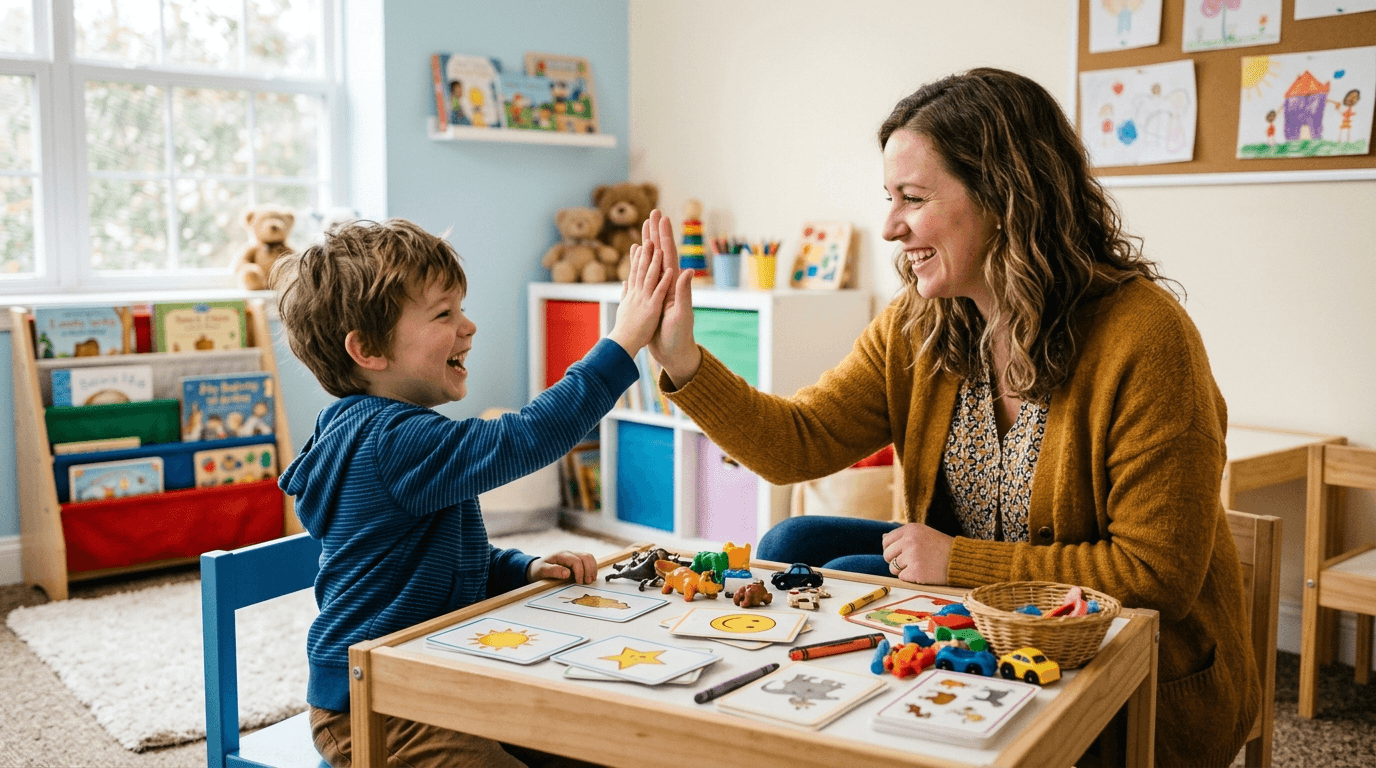
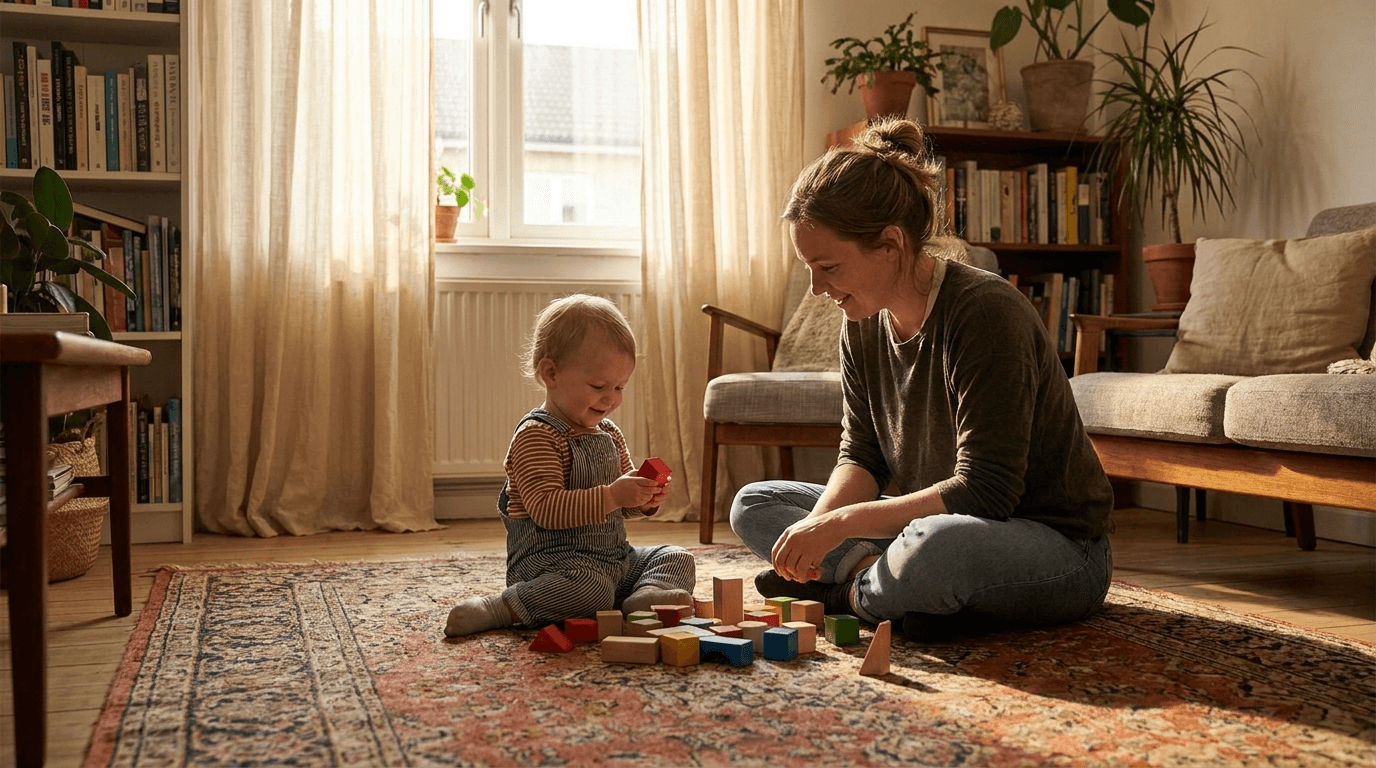
Therapy can take place in specialist centres, in schools, or increasingly, at home. Home-based therapy has particular advantages for young children: sessions take place in the environment the child knows best, goals can be embedded into real daily routines, and parents are directly involved in the process — which research consistently suggests improves outcomes. Centre-based programmes may suit families seeking more intensive, structured intervention as the child grows.
A Word on Family Wellbeing
Navigating an autism assessment — or even just the uncertainty before one — is emotionally demanding. Parents frequently describe a rollercoaster of relief, grief, determination, and love, sometimes all in the same afternoon. Reaching out for your own support — whether from a counsellor, a parent support group, or trusted family — is not a luxury. It is part of helping your child.
The UAE has a growing community of parents raising autistic children, with several active support groups and parent networks across Dubai and Abu Dhabi. Connecting with others who understand the journey can make an enormous difference.
How xlr8well Can Help
Our autism therapy team delivers speech and language therapy, ABA (Applied Behaviour Analysis), occupational therapy, and physical therapy at your home anywhere in Dubai — or at Bloom Autism Center in Al Barsha. Sessions take place in your child's own environment, with you as an active part of the process. Every journey starts with a free, judgement-free consultation on WhatsApp. Ask us anything; that is what we are here for.