%2520(350%2520x%2520150%2520px)%2520(90%2520x%252040%2520px)%2520(4).png%3Falt%3Dmedia%26token%3Dbed5580f-de12-4061-ac20-36c16b313f14&w=384&q=75)
Full Body Checkup in Dubai: What Should Actually Be Included?

Why a Full Body Checkup in Dubai Is Worth Doing Properly
Preventive health screening is one of the most practical investments you can make in a place like Dubai, where a demanding lifestyle, year-round heat, high sun exposure paradoxically paired with indoor living, and a diet that often mixes ultra-processed convenience with rich social dining can quietly push key markers in the wrong direction — well before any symptoms appear.
Yet not all "full body checkups" are created equal. A panel that lists 60 biomarkers on the brochure may still miss the handful that are most predictive of metabolic disease, cardiovascular risk, and chronic fatigue. This guide explains what a genuinely comprehensive checkup should include, what cheaper packages often leave out, how to prepare, and how to make sense of your results.
The Non-Negotiable Biomarkers
A worthwhile full body checkup should cover each of the following categories. If a package omits an entire category, it is worth asking why before you book.
Metabolic Health
- Fasting glucose — the basic screen for elevated blood sugar.
- HbA1c (glycated haemoglobin) — reflects average blood sugar over the past two to three months, catching trends that a single fasting glucose reading can miss.
- Fasting insulin — often left off budget panels but highly informative; elevated fasting insulin can signal insulin resistance years before glucose rises into the diabetic range.
The UAE has one of the highest rates of type 2 diabetes and pre-diabetes in the world, making metabolic screening particularly relevant for residents regardless of age or weight.
Cardiovascular Risk
- Full lipid panel — total cholesterol, LDL, HDL, and triglycerides at minimum.
- ApoB (apolipoprotein B) — a more precise measure of atherogenic particle count than LDL-C alone. Many cardiologists and preventive medicine doctors now consider it the single most useful cardiovascular lipid marker, yet it is frequently absent from standard packages.
- Lipoprotein(a) [Lp(a)] — largely genetically determined and rarely tested, but worth including at least once as elevated levels meaningfully increase cardiovascular risk independent of other lipid values.
Organ Function
- Liver enzymes — ALT, AST, GGT, and ALP assess liver cell health and can flag fatty liver disease, medication effects, or alcohol-related changes.
- Kidney function — creatinine, eGFR (estimated glomerular filtration rate), and urea give a picture of how well the kidneys are filtering. Dehydration, common in Dubai's climate, can affect these readings.
- Urine analysis — a simple dipstick or microscopy urine test can pick up early signs of kidney stress, infection, or blood sugar spillover.
Energy Systems and Micronutrients
- Thyroid function — TSH is the standard first-line screen; if it is abnormal, Free T3 and Free T4 are typically added. Thyroid dysfunction is among the most commonly missed causes of fatigue, weight changes, and mood shifts.
- Vitamin D (25-OH) — despite abundant sunshine, vitamin D deficiency is extremely prevalent in the UAE because most of the day is spent indoors in air-conditioned environments. Low vitamin D is associated with immune, bone, and mood-related concerns.
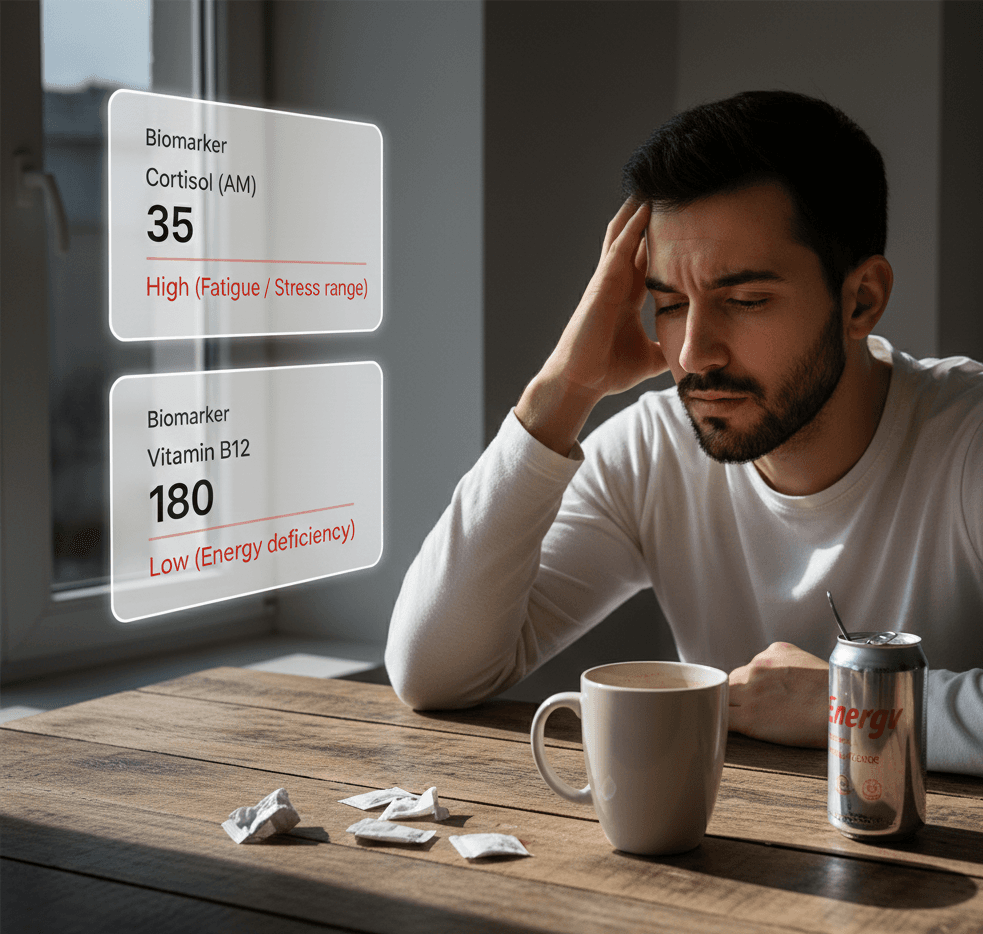
- Vitamin B12 — particularly relevant for vegetarians, vegans, and those on long-term metformin or proton pump inhibitors.
- Ferritin and full iron studies — ferritin reflects iron stores and is one of the most common causes of unexplained fatigue, especially in women. Ferritin alone is more informative than a basic haemoglobin check.
Inflammation
- hs-CRP (high-sensitivity C-reactive protein) — a sensitive marker of systemic low-grade inflammation, which is increasingly recognised as a driver of cardiovascular disease, metabolic dysfunction, and accelerated ageing. Budget panels frequently omit it despite it being relatively inexpensive to run.
Blood Health
- Complete blood count (CBC / FBC) — assesses red cells, white cells, and platelets. Picks up anaemia, infections, and a range of haematological conditions.
Hormonal Health (Add-Ons Worth Considering)
- Free and total testosterone — relevant for men experiencing fatigue, low libido, or changes in body composition, and increasingly included in women's panels as well.
- DHEA-S, cortisol — useful where chronic stress or adrenal function is a concern.
- PSA (prostate-specific antigen) — typically recommended for men over 40, though results should always be interpreted in context by a doctor.
- Female hormonal panel (FSH, LH, oestradiol, progesterone) — recommended for women experiencing cycle irregularities, perimenopausal symptoms, or fertility concerns.
What Cheap Packages Often Skip
When comparing checkup packages, the total number of markers listed can be misleading. A panel of 120 items may still omit the four or five most clinically informative ones. The markers most commonly absent from budget packages include:
- ApoB — arguably more predictive of cardiovascular risk than standard LDL
- Fasting insulin — critical for identifying early insulin resistance
- hs-CRP — a key inflammation marker with broad relevance
- Free testosterone — frequently left off despite being widely useful
- Ferritin — often replaced by a basic haemoglobin figure, which misses iron-deficiency states before anaemia develops
The practical advice: always review the actual marker list rather than accepting a headline count or a package name at face value.
How to Prepare for Your Blood Draw
- Fast for 8–12 hours beforehand for accurate glucose, insulin, and lipid readings. Water is fine; black coffee and tea ideally avoided.
- Book a morning slot where possible — it is easier to fast overnight, and many hormone levels are most accurately measured in the morning.
- Avoid intense exercise in the 24 hours prior, as this can transiently raise liver enzymes and inflammatory markers.
- Stay well-hydrated in the days before — dehydration can concentrate blood and affect kidney markers; in Dubai's heat this is a practical consideration year-round.
- Bring a list of any medications and supplements you take, as these can influence several biomarkers and should be communicated to whoever reviews your results.
Making Sense of Your Results
Laboratory reference ranges — the "normal" bands printed on your report — are population-based averages, not optimal targets. A result sitting within the reference range does not automatically mean it is ideal for you. For example, a vitamin D level of 30 nmol/L may be flagged as "normal" on a report but many clinicians consider levels above 75–80 nmol/L more appropriate for general wellbeing. Similarly, a fasting glucose near the top of the normal range, combined with a borderline HbA1c, may warrant attention even if neither figure is technically flagged.
For this reason, it is genuinely useful to have results reviewed by a doctor or qualified healthcare professional rather than interpreting them in isolation. A number without context — your age, symptoms, history, lifestyle, and trends over time — can be easy to misread in either direction.
How Often Should You Test?
For most healthy adults, an annual full panel provides a useful baseline and makes it possible to track trends year over year. If you are actively working to improve a flagged marker — for example, bringing down elevated triglycerides, optimising vitamin D, or improving fasting glucose — repeating relevant tests every four to six months allows you to gauge whether the changes you are making are having an effect.
At-Home Testing in Dubai
One practical barrier to regular blood testing in Dubai has historically been the inconvenience of clinic visits during working hours. At-home blood testing services, where a trained phlebotomist comes to your home or office at a time that suits you, have made it considerably easier to stay on top of preventive screening. xlr8well offers comprehensive at-home blood panels across Dubai, with results typically returned digitally so they can be easily shared with your doctor for review.
Whether you opt for a clinic or an at-home draw, the priority is choosing a panel that genuinely covers the markers described above — and making it a consistent habit rather than a one-off event.