%2520(350%2520x%2520150%2520px)%2520(90%2520x%252040%2520px)%2520(4).png%3Falt%3Dmedia%26token%3Dbed5580f-de12-4061-ac20-36c16b313f14&w=384&q=75)
7 Signs Your Hormones Are Off (And Which Test Confirms It)

When Your Body Is Trying to Tell You Something
Hormones are chemical messengers that regulate almost every system in the body — from how well you sleep and how easily you manage your weight, to your mood, energy, skin, and sex drive. When they fall out of balance, the effects can be wide-ranging, frustratingly vague, and easy to dismiss as simply "stress" or "getting older."
The challenge is that hormonal symptoms rarely point to one clear cause. Fatigue, for example, can stem from a sluggish thyroid, elevated cortisol, low testosterone, or poor iron stores — and these can occur individually or all at once. That is why objective testing matters far more than guesswork. This article walks through seven of the most common signs that your hormones may be off, explains what is likely going on beneath the surface, and outlines which tests can provide genuine answers.
The Seven Signs Worth Taking Seriously
1. Fatigue That Sleep Does Not Fix
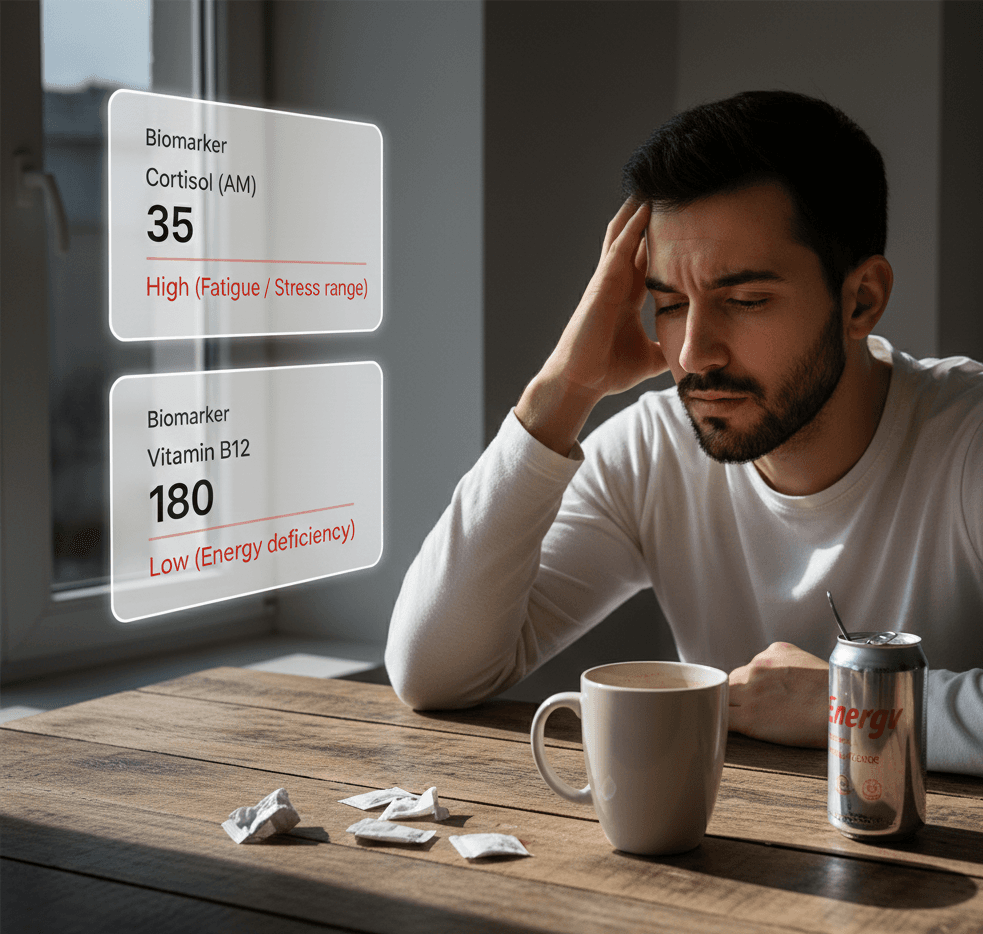
Waking up tired after a full night's rest — day after day — is one of the most commonly reported hormonal complaints. The thyroid gland, which controls your metabolic rate, is often involved: even a mildly underactive thyroid (hypothyroidism) can leave you feeling persistently depleted. Elevated cortisol from chronic stress can disrupt restorative sleep architecture, while low testosterone (in both men and women) may reduce motivation and physical energy. Low ferritin (stored iron) is not a hormone but frequently appears alongside hormonal imbalance and compounds fatigue significantly.
Tests to consider: TSH, Free T3, Free T4, cortisol (morning), ferritin, full blood count.
2. Weight That Resists Diet and Exercise
If you are eating carefully and staying active but the scales will not move — or you are gaining weight without explanation — a hormonal driver is a reasonable consideration. An underactive thyroid slows the rate at which your body burns calories. Elevated cortisol, associated with chronic stress, can promote fat storage particularly around the abdomen. Insulin resistance, where cells become less responsive to insulin, makes it difficult for the body to use glucose efficiently and is linked to weight gain and fatigue.
Tests to consider: TSH, Free T3, Free T4, fasting insulin, fasting glucose, HbA1c, cortisol.
3. Low Libido or Loss of Sexual Interest
A reduced interest in sex that is not explained by relationship or psychological factors often has a hormonal component. In men, low free testosterone is the most common culprit, but elevated sex hormone-binding globulin (SHBG) can reduce the amount of testosterone actually available to tissues even when total levels appear normal. In women, declining oestrogen and testosterone (yes, women need testosterone too) are common contributors, particularly in the perimenopause years. Elevated prolactin — a hormone produced by the pituitary gland — can suppress sex drive in both sexes.
Tests to consider: Total and free testosterone, SHBG, prolactin, oestradiol (women), LH, FSH.
4. Broken or Unrefreshing Sleep
Difficulty falling asleep, waking in the early hours, or never feeling truly rested can each have hormonal roots. Cortisol follows a natural rhythm — high in the morning to wake you, low at night to allow sleep. When this rhythm is disrupted, typically through chronic stress or shift work, sleep suffers. In women, declining progesterone during the perimenopause is closely linked to sleep disturbance, as progesterone has a calming, sleep-promoting effect. Night sweats related to oestrogen fluctuation are another common disruptor.
Tests to consider: Cortisol (ideally at multiple time points), progesterone (timed to cycle day 21 in women), oestradiol.
5. Mood Swings, Anxiety, or a Persistently Flat Mood
Hormones interact closely with neurotransmitters — the brain chemicals that regulate mood. Thyroid imbalance is a well-recognised cause of both depression and anxiety; it is sometimes identified in people who have been treated for mood disorders without improvement. In women, fluctuations in oestradiol across the menstrual cycle or in perimenopause can drive significant emotional variability. In men, low testosterone is associated with low mood, reduced motivation, and irritability. These symptoms deserve both medical and psychological evaluation — lab results provide one important piece of the picture.
Tests to consider: TSH, Free T3, Free T4, oestradiol, testosterone, DHEA-S.
6. Hair Thinning or Unexpected Hair Loss
Hair is surprisingly sensitive to hormonal and nutritional status. An underactive thyroid is a classic cause of diffuse hair thinning across the scalp, as well as loss of the outer third of the eyebrows. Low ferritin is one of the most commonly missed contributors to hair loss in women and is worth checking alongside hormones. Excess androgens (male hormones) in women — as seen in polycystic ovary syndrome (PCOS) — can cause patterned hair loss at the crown or temples. Post-partum hormonal shifts are another well-known trigger.
Tests to consider: TSH, Free T3, Free T4, ferritin, free and total testosterone, DHEA-S, prolactin (women).
7. Always Feeling Cold, or Suddenly Overheating
Persistent cold intolerance — feeling chilly when others are comfortable — is one of the more distinctive symptoms of hypothyroidism, as the thyroid regulates body temperature through its control of metabolism. Conversely, heat intolerance and excessive sweating can point to an overactive thyroid (hyperthyroidism). In women approaching or going through menopause, oestrogen fluctuations are the primary driver of hot flushes and night sweats. These temperature symptoms are worth investigating rather than tolerating indefinitely.
Tests to consider: TSH, Free T3, Free T4, anti-TPO antibodies (to assess autoimmune thyroid disease), oestradiol (women).
Why Guessing — and Self-Supplementing — Rarely Works
These seven symptoms overlap substantially. The fatigue you are experiencing could come from any one of half a dozen hormonal or nutritional causes, and targeting the wrong one wastes time and money while the real issue continues unchecked. Over-the-counter supplements marketed for "hormone balance" are not regulated as medicines and are generally not guided by your individual biochemistry. Some supplements can even interfere with thyroid function or alter hormone levels in ways that complicate future testing.
A targeted lab panel takes the guesswork out of the equation. It gives you and your doctor a clear, objective starting point — which hormones are within range, which are not, and by how much. From there, an appropriate clinical conversation becomes possible.
What a Hormone Panel Actually Measures
A well-designed hormone panel is not a single test — it is a grouped set of markers chosen to reflect how key hormonal axes are functioning. A typical panel might include:
- Thyroid axis: TSH (the pituitary signal to the thyroid), Free T3 and Free T4 (the active and storage thyroid hormones), and sometimes anti-TPO antibodies to check for autoimmune thyroid conditions such as Hashimoto's thyroiditis.
- Adrenal/stress axis: Cortisol, ideally collected in the morning when levels are naturally at their peak.
- Sex hormones (women): Oestradiol, progesterone, testosterone, SHBG, LH, FSH, prolactin — with timing relative to the menstrual cycle where relevant.
- Sex hormones (men): Total testosterone, free testosterone, SHBG, LH, FSH, prolactin, oestradiol.
- Supporting markers: Ferritin, fasting insulin, fasting glucose, and HbA1c are frequently included given their close relationship with hormonal symptoms.
Timing and Preparation
Hormone levels fluctuate, which means when you test matters. As a general guide:
- Most hormones are best measured with a morning blood draw, typically between 7 am and 9 am, when cortisol and testosterone are at their natural daily peak.
- Women tracking oestradiol, progesterone, and LH/FSH should ideally time their draw to a specific point in their menstrual cycle — usually day 2–5 for baseline sex hormones, or day 19–21 for progesterone. Your testing guidance will clarify this.
- Fast for 8–10 hours before testing if insulin, glucose, or HbA1c are included in your panel.
- Avoid intense exercise and alcohol in the 24 hours before your draw, as both can transiently affect results.
Understanding Your Results
Laboratory reference ranges indicate where most of the healthy population falls, but they are not the whole story. Some people experience significant symptoms at values that sit technically within the "normal" range — particularly for thyroid hormones and testosterone. This is why results should always be reviewed by a licensed doctor or clinician who can interpret them in the context of your symptoms, history, and overall health, rather than in isolation.
If your results do come back outside the reference range, that is valuable information — not a cause for alarm, but a clear direction for further clinical conversation and, where appropriate, treatment.
Getting Tested in Dubai and the UAE
For many people in Dubai and across the UAE, finding time to visit a clinic, queue for a blood draw, and chase results is a genuine barrier to getting tested at all. xlr8well offers at-home hormone blood testing across Dubai, with a trained phlebotomist visiting at a time that suits you, morning draws included. Results are typically available within 48 hours, giving you a factual foundation for the next conversation with your doctor.
If you recognise several of the signs described above and have been waiting for the right moment to investigate, an at-home hormone panel is a practical and straightforward starting point.
When to Seek Urgent Help
Hormone imbalances are rarely medical emergencies, but some presentations warrant prompt attention. If you are experiencing severe fatigue alongside rapid heart rate, unexplained weight loss, extreme heat intolerance, or tremor, contact a doctor as soon as possible — these can occasionally indicate a thyroid crisis or other serious condition. In a genuine emergency in the UAE, call 999.