%2520(350%2520x%2520150%2520px)%2520(90%2520x%252040%2520px)%2520(4).png%3Falt%3Dmedia%26token%3Dbed5580f-de12-4061-ac20-36c16b313f14&w=384&q=75)
Thyroid Antibodies (TPO/TG) Explained: Low vs High, Optimal Range & At-Home Testing in Dubai

What Are Thyroid Antibodies (TPO and TG)?
Thyroid peroxidase antibodies (TPO-Ab) and thyroglobulin antibodies (TG-Ab) are proteins produced by the immune system that mistakenly target the thyroid gland. In a healthy immune response, antibodies defend the body against foreign invaders. In autoimmune thyroid disease, however, the immune system misidentifies thyroid tissue as a threat and mounts an attack against it — and these two antibody types are the primary measurable markers of that process.
TPO is an enzyme essential to the production of thyroid hormones T3 and T4. Thyroglobulin is the protein from which those hormones are made. When antibodies are directed at either of these, the resulting inflammation can progressively damage thyroid tissue and impair its ability to function normally.
Together, TPO and TG antibodies are the central diagnostic markers for Hashimoto's thyroiditis — the most common cause of hypothyroidism worldwide, and a condition that often goes undiagnosed for years because early symptoms can be vague and non-specific.
The Connection to Hashimoto's and Hypothyroidism
Hashimoto's thyroiditis is a chronic autoimmune condition in which the immune system gradually destroys thyroid tissue over time. It is considerably more common in women than in men and can appear at any age, though it is frequently diagnosed in adults between their 30s and 50s. In the UAE, as in the rest of the world, thyroid disorders are among the more common endocrine conditions seen in clinical practice.
One of the defining features of Hashimoto's is that elevated thyroid antibodies can be detectable in the blood for years — sometimes a decade or more — before thyroid function tests such as TSH, free T3, or free T4 begin to shift outside their reference ranges. This means that standard thyroid function tests alone may appear completely normal even while an active autoimmune process is underway.
Testing TPO and TG antibodies therefore provides an earlier window into thyroid health than function tests alone. It is also useful in understanding why someone already diagnosed with hypothyroidism has the condition in the first place, which can guide decisions about monitoring frequency and lifestyle management.
It is important to note that elevated thyroid antibodies can also appear in Graves' disease (autoimmune hyperthyroidism), though the specific antibody patterns tend to differ. A doctor's interpretation is always necessary to place antibody results in the right clinical context.
What Low (Negative) Thyroid Antibody Levels Mean
A negative or undetectable result for both TPO-Ab and TG-Ab is the goal. It indicates that the immune system is not currently producing measurable antibodies against thyroid tissue. For most people, this is the expected finding and is reassuring in the context of evaluating thyroid autoimmunity.
However, a negative antibody result does not entirely rule out autoimmune thyroid disease in all cases. A small proportion of people with Hashimoto's may test seronegative (antibody-negative) and still have the condition confirmed via ultrasound or biopsy. If symptoms are strongly suggestive, a doctor may recommend further investigation even with a negative antibody result.
What High (Elevated) Thyroid Antibody Levels Mean
Elevated TPO or TG antibodies indicate that the immune system is producing antibodies directed at thyroid tissue. The degree of elevation can vary considerably — from mildly above the laboratory's reference range to several hundred or even thousands of units per millilitre.
Higher levels are generally associated with a more active autoimmune process, though antibody levels do not always correlate directly with symptom severity or the degree of thyroid dysfunction. Some individuals with very high antibodies continue to have normal thyroid function for many years; others experience a more rapid progression to hypothyroidism.
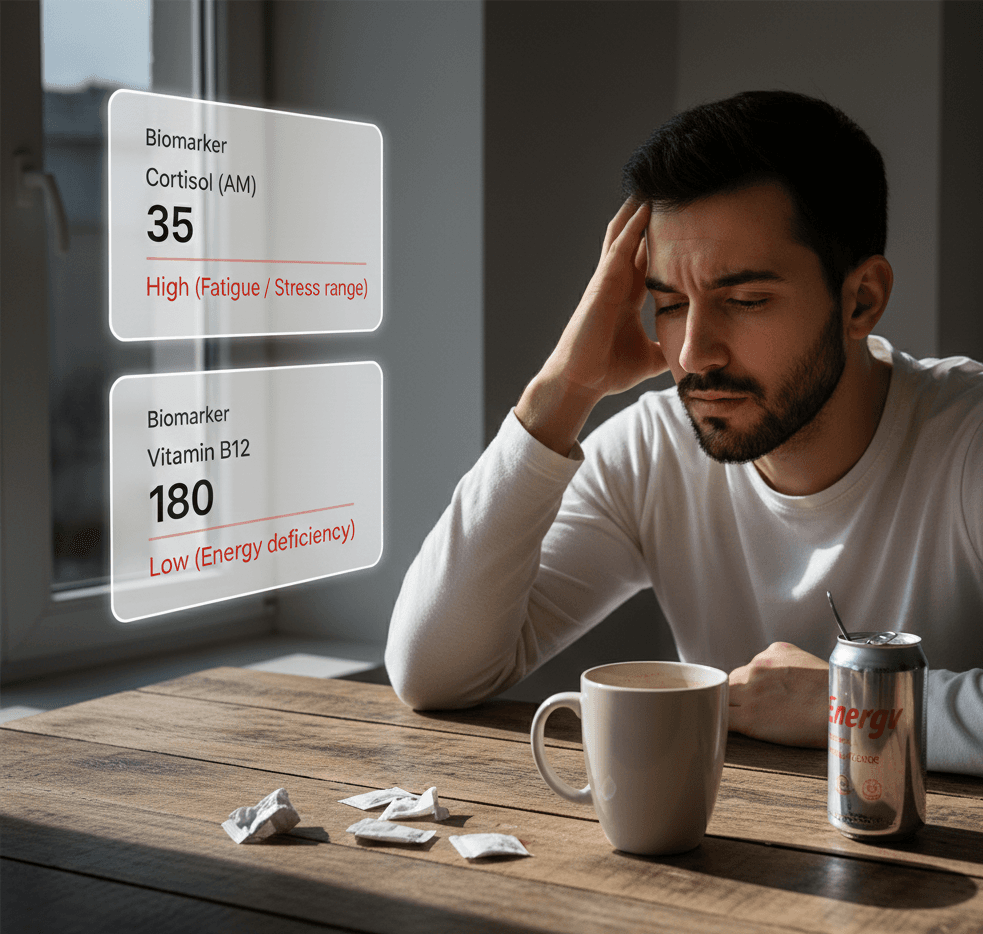
Common symptoms that may prompt investigation for thyroid autoimmunity include persistent fatigue, unexplained weight changes, feeling cold when others do not, brain fog, hair thinning, low mood, dry skin, and irregular menstrual cycles. These symptoms overlap with many other conditions, which is why blood testing is essential for accurate diagnosis.
An elevated antibody result should always be discussed with a licensed doctor, who can assess it alongside thyroid function tests, clinical history, and any relevant symptoms to determine the appropriate next steps.
The Optimal Range: Negative and Undetectable
The optimal result for thyroid antibodies is negative or undetectable. Most laboratories report a reference range with an upper limit — commonly around 34–35 IU/mL for TPO-Ab, though this can vary between laboratories and the specific assay used. Results below this threshold are typically reported as negative.
It is worth understanding that laboratory reference ranges describe the statistical distribution of results in a tested population — they are not necessarily the same as health-optimised targets. A result reported as "within range" does not always mean a result is clinically insignificant, and a result just above the upper limit may carry different implications than one that is markedly elevated. This is why antibody results should be interpreted by a clinician alongside the full clinical picture rather than viewed in isolation.
Who Should Consider Testing Thyroid Antibodies?
- Anyone experiencing persistent fatigue, unexplained weight gain, brain fog, hair loss, or other symptoms suggestive of thyroid dysfunction
- Individuals with a personal or family history of autoimmune conditions (such as type 1 diabetes, rheumatoid arthritis, or coeliac disease), as these increase the likelihood of thyroid autoimmunity
- Women planning a pregnancy or experiencing fertility challenges — thyroid autoimmunity is associated with increased risk of miscarriage and obstetric complications
- People already diagnosed with hypothyroidism who wish to understand the underlying cause
- Those with borderline TSH results who want a more complete picture of thyroid health
- Individuals undertaking a comprehensive health screen who want baseline data on autoimmune markers
How to Prepare for the Test
Thyroid antibody testing does not typically require fasting. Unlike lipid panels or fasting glucose, TPO-Ab and TG-Ab levels are not meaningfully affected by food intake in the hours before the blood draw. That said, if your test is part of a broader panel that includes fasting markers — such as cholesterol, triglycerides, or insulin — you may be asked to fast for 8–12 hours beforehand.
Your booking confirmation from xlr8well will include precise preparation instructions based on the specific markers in your panel, so there is no need to guess. There is generally no need to stop thyroid medication before testing antibodies, but if you have any questions about medication timing, check with your prescribing doctor ahead of your appointment.
What to Expect: At-Home Testing in Dubai with xlr8well
xlr8well offers at-home blood testing across Dubai, with sample collection carried out by a DHA-licensed nurse who visits you at your home, office, or hotel at a time that suits you. There is no need to travel to a clinic, queue, or rearrange your day around an appointment.
Once your sample is collected, it is processed by an accredited laboratory and results are typically available within 24–48 hours in your private xlr8well dashboard. Flagged values are explained in plain language rather than just listed alongside reference ranges, making it easier to understand what your results may mean before you speak with a doctor.
Thyroid antibodies are most informative when tested as part of a broader thyroid panel — ideally alongside TSH, free T3, and free T4. You can include these as part of a comprehensive health panel or use the custom test builder to select exactly the markers relevant to you. The full range of available panels is listed on the at-home blood testing page.
If you would like a clinician to review your results and discuss what they mean for you personally, a doctor review call can be added at the time of booking. This is particularly worthwhile if you receive an elevated result or if you are already managing a thyroid condition and want professional guidance on next steps.
Limitations and When to Seek Medical Advice
Thyroid antibody testing is a valuable screening and monitoring tool, but it has limitations. A positive result confirms the presence of autoimmune activity but does not on its own determine the degree of thyroid damage or dictate a specific treatment pathway. Diagnosis and management of autoimmune thyroid disease require clinical assessment by a licensed doctor, and in some cases referral to an endocrinologist.
If you are experiencing severe symptoms such as significant swelling in the neck, difficulty swallowing or breathing, very rapid weight loss, heart palpitations, or extreme fatigue, seek prompt medical attention. For emergencies, call 999.
This article is intended for general educational purposes only and does not constitute medical advice. Always consult a qualified healthcare professional regarding your individual health circumstances.