%2520(350%2520x%2520150%2520px)%2520(90%2520x%252040%2520px)%2520(4).png%3Falt%3Dmedia%26token%3Dbed5580f-de12-4061-ac20-36c16b313f14&w=384&q=75)
ABA at Home vs at a Center: Which Setting Fits Your Child?
ABA at Home vs at a Centre: Which Setting Fits Your Child?
At a glance: Home-based ABA therapy builds skills inside real daily routines and makes it easier for learning to generalise naturally. Centre-based ABA offers a controlled environment, intensive structured sessions, and access to peer interactions. In Dubai, the most effective programmes deliberately combine both settings — and a good assessment, not personal preference, should guide the balance.
What Is ABA Therapy?
Applied Behaviour Analysis (ABA) is a structured, evidence-informed approach to supporting children with autism spectrum disorder (ASD) and other developmental differences. It works by breaking skills down into manageable steps, using consistent reinforcement to encourage helpful behaviours, and systematically reducing barriers to learning.
ABA is not a single fixed method — it is a framework that a qualified behaviour analyst (BCBA or equivalent) tailors to each child's profile, goals, and environment. This flexibility is precisely why the setting in which therapy takes place matters so much: where a skill is taught can significantly affect whether — and how well — a child actually uses it in everyday life.
Home-Based ABA: Strengths and Considerations
What it looks like
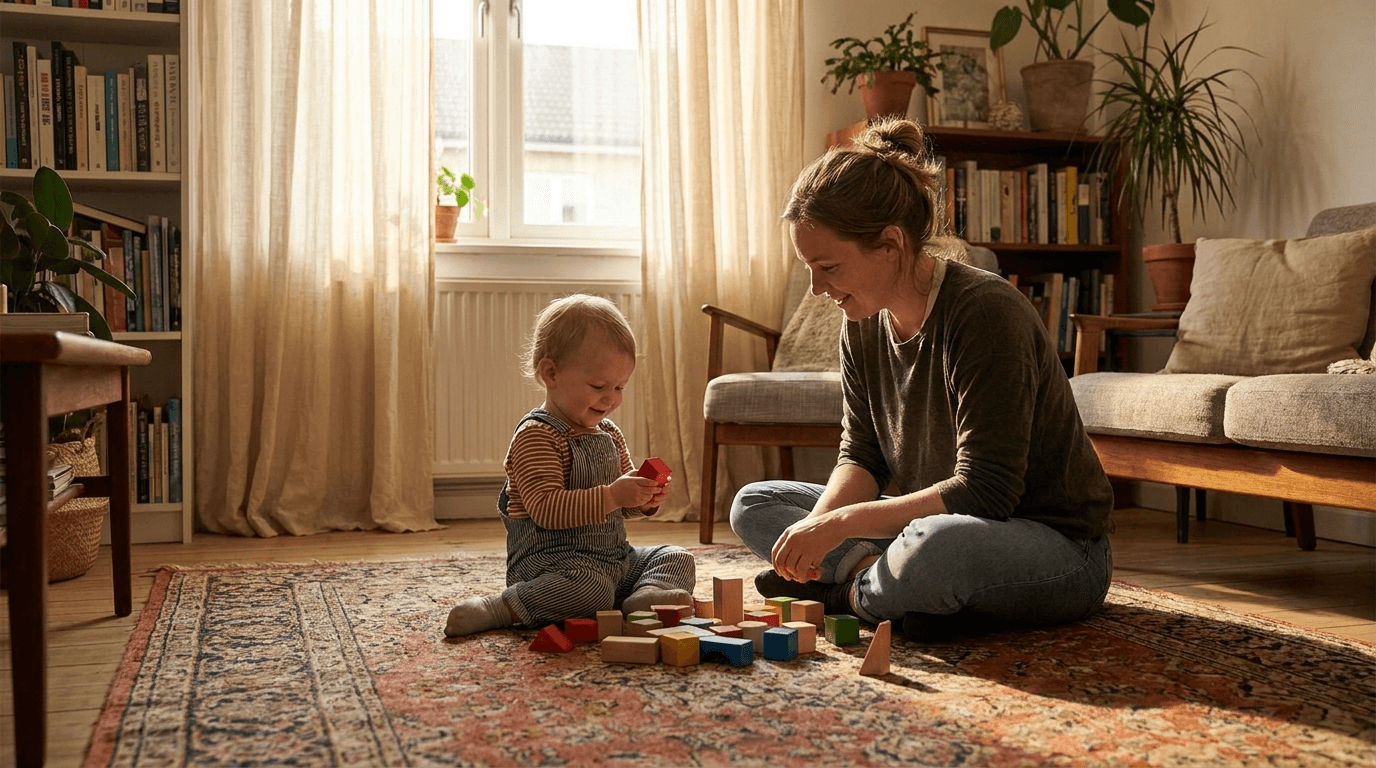
In a home programme, a therapist comes to your child's natural environment — the kitchen, the bedroom, the garden. Sessions are woven around the routines your family already follows: mealtimes, getting dressed, bath time, play. Teaching happens in the moments when skills are actually needed.
Where home-based ABA tends to shine
- Daily-living skills: Self-care routines, toileting, dressing, and mealtime behaviour are best practised exactly where they occur. There is no transfer step needed — the skill is learned in its real context from day one.
- Young children: Toddlers and very young children are often most at ease, and therefore most receptive, in their own home. Reducing the stress of a new environment can make early sessions more productive.
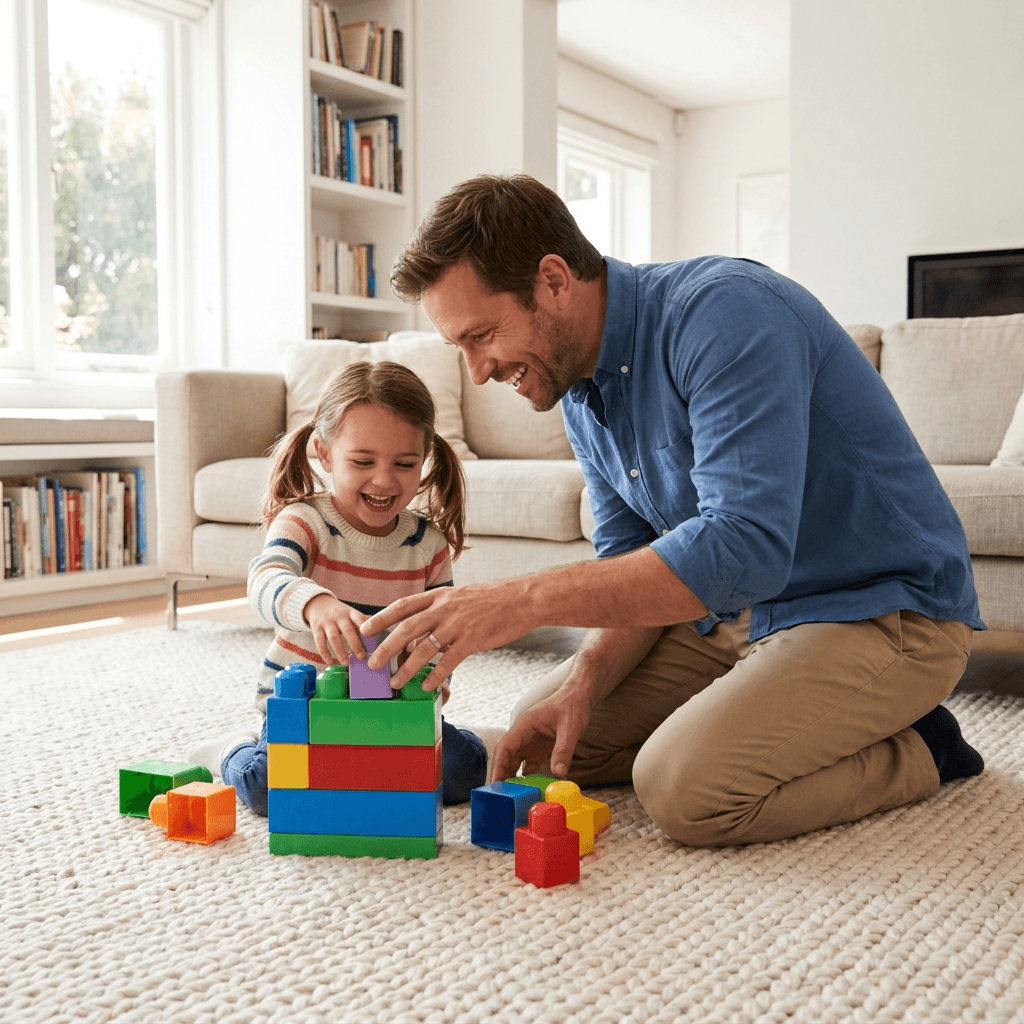
- Parent and family coaching: Home-based models naturally involve caregivers in the session. Parents learn to use ABA strategies throughout the day, turning every routine into a learning opportunity — not just the 60 minutes a therapist is present.
- Sibling integration: Siblings can be included as natural play partners, supporting social skill development in the most authentic setting possible.
- Generalisation from the start: One of the core challenges in ABA is helping children use a newly learned skill across different people, places, and materials. Home-based therapy sidesteps part of that challenge by teaching directly in the environment where the skill will be used.
Limitations to be aware of
Home environments can also introduce distractions that are difficult to manage during early skill acquisition. If a child is learning a brand-new, demanding skill — such as tolerating a transition or sitting for a structured task — the unpredictability of home can sometimes slow initial learning. Space constraints and the presence of other household members are also practical considerations.
Centre-Based ABA: Strengths and Considerations
What it looks like
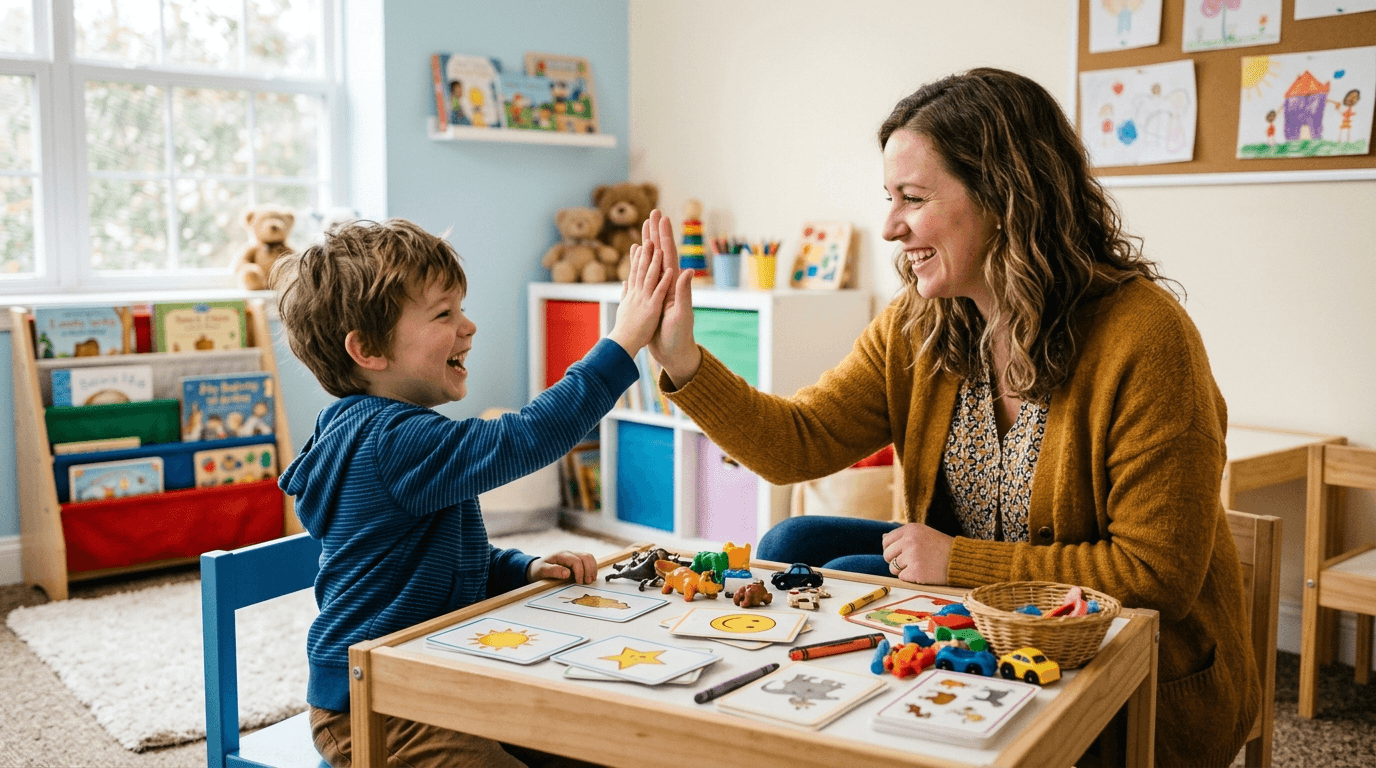
A dedicated therapy centre provides purpose-built rooms designed to support focused learning. Spaces can be adjusted for lighting, noise, materials, and layout. Therapists have immediate access to a wider range of teaching materials and clinical colleagues for consultation.
Where centre-based ABA tends to shine
- Intensive skill acquisition: When a child is beginning to learn a skill that requires concentrated, distraction-free practice, a controlled environment can accelerate initial learning. Structured discrete-trial teaching often works well in this kind of setting.
- Distraction management: For children who are easily overwhelmed or who need systematic desensitisation to environmental stimuli, the centre environment can be calibrated in ways a home cannot.
- Social and peer opportunities: Centres can facilitate carefully managed group moments — circle time, snack time, structured play — that are difficult to arrange at home. These peer interactions are an important bridge towards school readiness and broader social participation.
- Multidisciplinary collaboration: When speech-language therapy, occupational therapy, and ABA are all delivered under one roof, clinicians can align goals and share observations in real time.
Limitations to be aware of
Skills learned exclusively in a centre setting do not always transfer automatically to home or school. Without deliberate generalisation programming and caregiver involvement, a child may perform beautifully in the therapy room but struggle to use the same skill at the dinner table. Commute time and scheduling can also be a practical challenge for many Dubai families.
The Hybrid Approach: Why Most Strong Programmes Blend Both
In practice, the most effective ABA programmes in Dubai — and globally — use both settings intentionally. A common pattern is to introduce a new, challenging skill in the structured centre environment where variables can be controlled, then actively programme for its generalisation at home once the child has a reliable foundation.
This is not about splitting time equally; it is about asking, for each specific goal on a child's programme, where is this skill best taught right now? The answer will differ by goal, by the child's current level, and by the family's circumstances. If your provider gives the same answer for every goal — always home, or always centre — that may be worth exploring further in conversation with them.
How the Decision Should Actually Be Made
Setting decisions should follow a thorough assessment, not ideology or convenience. A qualified behaviour analyst will consider:
- The child's current skill profile and learning history
- The nature and priority of each therapy goal
- The family's capacity for home-based involvement and parent coaching
- The child's sensory profile and response to new environments
- Practical logistics, including age, co-occurring needs, and any school programme already in place
The assessment should be reviewed regularly. A child who begins with primarily centre-based work may transition to more home-based practice as skills solidify, and vice versa. A dynamic plan is a sign of a thinking, responsive clinical team.
A Note on Dubai's Context
Families in Dubai navigate a unique landscape: a diverse, international population, variable access to school-based support, and a growing but still-developing network of specialist providers. The UAE's autism therapy services sector has expanded considerably in recent years, and there are now more options for blended, community-based models than there were even a few years ago.
If your child attends a mainstream or inclusive school, it is worth ensuring that your ABA provider communicates with the school team so that goals and strategies are consistent across settings — this cross-environment alignment is one of the most impactful things you can do to support progress.
Getting Support in Dubai
xlr8well delivers speech, ABA, occupational, and physical therapy at your home, anywhere in Dubai — as well as at Bloom Autism Center (Office 702, Yes Business Tower, Al Barsha 1, Dubai). Every journey starts with a free, judgement-free consultation on WhatsApp, and a diagnosis is never required to begin. Explore our full range of autism therapy services to learn more about how we approach assessment and programme design.
This article is general information for parents and carers, not a diagnosis or a substitute for professional assessment of your individual child. If you have concerns about your child's development, please consult a licensed healthcare professional.