%2520(350%2520x%2520150%2520px)%2520(90%2520x%252040%2520px)%2520(4).png%3Falt%3Dmedia%26token%3Dbed5580f-de12-4061-ac20-36c16b313f14&w=384&q=75)
The BCBA Assessment: What Happens Before Therapy Starts
What Is a BCBA Assessment — and Why Does It Come First?
If your child has recently been identified as autistic, or you are exploring Applied Behaviour Analysis (ABA) therapy for the first time, you will likely hear one phrase repeated: the assessment must happen before anything else. This article explains what a BCBA assessment actually involves, why it matters, what to expect during the process, and how to make sense of the report you receive at the end.
A BCBA — a Board Certified Behaviour Analyst — is a professional credentialled by the Behaviour Analyst Certification Board (BACB). Their role at this stage is not to provide therapy directly, but to build a detailed, individualised picture of your child's current skills and then design a programme that genuinely fits that child. Every element of the assessment serves that purpose.
What the Assessment Is Actually Measuring
A common misconception is that a BCBA assessment is looking primarily for deficits or difficulties. In practice, a good assessment maps what your child can do across a broad range of developmental domains. These typically include:
- Communication and language — how your child requests things, labels objects, follows instructions, and uses language socially (whether verbal or through an alternative system)
- Play skills — independent play, functional use of toys, and early social play with others
- Social interaction — eye contact, joint attention, imitation, and turn-taking
- Learner readiness — the ability to sit, attend, follow simple instructions, and respond to reinforcement in a structured setting
- Self-help and daily living skills — dressing, eating, toileting, and basic routines
- Adaptive behaviour — how your child manages in real-world environments across home, community, and (where relevant) school
Programmes built in ABA are designed from a child's existing strengths upward. Knowing what a child already does fluently is as important as knowing what has not yet developed, because new skills are most efficiently taught by building on what is already there.
The Four Components You Should Expect
1. Parent and Caregiver Interview
This is often the starting point. The BCBA will speak with you — and ideally other key caregivers — about your child's developmental history, medical background, daily routines, what tends to go well, and what feels most challenging right now. Crucially, you will also be asked about your own priorities: what changes matter most to your family's daily life. A good assessor listens carefully here. Your knowledge of your child is irreplaceable clinical information.
2. Direct Observation
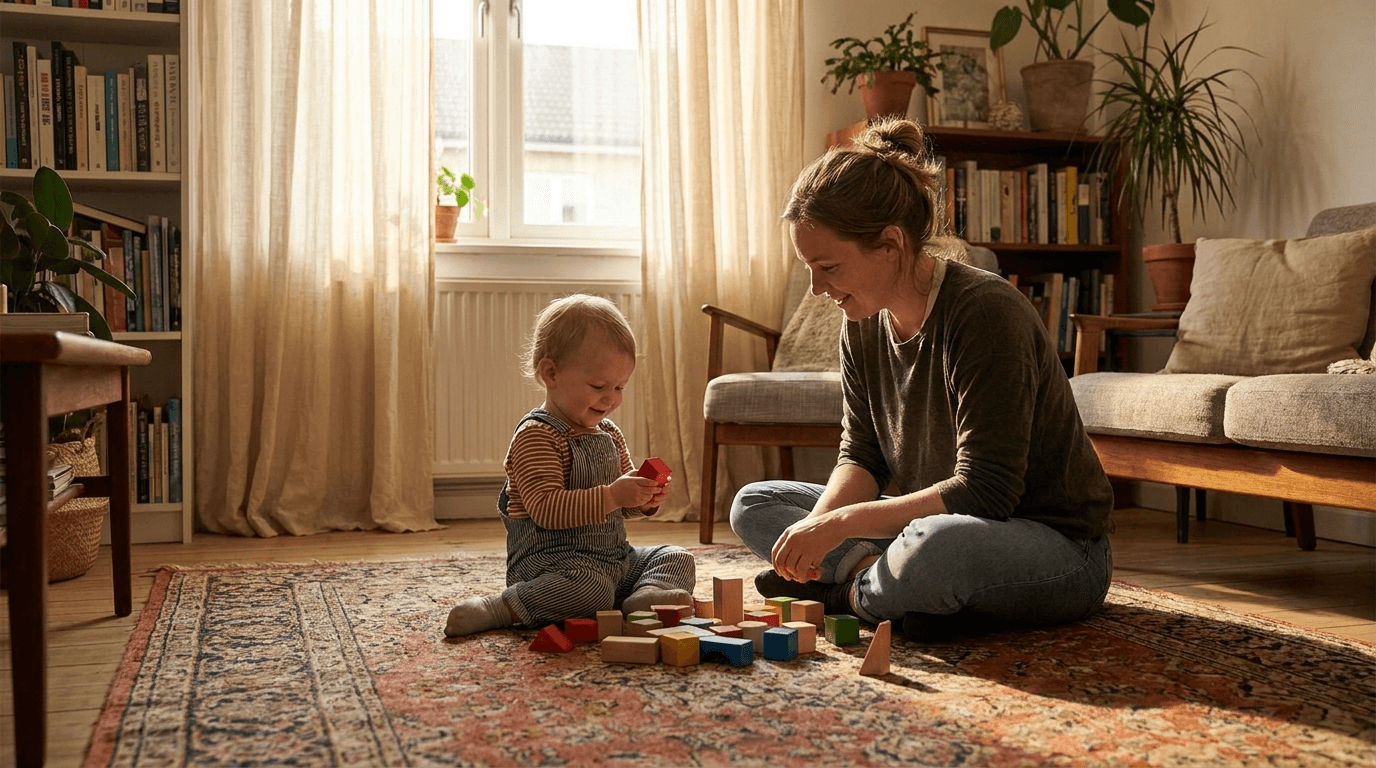
The BCBA will spend time watching your child in a naturalistic setting — often play-based — to see how skills actually present in an unstructured moment. This is different from formal testing; it captures spontaneous behaviour, how your child initiates interaction, how they respond when nothing particular is demanded, and what motivates them. In a home-based context, this observation can happen in your own living space, which often yields a more authentic picture than a clinical room.
3. Standardised Assessment Tools
To anchor the assessment in objective, replicable data, BCBAs use structured tools. Two of the most widely used are:
- VB-MAPP (Verbal Behaviour Milestones Assessment and Placement Program) — assesses language and learning milestones within a framework drawn from the science of verbal behaviour, covering areas such as manding (requesting), tacting (labelling), listener responding, and social skills
- ABLLS-R (Assessment of Basic Language and Learning Skills – Revised) — a comprehensive checklist covering over 500 skills across language, social, self-help, and academic domains, often used to track progress over time as well as for initial placement
The choice of tool will depend on your child's age, current skill level, and what the BCBA is trying to understand. Some assessors use more than one. These tools are not IQ tests; they are curriculum-referenced, meaning the results map directly onto what skills to teach next.
4. The Written Report
At the end of the process, you should receive a written report. This document is yours to keep. It should set out your child's current baseline across assessed domains, the proposed therapy goals in order of priority, a recommendation for therapy hours per week, and an explanation of how progress will be measured going forward. If you receive a report written in dense clinical language with no plain-English explanation offered, ask for one — a good clinician will welcome the question.
How Long Does It Take?
In total, a thorough BCBA assessment typically takes somewhere between two and six hours, spread across one or more visits. Rushing this process is not in your child's interest. The time invested here directly determines the quality and fit of the programme that follows. If a provider presents you with ready-made goals or a fixed programme before any assessment has taken place, that is a significant warning sign — you would be receiving a package, not a programme built for your child.
What to Do Before the Assessment
A little preparation can make the process smoother and richer:
- Gather any previous reports — paediatric assessments, speech therapy notes, school observations, or a formal diagnosis if one exists (note that a diagnosis is not required to begin an ABA assessment)
- Jot down your own observations: what your child enjoys, what triggers difficult moments, what a typical day looks like hour by hour
- Think about your family's priorities — what would meaningful progress look like in your daily life over the next six months?
- Bring your child's favourite items or activities; knowing what genuinely motivates your child helps the assessor establish rapport and gather better information
Safety, Limitations, and Important Caveats
A BCBA assessment is a specialised behavioural evaluation. It is not a medical diagnostic assessment, and it does not replace the role of a paediatrician, developmental psychiatrist, or psychologist in confirming or ruling out diagnoses. If you have concerns about your child's health, seizures, sleep, or any medical matter, those should be discussed with a licensed medical doctor.
Assessment findings represent a snapshot in time. Children develop, circumstances change, and a well-run ABA programme includes regular re-assessment to update goals and ensure the programme continues to reflect your child's current needs.
When seeking a BCBA, you can verify credentials independently at any time. The BACB maintains a publicly searchable online registry where you can confirm a practitioner's certification status, disciplinary history, and credential type by name.
The Assessment in a Dubai Context
Families in Dubai and across the UAE face some specific practical considerations. Assessments conducted in a familiar home environment can be particularly valuable, as children often present a more representative picture of their skills when they are not navigating an unfamiliar clinical setting. Waiting times at specialist centres can also vary, making home-based assessment an accessible alternative for many families.
At xlr8well, our team delivers ABA therapy and assessments at home across Dubai, as well as at Bloom Autism Center (Office 702, Yes Business Tower, Al Barsha 1, Dubai). Our behavioural programmes are designed and supervised by credentialled behaviour analysts, with transparent supervision arrangements. A formal diagnosis is never required to begin a consultation. You can explore what we offer through our autism therapy services page, or reach out via WhatsApp for a free, judgement-free conversation about your child's needs.
This article is general information for parents and caregivers, not a substitute for professional assessment of your child or advice from a licensed clinician.