%2520(350%2520x%2520150%2520px)%2520(90%2520x%252040%2520px)%2520(4).png%3Falt%3Dmedia%26token%3Dbed5580f-de12-4061-ac20-36c16b313f14&w=384&q=75)
Pairing: Why Great ABA Starts With Becoming the Fun

What Is Pairing — and Why Does It Come First?
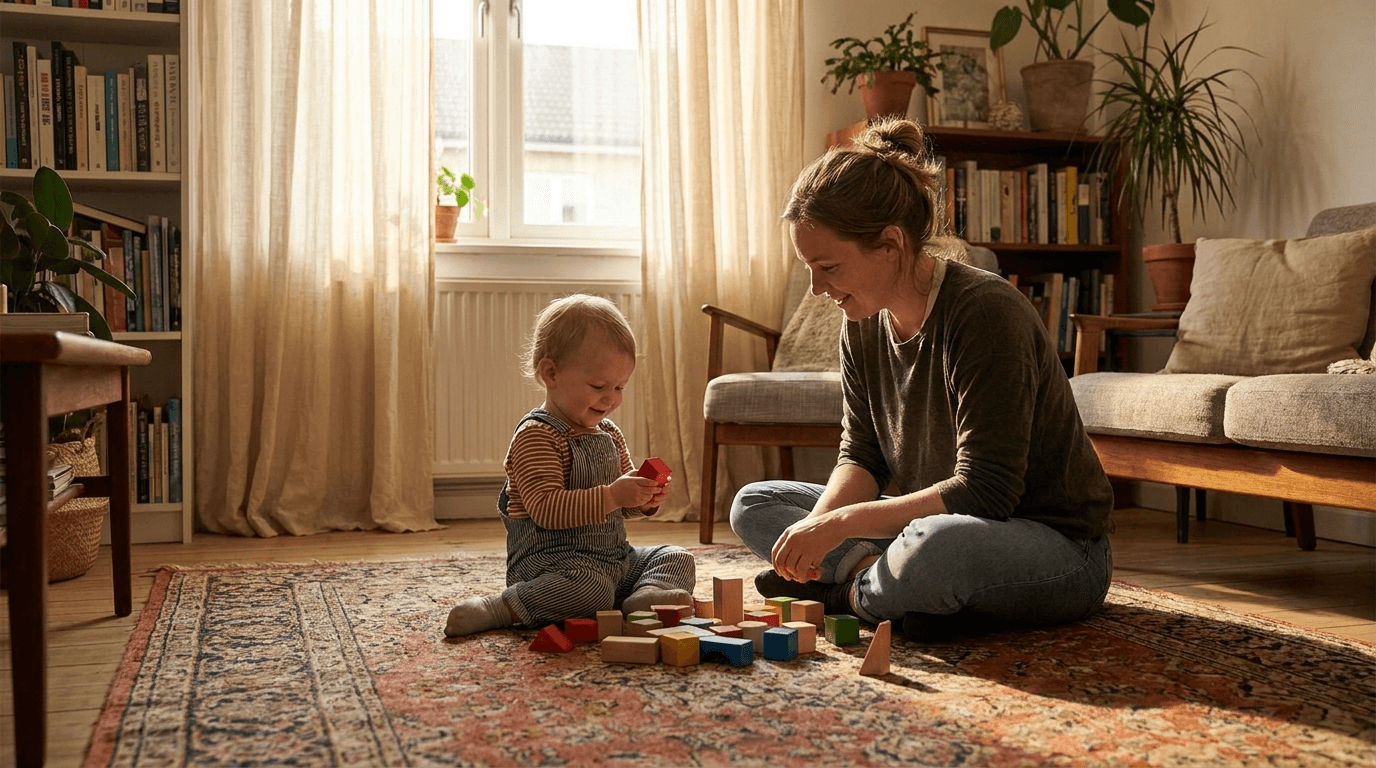
If you have ever watched an ABA (Applied Behaviour Analysis) session and thought, "They are just playing," you have witnessed pairing in action. Pairing is the deliberate, structured first phase of any well-run ABA programme, in which the therapist works systematically to become associated in the child's mind with everything the child already enjoys. No flash cards, no demands, no corrections — just a steady stream of positive experiences anchored to one person.
The underlying principle is straightforward: before a therapist can teach, the child must want to be around that therapist. In behaviour-analytic terms, the therapist is working to become a conditioned reinforcer — someone whose very presence signals "good things happen here." Once that association is firmly in place, the child is far more likely to engage, attempt new skills, and persist through challenges. A child who runs towards their therapist is in a very different learning state from one who needs to be coaxed into the room.
The Science Behind the Strategy
ABA is grounded in the science of learning and behaviour. One of its core insights is that motivation is not a fixed trait — it is something that can be carefully cultivated. Early ABA models sometimes relied on compliance-based approaches where demands were introduced very quickly. Contemporary, compassionate ABA has moved decisively towards a relationship-first model, recognising that instructional control built through trust and genuine enjoyment tends to produce more durable learning, less distress, and better generalisation of skills to real-life settings.
Pairing draws on classical conditioning — the same basic process by which a child learns that the sound of a parent's key in the door means someone they love is home. Over repeated, positive interactions, the therapist's face, voice, and presence begin to carry genuine value for the child. That value then powers every teaching interaction that follows.
What Happens During Pairing Sessions?
To an outside observer, the first several sessions of a well-paired ABA programme may indeed look like free play. In reality, the therapist is busy doing several important things at once:
- Reinforcer identification: The therapist observes closely to discover what the child genuinely finds motivating — specific toys, sensory experiences, music, movement, particular foods, or social games. This information shapes every teaching plan that follows.
- Building rapport and trust: The therapist follows the child's lead, joins their preferred activities, and makes no demands. This communicates safety and respect, which is especially important for autistic children who may have had stressful therapy experiences in the past.
- Zero-demand or minimal-demand interactions: Requests and instructions are held back entirely until reliable indicators emerge — most importantly, the child independently seeking the therapist out or showing clear pleasure in the interaction.
- Emotional tone calibration: The therapist learns how animated, quiet, physical, or playful to be in order to match the child's regulatory needs without overwhelming them.
There is no fixed timeline for how long pairing takes. For some children it may be a handful of sessions; for others it may take several weeks. Rushing this phase to "get to the real therapy" is a common mistake — and one that can undermine progress for months afterwards.
Re-Pairing: When the Relationship Needs Refreshing
Pairing is not a one-time event at the start of a programme. Skilled ABA therapists return to it deliberately whenever the relationship account has been depleted. This can happen after:
- A break in sessions due to illness, travel, or school holidays
- A period of intensive teaching that involved a higher rate of demands or corrections
- A change in therapist or setting
- Stressful life events that have affected the child's overall wellbeing
Noticing when re-pairing is needed — and acting on it promptly rather than pushing through — is a hallmark of an experienced, child-centred practitioner.
A Red Flag Worth Knowing
If a new therapist arrives on day one with a structured programme, worksheets, and a table of demands, that is worth questioning. It does not necessarily mean the therapist is unkind or unskilled — but it does suggest the programme design may not be prioritising the relationship foundation that makes everything else work. Parents are well within their rights to ask their child's ABA provider: "How do you approach pairing, and how will I know when that phase is complete?"
How Parents Can Use Pairing at Home
One of the most empowering ideas in modern ABA is that pairing is not only for therapists. Parents, carers, and siblings can use the same principle to strengthen their relationships with an autistic child — particularly around activities that tend to involve requests or corrections.
Think of it as a deposit-before-withdrawal model. Before asking a child to get dressed, tidy up, or come to the table, spending even two or three minutes in the child's preferred activity — with no agenda and no demands — can meaningfully shift their readiness to cooperate. Over time, these deposits build an emotional account that makes the inevitable withdrawals (requests, transitions, boundaries) far less costly.
Parent coaching built into an ABA programme typically includes guidance on exactly this: how to embed pairing principles into daily routines so that progress is not confined to therapy hours.
Pairing in the UAE Context
Families in Dubai and across the UAE may notice that their child's behaviour and regulation can be significantly affected by the heat, Ramadan schedules, school term changes, and frequent travel for family visits or holidays. Each of these is a natural trigger for re-pairing. A well-structured home-based ABA programme — delivered in the child's own environment rather than a clinic — already has a pairing advantage: the setting itself is familiar and associated with safety, which reduces one of the most common early barriers to engagement.
xlr8well delivers ABA and related therapies at home across Dubai, as well as at Bloom Autism Center (Office 702, Yes Business Tower, Al Barsha 1, Dubai). Every programme is individualised following a thorough assessment, and a diagnosis is never required to begin. Families can reach the team directly on WhatsApp for a free, judgement-free consultation. You can also learn more about our autism therapy services.
Questions to Ask Any ABA Provider
If you are evaluating ABA services for your child in Dubai or elsewhere in the UAE, the following questions can help you gauge whether pairing and relationship-building are genuinely central to the programme:
- How do you assess and track what motivates my child?
- How will I know when the pairing phase is complete and teaching goals are being introduced?
- What is your approach when my child has had a difficult week or a long break?
- How is parent coaching structured into the programme?
- How do you monitor my child's enjoyment of and engagement in sessions over time?
There are no trick answers to these questions — they simply help you understand whether the provider has a clear, child-centred philosophy that goes beyond box-ticking.
This article is general information for parents and carers, not a diagnosis or a substitute for professional assessment of your child. If you have concerns about your child's development, please consult a licensed healthcare professional.