%2520(350%2520x%2520150%2520px)%2520(90%2520x%252040%2520px)%2520(4).png%3Falt%3Dmedia%26token%3Dbed5580f-de12-4061-ac20-36c16b313f14&w=384&q=75)
BPC-157 and TB-500: The Science of Peptide-Assisted Recovery
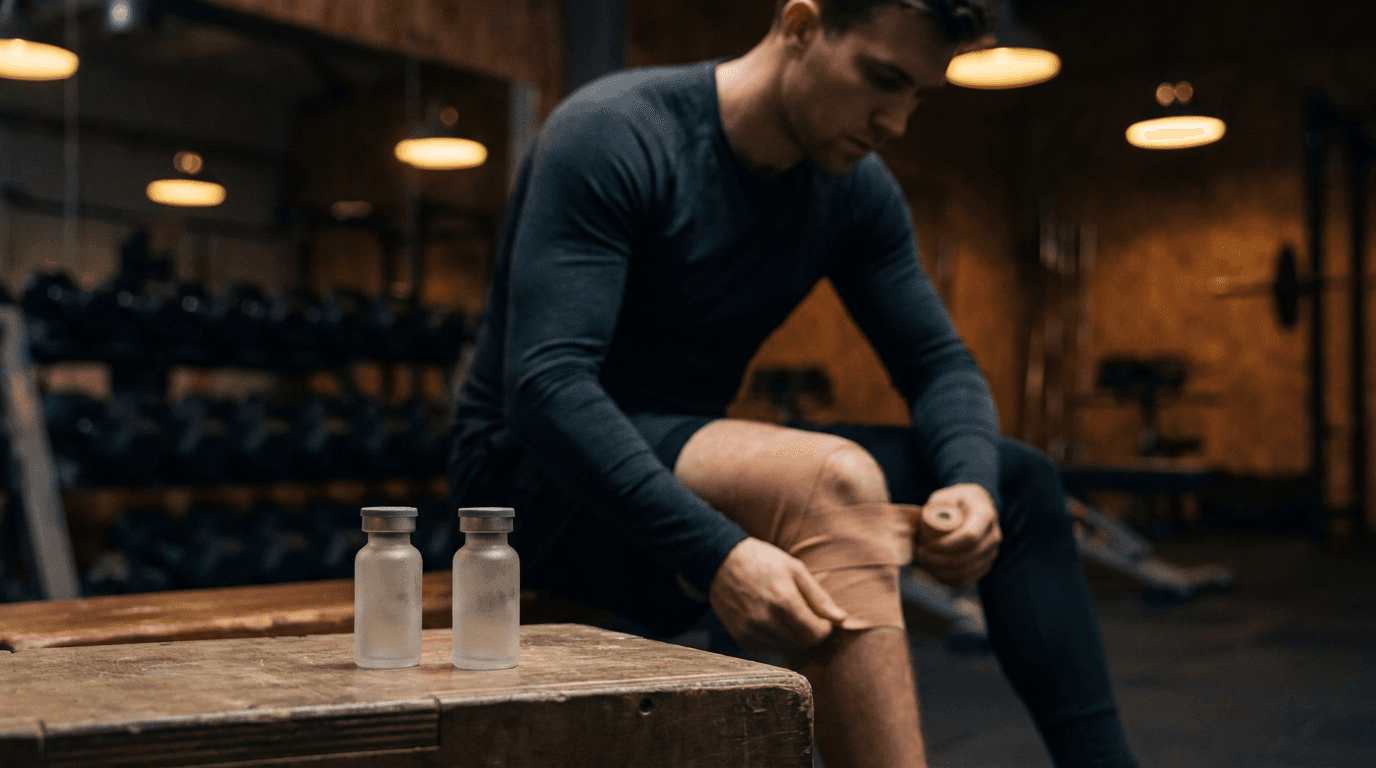
Why Injuries Plateau
Most soft-tissue injuries follow a frustrating curve: rapid improvement for the first few weeks, then a long tail of "almost better" that can drag on for months. The biology behind the plateau is well recognised — tendons and ligaments have a comparatively poor blood supply, which limits the delivery of oxygen, nutrients, and the cellular signals needed to complete the repair process. Muscle tissue, by contrast, is richly vascularised and tends to recover far more quickly. This structural difference means that even with diligent rest and physiotherapy, tendon and ligament injuries can feel perpetually unfinished.
Understanding this biology is important, because it explains why standard approaches — rest, ice, anti-inflammatory medication — may address pain and swelling without fully resolving the underlying tissue deficit. It also helps explain the growing interest in peptide-based protocols designed to support the body's natural repair signalling at a cellular level.
What Are Peptides?
Peptides are short chains of amino acids — the same building blocks that make up proteins. Unlike large protein molecules, peptides are small enough to interact directly with specific cell receptors, acting as biological signals that can influence processes such as inflammation, cell migration, and new tissue formation. The human body produces hundreds of peptides naturally; researchers have been studying synthetic analogues for decades, with the aim of concentrating or mimicking these signals in therapeutic contexts.
It is important to understand that peptide science is a genuinely active and evolving field. While some peptides have well-established pharmaceutical applications, others — including those discussed here — are still under research, and their use should always be guided by a qualified medical professional.
BPC-157 and TB-500: Two Complementary Signals
Two peptides in particular have attracted significant attention in the context of recovery and soft-tissue repair:
- BPC-157 — Body Protection Compound 157 is a synthetic peptide derived from a protein found naturally in gastric juice. Preclinical research has focused on its potential to accelerate healing in tendons, ligaments, muscle, and the gut lining. One of the most studied mechanisms is its apparent ability to promote angiogenesis — the formation of new blood vessels — at injury sites. By improving local circulation, it may help deliver the building blocks that slow-healing connective tissue needs to progress through the repair cycle.
- TB-500 — Thymosin Beta-4 (TB-500 is a synthetic fragment of this naturally occurring protein) has been investigated for its role in cell migration, tissue regeneration, and modulation of inflammation. Unlike BPC-157, which is thought to act primarily at the local site of administration, TB-500 is associated with more systemic effects — meaning it may support repair signalling throughout the body rather than at a single location.
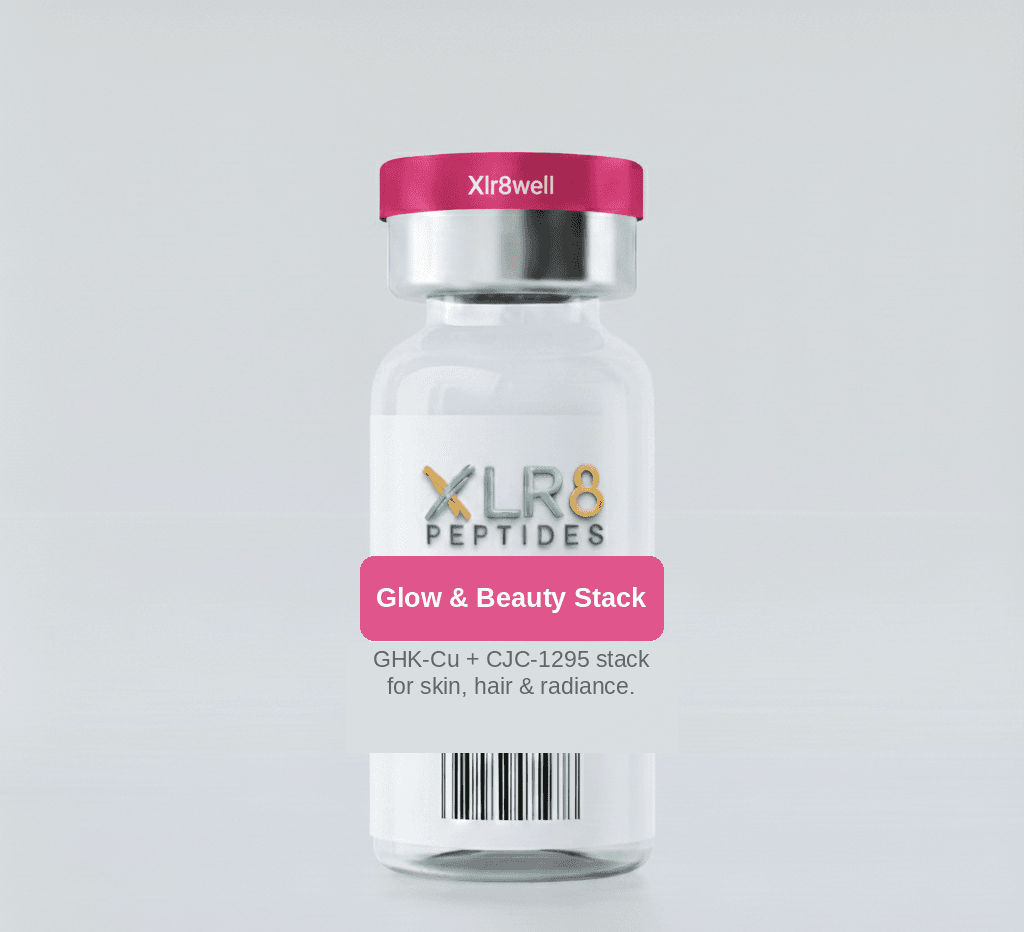
The two peptides are frequently considered together precisely because their mechanisms appear to complement each other: one acting locally to improve blood vessel growth at the site of injury, the other potentially supporting broader systemic repair processes and reducing inflammation more widely. This combination approach is reflected in xlr8well's Healing & Recovery Stack, which pairs both peptides for this reason.
What the Research Currently Shows
It is worth being clear-eyed about the evidence base. The majority of published research on BPC-157 and TB-500 comes from preclinical studies — predominantly animal models — alongside a growing body of observational clinical use. Rigorous, large-scale human clinical trials are still limited compared to the evidence base for established pharmaceuticals.
What the preclinical literature does suggest is potentially interesting: some studies indicate that BPC-157 may promote tendon-to-bone healing, support gut barrier integrity, and reduce inflammation at injury sites. TB-500 research points to possible roles in muscle and cardiac tissue repair, and in modulating inflammatory pathways. However, "suggests" and "may" are the operative words here — extrapolating from animal studies to human outcomes requires caution, and individual responses can vary considerably.
This is precisely why a medically supervised approach matters. Dosing, route of administration, and duration of use are all variables that should be determined based on an individual's health profile, not based on anecdotal reports from online forums.
Who Might Consider This Protocol
Peptide-assisted recovery protocols are generally considered by a specific subset of individuals rather than the general population. Common profiles include:
- Athletes with persistent connective tissue injuries — particularly those dealing with stubborn tendon or ligament issues that have not fully resolved despite conventional treatment and rest.
- Post-surgical patients — individuals who have been cleared by their surgeon and are looking to support the later stages of their recovery. It is essential that peptide use is discussed with and approved by the operating surgeon before proceeding.
- Active adults with recurrent injury patterns — those whose old injuries reliably flare with each training cycle, suggesting incomplete tissue repair rather than a new acute injury.
- Individuals with gut-related concerns — BPC-157 in particular has been studied in the context of gut lining integrity, and some people explore it for this reason under medical supervision.
Peptide therapy is not appropriate for everyone. Contraindications, existing medical conditions, and current medications all need to be assessed. A thorough consultation with a licensed doctor is a non-negotiable first step.
What to Expect: The Process at xlr8well
At xlr8well, every peptide protocol begins with a medical consultation and a baseline assessment. Before any peptide is recommended, clients are advised to complete the Peptide Readiness Panel — a blood test designed to give the supervising doctor the data needed to make safe, personalised dosing decisions. This step exists so that your protocol is built on your actual biochemistry, not a generalised template.
Once cleared, administration is performed by a trained nurse in your own home in Dubai — a practical consideration in the UAE, where the heat and pace of daily life can make clinic visits inconvenient. Sessions are scheduled at a time that suits you, and ongoing monitoring ensures that any adjustments are made in response to how your body is responding.
A typical course length and dosing frequency will be determined by your supervising doctor based on the nature and severity of the injury, your baseline blood results, and your recovery goals. There is no single universal protocol, which is another reason why professional oversight is important.
Safety Considerations and Honest Limitations
Peptide therapy, like any bioactive intervention, carries considerations that any prospective user should understand clearly:
- Limited long-term human safety data — because large-scale human trials are still relatively few, the long-term safety profile in humans is not as comprehensively documented as for licensed pharmaceuticals.
- Individual variability — responses to peptides can differ meaningfully between individuals. What is well tolerated by one person may not be by another.
- Injection site reactions — mild redness, bruising, or discomfort at the injection site can occur and should be reported to your supervising clinician.
- Drug interactions — anyone taking existing medications, or managing a chronic health condition, should disclose this fully during their consultation, as interactions are possible.
- Not a substitute for rehabilitation — peptides are not a replacement for physiotherapy, appropriate rest, or surgical intervention where indicated. They are best understood as a potential adjunct to a broader recovery plan.
If you experience any unexpected or severe reaction following administration, seek medical attention promptly. In the event of a medical emergency in the UAE, call 999.
A Practical Note for UAE Residents
Living in Dubai or the wider UAE comes with specific lifestyle considerations that can affect recovery — prolonged heat exposure, demanding training schedules, long working hours, and the cumulative physical demands of an active lifestyle all play a role. Dehydration in the Gulf climate can compound the already-limited circulation to connective tissue, potentially prolonging recovery further. Any peptide protocol is best pursued alongside sensible hydration, adequate sleep, and appropriate nutritional support — factors that a good clinician will address as part of a holistic consultation.
For a full overview of available options, visit the xlr8well peptide therapy catalogue, or speak with a doctor to discuss whether this type of protocol is suitable for your situation.