%2520(350%2520x%2520150%2520px)%2520(90%2520x%252040%2520px)%2520(4).png%3Falt%3Dmedia%26token%3Dbed5580f-de12-4061-ac20-36c16b313f14&w=384&q=75)
Peptide Stacks 101: Why Smart Combinations Beat Single Compounds

One Signal Is a Suggestion; Two Is a Strategy
Peptides are signalling molecules — short chains of amino acids that carry precise biological instructions to specific cells and receptors. Unlike broad-spectrum compounds, each peptide tends to act on a relatively narrow set of pathways. That specificity is part of what makes them interesting in modern regenerative and wellness medicine, but it also reveals an important limitation: most meaningful physiological processes — tissue repair, collagen synthesis, immune modulation, hormonal regulation — involve multiple cascades working in parallel.
This is the core insight behind peptide stacking. Rather than pushing a single signal louder by increasing the dose of one compound, stacking pairs or groups peptides whose mechanisms complement one another. The result, when chosen thoughtfully and supervised by a clinician, can be a more balanced and targeted approach to supporting the body's own processes than any single compound can achieve alone.
This article explains the logic behind common peptide combinations, who may benefit from them, what to expect in practice, and why baseline testing matters before you begin.
How Stacking Works: Complementary Pathways, Not Redundancy
A well-designed stack is not about doubling up on the same effect. It is about identifying two or more mechanisms that naturally support each other. Consider how the body heals an injury: blood vessels need to regrow, inflammatory signals need to be modulated, fibroblasts need to migrate to the site, and new collagen needs to be laid down. No single peptide addresses all of these steps simultaneously. Pairing compounds that each handle a different part of the process is closer to how the body itself operates — through a coordinated network of signals, not a single loud instruction.
The same principle applies to skin quality, hormonal support, sleep architecture, and cognitive performance. Each outcome depends on a web of interacting pathways. Thoughtful stacking tries to support more of that web at once.
The Classic Pairings, Explained
BPC-157 + TB-500 — The Recovery Stack
This is one of the most widely discussed combinations in regenerative peptide therapy, and the rationale is straightforward. BPC-157 (Body Protection Compound-157) is understood to act locally at sites of injury or inflammation, supporting angiogenesis (new blood vessel formation), tendon and ligament healing, and gut mucosal repair. TB-500 (a synthetic fragment of Thymosin Beta-4) operates more systemically, influencing cell migration, actin regulation, and the body's broader inflammatory response.
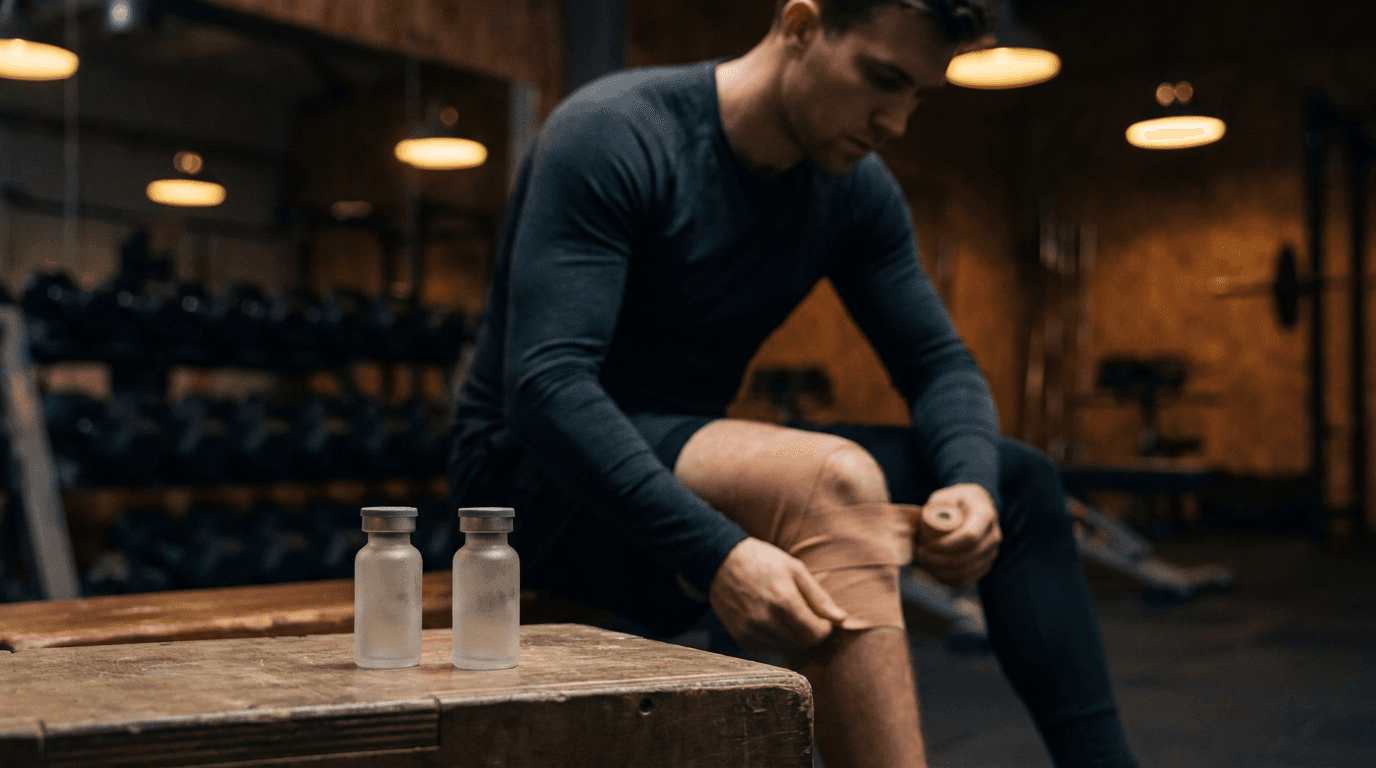
The local-plus-systemic dynamic is what makes this pairing compelling. BPC-157 may help address the specific site of damage while TB-500 can support the wider biological environment needed for recovery. Athletes, people recovering from musculoskeletal injuries, and those dealing with chronic inflammation are among those who most commonly enquire about this combination.
xlr8well offers a Healing & Recovery Stack that bundles both compounds with a doctor consultation included before dispensing.
GHK-Cu + CJC-1295 — The Glow Stack
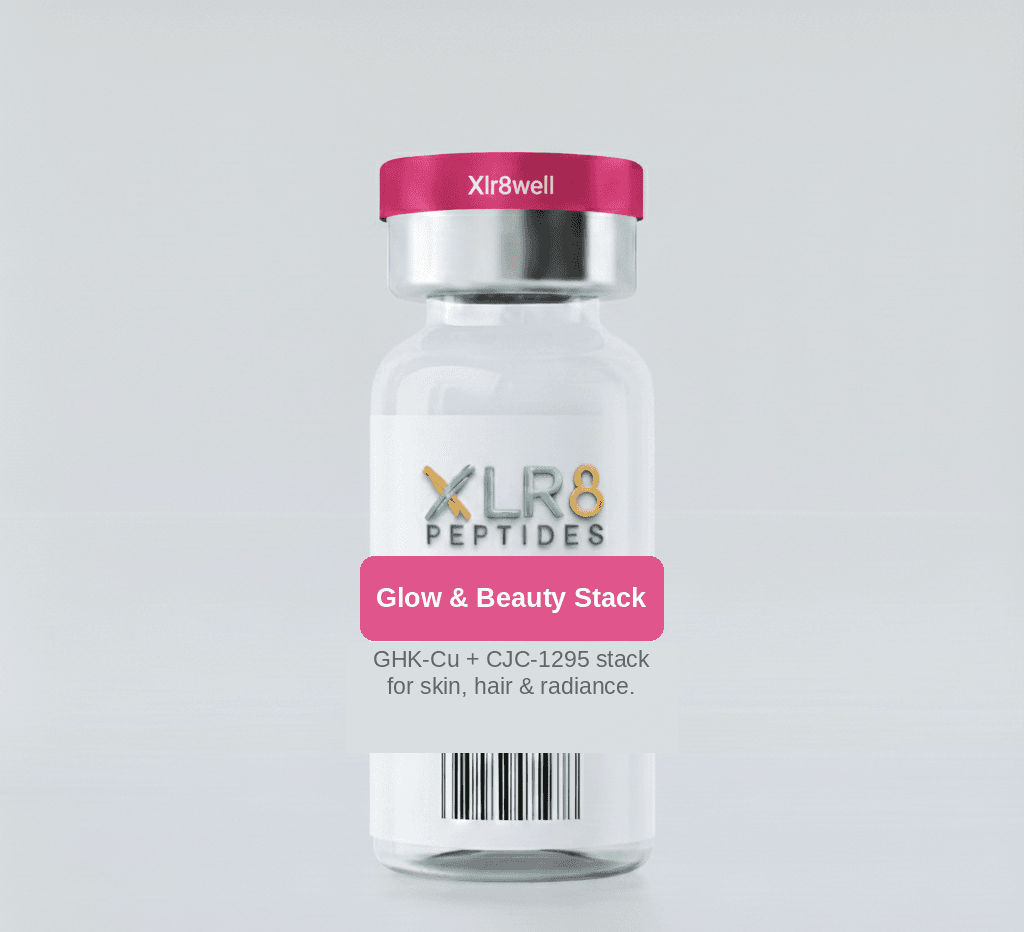
GHK-Cu is a copper peptide with a well-established role in skin biology. It may support collagen and elastin synthesis, promote skin remodelling, and exert antioxidant effects — working at the structural level of the dermis. CJC-1295 is a growth hormone-releasing hormone (GHRH) analogue that supports the pulsatile release of growth hormone from the pituitary gland. Growth hormone, in turn, plays a foundational role in tissue quality, cellular repair, and skin thickness across the body.
The pairing can be thought of as surface plus foundation: GHK-Cu works directly at the skin level, while CJC-1295 supports the hormonal axis that underpins tissue quality more broadly. This combination is particularly relevant for those focused on skin health, anti-ageing wellness, and overall body composition. The Glow & Beauty Stack is available through xlr8well with clinical oversight.
CJC-1295 + Ipamorelin — The Growth Hormone Classic
These two peptides work on the same axis but through different mechanisms, making them a natural complement. CJC-1295 acts on GHRH receptors to extend the duration of growth hormone pulses, while Ipamorelin is a ghrelin mimetic (GHRP) that stimulates a separate receptor to amplify the size of those pulses. Importantly, Ipamorelin is considered to have a relatively selective action — it may stimulate growth hormone release without significantly raising cortisol or prolactin levels, which is a concern with some other GH secretagogues.
The combination may support improvements in body composition, sleep quality, recovery speed, and general tissue repair over time. It is one of the most commonly discussed pairings in longevity and performance medicine.
Who May Benefit from Peptide Stacking?
Peptide stacking is not a one-size-fits-all approach. It is most appropriate for adults who already have a reasonable understanding of what peptides are, have ideally tried individual compounds under clinical supervision, and have undergone baseline blood testing to understand their current hormonal and metabolic status. People who may find stacking particularly relevant include:
- Those recovering from sports injuries or musculoskeletal conditions who want to support the body's natural repair processes
- Adults concerned with skin quality, early signs of ageing, or changes in body composition
- People experiencing suboptimal sleep, low energy, or recovery that feels slower than expected
- Individuals already engaged in a structured health optimisation or longevity programme under medical guidance
Peptide therapy is not appropriate for everyone. Pregnant or breastfeeding women, people with active cancer or a history of hormone-sensitive conditions, and those on certain medications should discuss suitability carefully with a licensed doctor before considering any peptide protocol.
The Rule That Makes Stacking Sensible: Test First
A stack multiplies biological signals. Before amplifying anything, it is worth understanding your baseline — what your body is already doing, where genuine deficiencies or imbalances may exist, and whether your current health status makes a given peptide appropriate for you.
This is not just good practice; it is the responsible foundation of any protocol. Key markers worth assessing before a growth hormone-related stack might include IGF-1 levels, thyroid function, inflammatory markers, and sex hormones. Without this data, a protocol is essentially a guess.
xlr8well's Advanced Peptide Blood Panel — covering testosterone, IGF-1, thyroid function, and inflammatory markers — provides that baseline, and every stack dispensed through xlr8well includes a doctor consultation as standard. No peptide protocol should begin without clinical review.
What to Expect: Timelines and Realistic Outcomes
Peptide stacks are not fast-acting drugs. Most people using recovery-focused combinations report that noticeable changes in pain, mobility, or healing speed may begin to emerge over several weeks of consistent use. Skin-focused stacks involving GHK-Cu or GH-axis peptides typically require one to three months before meaningful changes in skin texture or firmness become apparent. Growth hormone secretagogue stacks may produce earlier improvements in sleep quality — a commonly reported early signal — with body composition changes often following over a longer period.
Individual responses vary considerably based on age, baseline hormone levels, lifestyle, diet, sleep hygiene, and adherence to the protocol. Peptide therapy works best as part of a broader health strategy, not as a standalone intervention.
Safety, Limitations, and the UAE Context
Peptide therapy, like any bioactive intervention, carries potential side effects and contraindications that vary by compound. These can include injection-site reactions, water retention, changes in blood sugar regulation, and interactions with existing medications. This is why clinical supervision is not optional — it is essential.
In the UAE, healthcare is regulated by bodies including the Dubai Health Authority (DHA) and the Department of Health Abu Dhabi (DoH). Any peptide protocol you undertake should be prescribed and supervised by a licensed practitioner operating within that regulatory framework. xlr8well operates as an at-home healthcare provider in Dubai, delivering consultations and protocols to clients at home — removing the barrier of clinic visits without compromising clinical standards.
If you are new to peptides entirely, the sensible starting point is an Essential Peptide Readiness Panel, followed by a free consultation to discuss what your results mean and which protocol, if any, may be suitable for your goals. You can explore the full range of peptide therapy categories — recovery, cognitive, sleep, sexual wellness, longevity, and more — on the peptide therapy page.
The Bottom Line
Stacking peptides is not about taking more; it is about taking smarter. When paired correctly, with a clear understanding of mechanisms and a baseline blood panel in hand, complementary peptides can support biological processes in a more coordinated way than single compounds alone. The key is starting from a place of knowledge — your own biology — and building a protocol that reflects it, always under the guidance of a qualified clinician.