%2520(350%2520x%2520150%2520px)%2520(90%2520x%252040%2520px)%2520(4).png%3Falt%3Dmedia%26token%3Dbed5580f-de12-4061-ac20-36c16b313f14&w=384&q=75)
What Is a "Sensory Diet"? An OT Concept Every Parent Should Know
What Is a Sensory Diet? An OT Concept Every Parent Should Know
TL;DR: A sensory diet is a personalised schedule of sensory activities — movement, deep pressure, tactile play — designed by an occupational therapist to keep a child regulated through the day. It is one of the most practical take-home tools that paediatric occupational therapy (OT) can offer families.
The Idea in Plain Language
Every nervous system has its own appetite for sensory input. Some children crave constant movement, loud sounds, or strong physical sensations before they can settle enough to learn or connect. Others become overwhelmed by inputs that most people barely notice — a seam in a sock, the hum of an air-conditioning unit, the bustle of a school canteen. Neither profile is a character flaw; both reflect genuine differences in how the brain processes incoming information.
A sensory diet works on the same principle as a nutritional diet: rather than waiting until the body is starving or overloaded, you feed it regularly and strategically. Planned sensory activities are woven into the child's daily routine so that the nervous system stays in its optimal "just right" zone — calm enough to focus, alert enough to engage, and regulated enough to cope with the inevitable surprises of a busy day in Dubai.
The Science Behind It: Sensory Processing and Regulation
The concept of the sensory diet was first described by occupational therapist Patricia Wilbarger in the 1980s and has been refined considerably since. It sits within a broader OT framework known as Sensory Integration Theory, originally developed by A. Jean Ayres.
The core idea is that the nervous system uses sensory input — particularly from the proprioceptive (body position and muscle effort), vestibular (balance and movement), and tactile (touch) systems — to regulate its own level of arousal. When a child is under-stimulated, they may seek input in ways that look disruptive: bouncing, crashing into furniture, or making repetitive noises. When they are over-stimulated, they may shut down, melt down, or become aggressive. A well-designed sensory diet anticipates these peaks and troughs and addresses them before they escalate.
It is worth noting that research into sensory integration interventions is ongoing, and findings vary across studies. Occupational therapists use clinical assessment and professional judgement alongside the available evidence when designing a sensory diet. If you have questions about the evidence base for your child specifically, a qualified OT or your child's paediatrician is the right person to consult.
Who Can Benefit from a Sensory Diet?
Sensory diets are most commonly associated with autism support, and they are indeed widely used by occupational therapists working with autistic children. However, they can also be helpful for children who experience:
- Attention difficulties, including ADHD
- Sensory processing differences not linked to a formal diagnosis
- Anxiety that has a strong physical or sensory component
- Developmental coordination disorder (sometimes called dyspraxia)
- Premature birth histories, which can affect sensory development
- Trauma responses that manifest through the body
In short, a sensory diet is a tool for any child whose nervous system struggles to regulate itself consistently — regardless of whether there is a formal diagnosis attached to that difficulty.
The Building Blocks: Types of Sensory Input
An occupational therapist will draw from several categories of sensory input when designing a programme. The most commonly used include:
- Proprioceptive (organising) input: Activities that involve muscles working against resistance — animal walks, carrying shopping bags, wall push-ups, jumping on a trampoline, or wearing a weighted backpack. Proprioceptive input is widely considered one of the most calming and organising forms of sensory nourishment, making it a frequent anchor in sensory diets.
- Vestibular (movement) input: Swinging, spinning, rocking, and bouncing all stimulate the vestibular system in the inner ear. Depending on the type of movement and the child's profile, vestibular input can be either alerting or calming — which is one reason professional guidance matters.
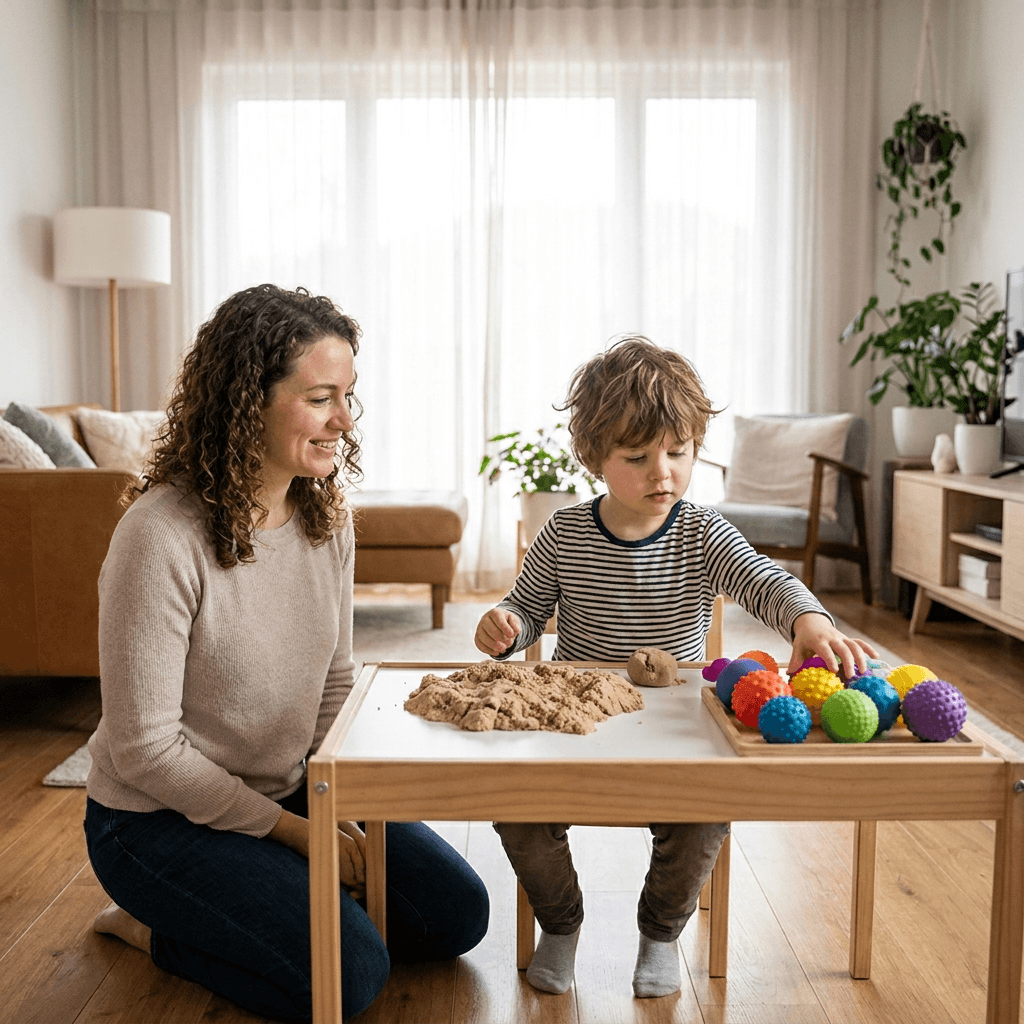
- Tactile input: Hands-on textures such as kinetic sand, water play, texture bins, clay, or even cooking activities engage the tactile system. Some children seek this input; others are highly sensitive to unexpected touch and need slow, predictable tactile experiences instead.
- Calming and organising strategies: Weighted lap pads or blankets, slow rocking, gentle compression through clothing or hugs, dim and warm lighting, and rhythmic activities such as humming or slow swinging. These are often used in wind-down routines before sleep or during transitions.
- Oral motor input: Chewing on appropriate chew tools, drinking through a straw, blowing bubbles, or eating crunchy foods can help some children regulate, particularly those who seek oral sensory input.
Why Personalisation Is Essential
A sensory diet is not a generic checklist you can download and apply. The same activity that calms one child can significantly dysregulate another. A child who is sensory-seeking in the proprioceptive system may respond beautifully to a session of heavy work before homework, while a child who is sensory-avoiding in the tactile system may find certain textures genuinely distressing rather than soothing.
A formal OT assessment maps your child's unique sensory profile across all the major sensory systems — identifying where they seek input, where they avoid it, and where their threshold sits. The OT then builds a schedule that fits realistically around your family's actual routine: school pick-up times, extracurricular activities, mealtimes, and the UAE climate (outdoor movement activities look very different in July versus January).
The diet is also a living document. As your child develops and their sensory needs shift, the activities are refined accordingly. Regular OT reviews are an important part of keeping the plan effective.
What to Expect in Practice
Once an OT has completed an assessment, you will typically receive a written sensory diet — a structured daily schedule specifying which activities to do, when, for how long, and in what order. Common examples might include:
- Ten minutes of heavy work (animal walks or carrying books) before the school run to support a regulated start
- A movement break mid-morning during home learning, such as jumping on a trampoline or bouncing on a therapy ball
- Tactile play after school as a transition from the stimulation of the school environment
- A calming proprioceptive and dim-light routine in the 30 minutes before bed
The OT will coach you and any other caregivers — including school staff, where appropriate — on how to implement each activity correctly and safely. Consistency across all the environments your child moves through is one of the key factors in how well a sensory diet works.
Families who apply a sensory diet consistently often describe noticing calmer transitions, fewer meltdowns, and greater readiness to engage with learning and social interaction. However, it is important to have realistic expectations: a sensory diet is a supportive strategy, not a cure, and it works best as part of a broader OT or multidisciplinary plan.
Safety and Practical Considerations
Most sensory diet activities are low-risk everyday movements and play. That said, a few points are worth keeping in mind:
- Certain vestibular activities — particularly fast spinning or inverted positions — can be powerful and should only be introduced under OT guidance, as they can occasionally trigger nausea or disorientation in sensitive children.
- Weighted items (blankets, lap pads, vests) should always be used according to the OT's specific recommendations regarding weight, duration, and monitoring. They are not appropriate for all children and should never be used unsupervised with very young children or those with certain medical conditions.
- If your child has any physical health conditions, always inform the OT before beginning any new physical activity programme.
- A sensory diet is not a substitute for medical assessment. If you have concerns about your child's development, consult a licensed paediatrician or developmental specialist in the first instance.
Getting Started in the UAE
In Dubai and across the UAE, occupational therapy services for children are available through DHA-licensed clinics and, increasingly, through at-home providers — which can be particularly valuable for children who find unfamiliar clinical environments difficult to navigate. xlr8well offers paediatric occupational and sensory therapy in the comfort of your own home, meaning the OT can observe your child in their actual daily environment and design a sensory diet that works within your real-world setting.
If you would like to learn more, explore our Occupational & Sensory Therapy service page, or speak to your child's paediatrician about whether an OT referral is appropriate.
Frequently Asked Questions
Is a sensory diet only for autistic children?
No. While sensory diets are widely used in autism support, any child who experiences difficulties with sensory regulation may benefit — including children with ADHD, anxiety, developmental coordination difficulties, or no formal diagnosis at all. An OT assessment will clarify whether a sensory diet is appropriate for your child's specific profile.
How quickly might we see results?
Families who apply a sensory diet consistently often begin to notice calmer transitions and fewer dysregulation episodes within two to four weeks. However, every child is different, and the OT will typically schedule review sessions to fine-tune activities based on what is actually working. Patience and consistency are both important parts of the process.
Do I need a diagnosis before seeing an OT?
Not necessarily. Occupational therapists can assess a child's sensory and functional needs without a prior diagnosis. If underlying developmental or medical conditions are suspected, the OT may recommend a parallel assessment from a paediatrician or specialist, but a referral or diagnosis is not always a prerequisite for starting OT support.
Can a sensory diet be used at school as well as at home?
Yes, and ideally it should be. Sensory needs do not pause when a child walks through the school gate. A good OT will work with you to communicate relevant strategies to teachers and learning support staff so that the approach is consistent across environments. This joined-up support is particularly important for children in UAE mainstream schools who may not have a dedicated support assistant.
Are there any activities in a sensory diet that are not safe to do unsupervised?
Most sensory diet activities are everyday play and movement that families can carry out independently once trained by an OT. However, certain vestibular activities (fast spinning, inverted positions) and the use of weighted items should always be introduced under professional guidance and used according to specific OT instructions. If you are ever uncertain about whether an activity is appropriate, contact your child's OT before proceeding.