%2520(350%2520x%2520150%2520px)%2520(90%2520x%252040%2520px)%2520(4).png%3Falt%3Dmedia%26token%3Dbed5580f-de12-4061-ac20-36c16b313f14&w=384&q=75)
The Myers' Cocktail, Decoded: What Is Actually in the Most Famous IV Drip
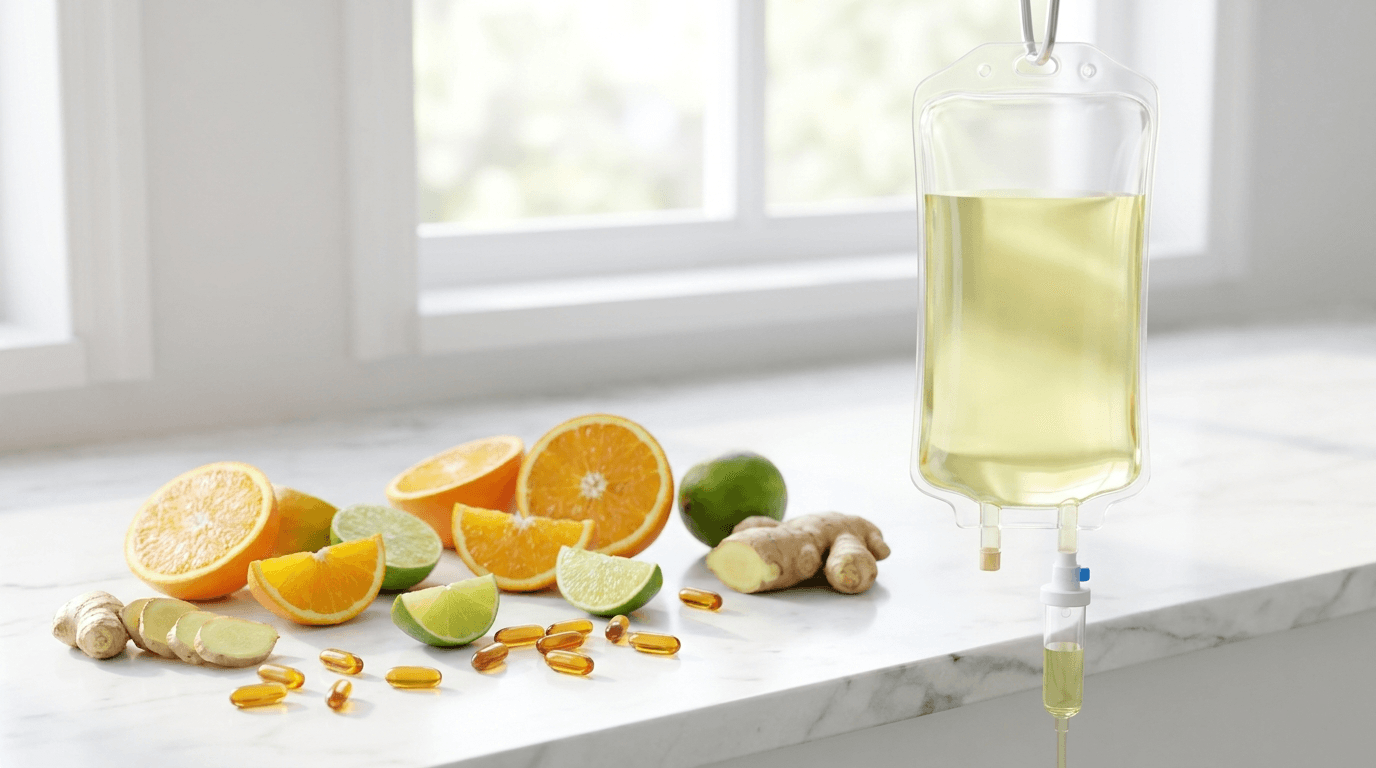
A 1960s recipe that refuses to retire
Dr John Myers, a Baltimore physician, began infusing a blend of vitamins and minerals in the 1960s for patients with fatigue, migraines and fibromyalgia. Sixty years later, the "Myers' Cocktail" remains the most requested IV formula in the world — because the ingredient list is sensible, not exotic. Understanding exactly what goes into the bag, why each component is there, and who is most likely to benefit is the best starting point before booking any IV therapy session.
What is in the bag — and why each ingredient matters
The Myers' Cocktail is not a single standardised product; practitioners adapt concentrations and volumes to individual needs. That said, the classic formula consistently includes the following components.
Magnesium
Magnesium is involved in more than 300 enzymatic reactions in the human body, touching everything from energy production and protein synthesis to muscle contraction and nerve signalling. It is also chronically under-consumed in modern diets — soil depletion, food processing, and high caffeine or alcohol intake can all reduce functional magnesium status. Delivered intravenously, magnesium bypasses the digestive tolerance ceiling that makes high-dose oral supplements uncomfortable, which is why it is often credited as the ingredient most responsible for the rapid sense of muscle ease and calm that many recipients describe.
In clinical settings, intravenous magnesium has a well-established history of use for acute migraine management, and its inclusion in the Myers' Cocktail reflects that same rationale.
B-complex vitamins (B1, B2, B3, B5, B6)
The B vitamins act as coenzymes — molecular tools that allow your cells to convert food into usable energy. B1 (thiamine) supports carbohydrate metabolism and nerve function; B2 (riboflavin) is essential to the body's antioxidant defences; B3 (niacin) plays a role in DNA repair and energy metabolism; B5 (pantothenic acid) is a precursor to coenzyme A, central to fat metabolism; and B6 (pyridoxine) is involved in over 100 enzyme reactions, including neurotransmitter synthesis. Together they form the metabolic backbone of the formula. Because B vitamins are water-soluble, the body does not store meaningful reserves, meaning even short periods of poor diet, high stress, or gastrointestinal illness can create a functional shortfall.
Vitamin B12
B12 deserves its own mention because its deficiency is widespread and its consequences significant — including fatigue, brain fog, and peripheral nerve symptoms. Absorption through the gut depends on a protein called intrinsic factor, production of which declines with age, certain medications (notably metformin and proton-pump inhibitors), and conditions such as atrophic gastritis. For those following plant-based diets, dietary B12 is essentially absent without supplementation. Intravenous or intramuscular delivery sidesteps the absorption variable entirely, making it particularly relevant for those who have not responded well to oral B12 supplementation.
Vitamin C
Oral vitamin C is tightly regulated by intestinal absorption; once a threshold is reached, the excess is excreted rather than absorbed. Intravenous administration can achieve significantly higher plasma concentrations than the oral route allows. At these higher concentrations, vitamin C functions as a meaningful antioxidant and plays a supporting role in collagen synthesis, immune cell function, and the absorption of non-haem iron. It is important to note that high-dose intravenous vitamin C is not a treatment for any disease, but many recipients report a subjective improvement in energy and resilience during and after periods of illness or heavy physical demand.
Calcium
Calcium completes the classic Myers' formulation. Beyond its familiar role in bone and dental health, calcium is essential for muscle contraction, nerve transmission, and blood clotting. Its inclusion at low therapeutic doses contributes to the formula's overall electrolyte balance and complements the action of magnesium, with which it works in a tightly regulated physiological partnership.
How the infusion actually works
The nutrients are dissolved in a sterile saline or lactated Ringer's solution and delivered directly into a vein — typically in the arm — via a small cannula. Because the digestive system is bypassed entirely, 100% of the administered dose enters circulation immediately. A standard Myers' Cocktail infusion generally takes between 30 and 60 minutes, depending on the volume and the individual's tolerance. Many recipients experience a sensation of warmth (from the magnesium) and a metallic or vitamin-like taste during the infusion — both normal and temporary responses.
A licensed nurse monitors the session throughout, adjusting the flow rate if any discomfort arises. The procedure is minimally invasive, but it is still a medical procedure: cannula insertion, sterility, and the correct preparation and dosage of the solution all require clinical training and pharmacy-grade materials.
Who is most likely to benefit
The Myers' Cocktail is not a treatment for any diagnosed medical condition, and it is not a substitute for addressing root causes such as poor sleep, chronic stress, or an inadequate diet. It may, however, act as a useful bridge in specific circumstances:
- Recovery from illness or jet lag — replenishing nutrients depleted by fever, reduced appetite, or long-haul travel
- Athletes in heavy training blocks — supporting recovery when dietary intake may not keep pace with physiological demand
- Periods of acute stress and poor eating — when B vitamin and magnesium turnover is elevated but intake is low
- Unexplained fatigue with normal bloodwork — when standard panels show nothing actionable but the "flat battery" feeling persists
- Migraine sufferers — particularly those with a known or suspected magnesium component to their episodes
- Those with compromised gut absorption — including people on medications that impair nutrient absorption or those with gastrointestinal conditions
If you have a chronic health condition, are pregnant, or are taking prescription medications, consult a licensed doctor before proceeding with any IV therapy.
Safety, limitations, and what to be realistic about
For the majority of healthy adults, a correctly prepared and administered Myers' Cocktail carries a low risk profile. Potential side effects can include bruising at the cannula site, a temporary drop in blood pressure (particularly with rapid magnesium delivery), nausea, or lightheadedness. Individuals with kidney disease, heart conditions, or certain metabolic disorders may not be suitable candidates, which is why a health screening conversation prior to treatment is standard practice.
It is equally important to be realistic about what a single or occasional infusion can and cannot do. The body cannot store most of these water-soluble vitamins for long; any benefit is not permanent. Sustained improvement in energy, mood, and physical performance ultimately requires sustained attention to nutrition, sleep, hydration, and lifestyle — the drip supports those efforts, it does not replace them.
Getting a Myers' Cocktail in Dubai and the UAE
IV therapy has grown considerably in popularity across Dubai and the broader UAE, reflecting both the international wellness culture of the region and the very real lifestyle factors — intense heat, long working hours, frequent travel, and dietary variety — that can affect nutrient status. Dubai Health Authority (DHA) regulations require that IV therapy be administered by licensed healthcare professionals, and that the formulas used are pharmacy-prepared to clinical standards.
xlr8well provides Myers' Cocktail infusions at home across Dubai, with every session carried out by a DHA-licensed nurse using pharmacy-grade preparations. There are no clinic waiting rooms, no upsells, and no need to travel when you are already feeling run down. Browse the full IV therapy menu, which includes the classic Myers' Cocktail alongside NAD+, glutathione, and specialist recovery blends — each formulated for a specific purpose and administered with the same standard of care.
Sixty years of enduring popularity has not kept the Myers' Cocktail relevant through marketing alone. It has persisted because the ingredients are grounded in basic nutritional science, the delivery method makes physiological sense, and — for the right person at the right time — it genuinely seems to help.