%2520(350%2520x%2520150%2520px)%2520(90%2520x%252040%2520px)%2520(4).png%3Falt%3Dmedia%26token%3Dbed5580f-de12-4061-ac20-36c16b313f14&w=384&q=75)
NAD+ IV Therapy: Hype or the Real Deal? A Clinical Look

The Molecule Behind the Buzz
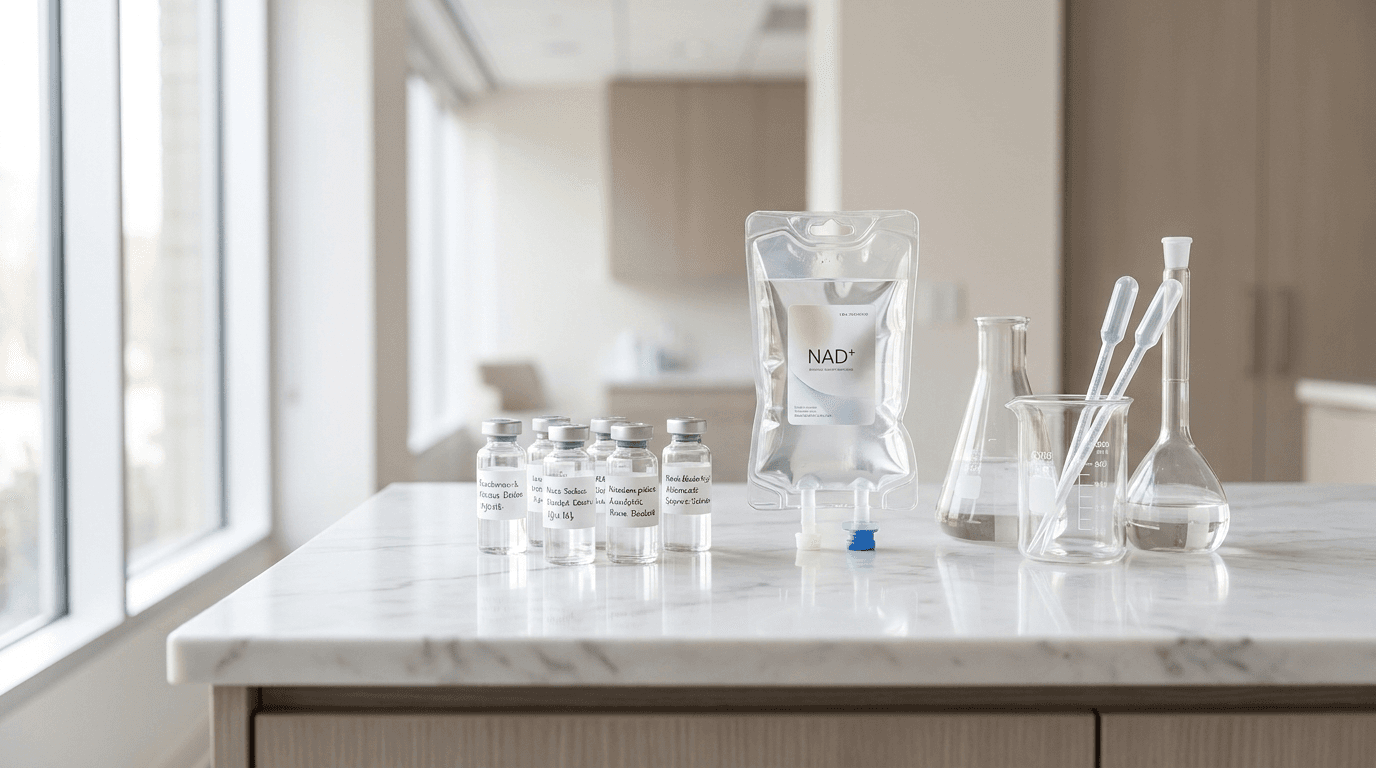
NAD+ (nicotinamide adenine dinucleotide) is not an influencer invention — it is a coenzyme present in every living cell, central to energy production, DNA repair, and the function of sirtuins, the proteins most studied in ageing research. Far from being a wellness trend, NAD+ has been a subject of serious scientific interest for decades. The clinically established fact: NAD+ levels decline significantly with age, falling considerably between young adulthood and middle age, a pattern observed consistently in human and animal research.
This decline matters because NAD+ sits at the crossroads of several fundamental biological processes. It acts as a critical electron carrier in the metabolic pathways that convert food into cellular energy (ATP), and it serves as a required substrate for enzymes — including sirtuins and PARPs — that govern DNA repair, stress responses, and cellular maintenance. In short, when NAD+ availability drops, many downstream processes that keep cells functioning well can become less efficient.
Why the IV Route? Understanding Bioavailability
Oral NAD+ precursors — most commonly nicotinamide riboside (NR) and nicotinamide mononucleotide (NMN) — have genuine supporting research. They survive digestion and are converted by the body into NAD+, and some people find them a convenient daily supplement. So why consider the intravenous route?
The honest argument is about delivery, not magic. Intravenous administration bypasses the digestive system entirely, meaning the coenzyme enters circulation directly at effectively 100% bioavailability. There is no reliance on individual variation in gut absorption, liver first-pass metabolism, or conversion efficiency. For people seeking a rapid, measurable increase in circulating NAD+, IV delivery offers a more direct and predictable pathway than oral supplementation. Whether that translates into meaningfully greater clinical benefit for any given individual is a question best explored with a healthcare professional who knows your health history.
Who May Benefit From NAD+ IV Therapy?
NAD+ IV therapy is not a treatment for any specific disease, and it should never replace medical care for diagnosed conditions. That said, there are several contexts in which clinicians and wellness practitioners commonly consider it as a supportive tool:
- Fatigue and energy management: Individuals experiencing persistent low energy — particularly those ruled out for underlying medical causes — may find NAD+ infusions supportive as part of a broader wellness plan.
- Cognitive performance and mental clarity: NAD+ plays a role in neuronal energy metabolism, and some users report improvements in focus and mental stamina, particularly when fatigued or jet-lagged.
- Athletic recovery: Active individuals and athletes may use NAD+ as part of recovery protocols following intense training blocks or competition, given its role in cellular energy replenishment.
- Longevity and healthy ageing protocols: Those taking a proactive, preventative approach to ageing may incorporate NAD+ infusions alongside other evidence-informed interventions.
- Post-illness recuperation: Following viral illness or a period of physical stress, some individuals and their doctors consider NAD+ as a supportive measure to aid recovery — though this should always be discussed with a licensed physician first.
If you have any pre-existing medical conditions, are pregnant or breastfeeding, or are taking medications, it is important to consult your doctor before proceeding with any IV therapy.
What People Actually Report
Patient-reported outcomes for NAD+ IV therapy are largely experiential rather than drawn from large randomised trials, and it is important to frame them honestly. The most consistently reported experiences include:
- Steadier, more sustained energy throughout the day — the most frequently noted benefit
- Sharper mental clarity, particularly in states of fatigue, sleep debt, or post-travel adjustment
- Improved sense of recovery after long-haul flights, illness, or demanding exercise blocks
- A general sense of improved wellbeing and motivation, which some attribute to the sirtuin-activating effects of elevated NAD+ levels
What responsible practitioners will not promise: reversed ageing, cured conditions, or guaranteed outcomes. NAD+ is one tool in a longevity and wellness protocol — potentially useful, and best combined with the well-established fundamentals of quality sleep, regular movement, balanced nutrition, and stress management. Think of it as supporting a foundation that already needs to be solid.
What to Expect During a Session
A standard NAD+ IV session is straightforward. A DHA-licensed nurse attends your location — home, hotel, or office — and administers the infusion through a small cannula, typically in the forearm. Because NAD+ can cause a transient sensation of warmth, chest tightness, or a "flushing" feeling if administered too quickly, it is dripped slowly, generally over 60 to 120 minutes, at a pace adjusted to your comfort. These sensations are normal and typically resolve when the infusion rate is reduced — the nurse will monitor you throughout.
Most structured protocols begin with a loading series of infusions — often two to four sessions over the first few weeks — followed by a monthly maintenance schedule. The rationale is to replenish depleted reserves first, then sustain elevated levels over time. Dosing (commonly 250mg or higher concentrations) is selected based on individual goals and any clinical guidance you have received.
Pairing NAD+ With Bloodwork: The Case for Measurement
One of the most sensible approaches to any wellness intervention is to track objective markers before and after. If you are investing in a NAD+ protocol, baseline bloodwork — looking at metabolic panels, inflammatory markers, and where relevant, cellular ageing markers — gives you something concrete to evaluate. It shifts the conversation from "how do I feel?" to "what is actually changing?" At xlr8well, we encourage pairing IV therapy with appropriate before-and-after laboratory testing for exactly this reason.
Safety, Limitations, and Honest Caveats
NAD+ IV therapy has a reasonable safety profile when administered correctly by trained, licensed practitioners. However, it is not appropriate for everyone, and a few points deserve emphasis:
- It is not a medical treatment: NAD+ IV therapy is a wellness intervention. It does not diagnose, treat, cure, or prevent any disease.
- Trained administration matters: IV therapy carries inherent risks — infection, phlebitis, and adverse reactions — which is why DHA-licensed clinical oversight is essential. Always verify the credentials of any provider.
- Individual responses vary: Some people notice significant subjective benefits; others notice less. There is no universal guarantee of outcome.
- Oral alternatives exist: For those unable or unwilling to have IV infusions, oral NR or NMN supplementation remains a reasonable alternative, discussed with a healthcare professional.
- Underlying conditions first: Persistent fatigue, cognitive difficulties, or poor recovery can have medical explanations. Always rule these out with your doctor before attributing them to NAD+ deficiency.
In an emergency, call 999. If you experience chest pain, breathing difficulties, or a severe allergic reaction during any IV therapy, the attending nurse will follow clinical protocols and emergency services should be contacted immediately.
NAD+ IV Therapy in Dubai: A Practical Note
Dubai's climate, pace of life, and the prevalence of long-haul travel create conditions in which cellular recovery and energy management are genuine concerns for many residents and visitors. The city's growing interest in longevity medicine and preventative health has made treatments like NAD+ IV therapy increasingly accessible — but quality and clinical oversight vary widely. At xlr8well, sessions are conducted by DHA-licensed nurses in the comfort of your home, removing the need to visit a clinic. You can explore our IV NAD+ 250mg option or browse the full IV therapy menu to find an approach that aligns with your goals.
Ultimately, NAD+ IV therapy sits in a genuinely interesting space: well-grounded in biochemistry, supported by a growing body of research, and reported positively by many who try it — while still awaiting the large-scale human trials that would give it a firmer evidence base. Approached with realistic expectations and proper clinical oversight, it can be a meaningful addition to a thoughtful wellness strategy.