%2520(350%2520x%2520150%2520px)%2520(90%2520x%252040%2520px)%2520(4).png%3Falt%3Dmedia%26token%3Dbed5580f-de12-4061-ac20-36c16b313f14&w=384&q=75)
Sensory Overload: Reading the Signs Before the Storm
What Is Sensory Overload — and Why Does It Matter?
Every moment of the day, the human brain is filtering an extraordinary amount of incoming information: sounds, lights, textures, smells, movement, temperature, and more. For many autistic children — and some adults — this filtering process works differently. Rather than unconsciously tuning out background noise or the scratchy label on a T-shirt, the nervous system may register every stimulus at full volume, so to speak, with little ability to dial it down.
Sensory overload occurs when the volume and intensity of incoming sensory information exceeds what the brain can comfortably process at that moment. Think of it less like a single switch being flipped and more like a cup filling steadily with water. The cup may look fine right up until it spills — and the spill, when it comes, can look dramatic and sudden even though it has been building for some time.
Understanding this process is not just useful — for parents and carers of autistic children, it can be genuinely life-changing. Spotting the early warning signs before the cup overflows is what turns a potential meltdown in a crowded Dubai mall into a quiet, dignified exit.
Why Certain Environments Fill the Cup Faster
Dubai is a vibrant, fast-paced city, and many of its most common family destinations are, from a sensory standpoint, extremely demanding:
- Shopping malls: Overlapping music from different stores, bright fluorescent or LED lighting, crowds, echoing footsteps, food smells, and the unpredictable movement of other shoppers all arrive simultaneously.
- Birthday parties and social gatherings: Heightened noise levels, unfamiliar people, unexpected physical contact (hugs from relatives), and breaks in routine can stack up quickly.
- School classrooms: Even a typical classroom involves chairs scraping, air conditioning hum, overlapping voices, visual displays on walls, and the physical sensation of sitting still for extended periods.
- Outdoor events and theme parks: Heat, sudden loud sounds (fireworks, announcements), crowds, and strong smells from food stalls create an intense multi-sensory environment.
None of these places are "wrong" — but awareness of their sensory demands helps parents anticipate and plan rather than react.
Building Your Child's Sensory Overload Map
Every child's sensory profile is unique. One child may be highly sensitive to sound but relatively unbothered by touch; another may struggle primarily with visual "busy-ness" or strong smells. Mapping your individual child's profile is one of the most practical things you can do as a parent.
Consider keeping a simple journal over a few weeks, noting:
- Which environments consistently seem to trigger difficulties
- Which specific senses appear most involved (sound, light, touch, smell, taste, movement, proprioception)
- How quickly signs appear after arriving in a challenging environment — some children have a longer window than others
- What time of day or week tends to bring a lower tolerance (tiredness, hunger, and illness all reduce the threshold)
Over time, patterns emerge. This map becomes your most reliable planning tool — far more useful than any general checklist — because it is built from your child's actual experience.
Early Warning Signs: Learning the Sequence Before the Storm
The single most important insight in sensory overload management is this: the warning signs appear well before the meltdown, and they are consistent. Most children display the same sequence of early signs each time, even if those signs vary widely between children.
Common early indicators can include:
- Covering or pressing on the ears, even when there is no obviously loud noise
- Pulling at clothing, particularly around the neck or cuffs
- Seeking physical pressure — pressing into walls, furniture, or a caregiver's body
- Becoming quieter and more withdrawn, or conversely, beginning to move more rapidly (running, jumping, spinning)
- Increased stimming behaviours that differ slightly from the child's baseline — a sign the nervous system is self-regulating
- Irritability, short responses, or difficulty following instructions that would normally be easy
- Glazed or averted eye contact, or a fixed stare
- Complaints of physical discomfort — headache, stomach ache, or a vague sense of feeling unwell
These signs are the nervous system's early communication. The goal is not to eliminate them — they are useful signals — but to respond to them before the system tips into full overload. Catching sign two or three in your child's personal sequence, rather than waiting for the final stage, is what makes the difference.
The Exit-or-Shield Toolkit
Once you have recognised the early signs, having a ready plan matters. There are broadly two options: exit the environment, or reduce the sensory load within it.
Exiting
A pre-agreed quiet signal — such as your child touching their ear, showing a card, or using a simple phrase — means "I need out, now." Practise this signal at home in calm moments so it becomes automatic. Using it early, before distress peaks, preserves everyone's dignity and makes the next outing more likely to succeed. A pre-agreed exit route (knowing where the quiet corner of the mall is, or which exit is least crowded) removes decision-making in the moment.
Shielding within the environment
Sometimes a full exit is not immediately possible, or the goal is to gradually extend tolerance. Useful tools include:
- Noise-cancelling or ear-defender headphones: These can significantly reduce auditory input without requiring the child to leave.
- Tinted or wraparound sunglasses: Useful indoors for children particularly sensitive to bright or flickering light.
- Chewable jewellery or oral sensory tools: Provide proprioceptive input that many children find regulating.
- A "quiet corner pass": Arranged in advance with a school or venue, this gives the child explicit permission to access a lower-stimulation space without needing to explain or justify it in the moment.
- Weighted items: A lap pad or weighted vest may help some children feel grounded — discuss with an occupational therapist whether this is appropriate for your child.
Recovery: Why "Nearly Calm" Is Not Calm Enough
A point that many parents discover through trial and error: a child who appears to have recovered from a period of high sensory load may still be operating closer to their threshold than usual. The nervous system may need significantly more time — sometimes hours — to genuinely return to baseline. Re-entering a busy environment too soon, or piling on further demands (homework, social interaction, transitions), can tip a partially-recovered child back into overload very quickly.
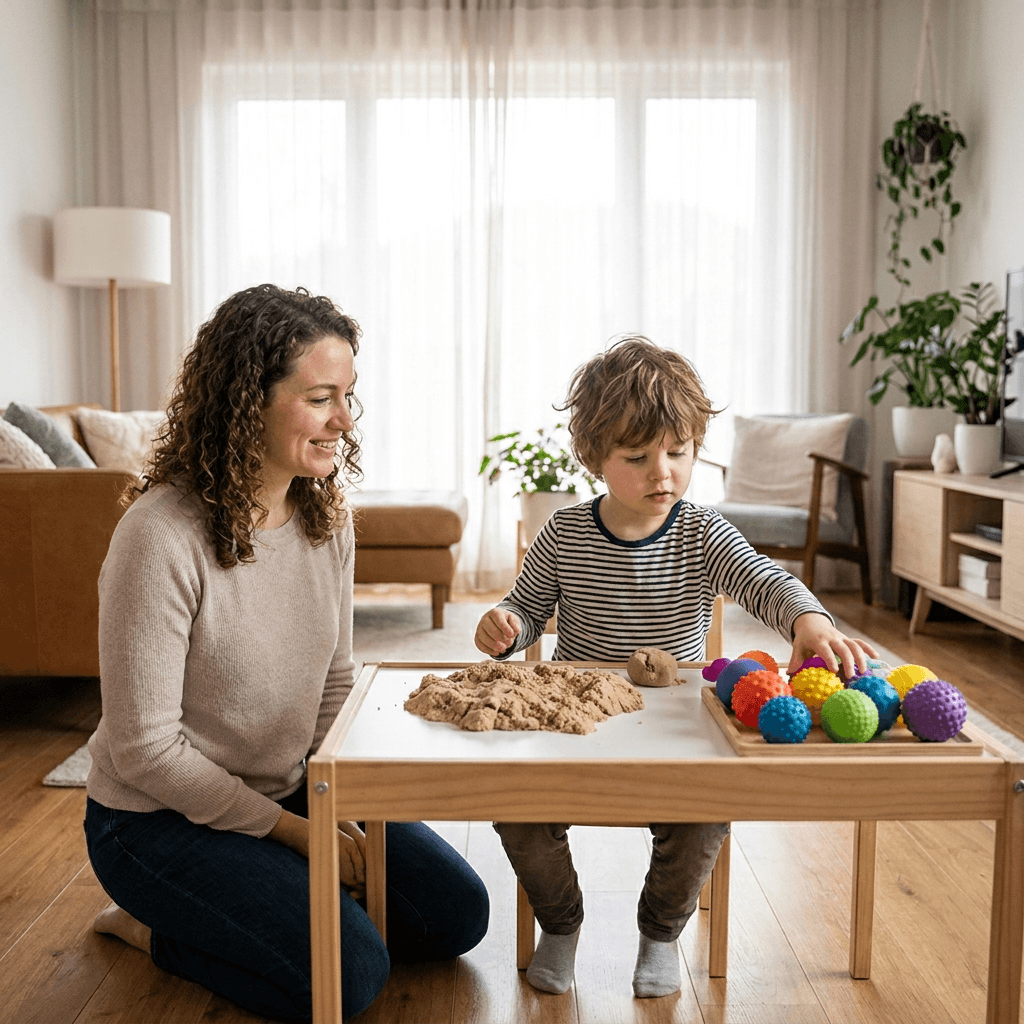
Genuine recovery typically involves real quiet — not a different stimulating activity, but low-demand, low-sensory time. For some children this means solitary play, lying in a dim room, or simply sitting with a trusted caregiver without expectation. Resist the urge to "fill the gap" with engagement.
When to Seek Professional Support
Sensory differences are a core part of many autistic children's experience, and they are highly manageable with the right strategies. However, if sensory overload is significantly limiting your child's ability to participate in daily life, affecting sleep, eating, school attendance, or family wellbeing, professional input can make a substantial difference.
Occupational therapists with experience in sensory processing can conduct a detailed assessment and build a personalised sensory diet — a structured plan of sensory activities designed to help regulate the nervous system across the day. Speech and language therapists may help with the communication strategies around signalling needs. Applied behaviour analysis (ABA) can support the development of coping strategies and gradual exposure in a structured way.
A formal autism diagnosis is not required before beginning support. Many families find it helpful to start therapy while an assessment is still in progress, so that practical strategies are already in place.
The xlr8well team provides speech therapy, ABA, occupational therapy, and physical therapy at home across Dubai — removing the additional challenge of navigating a clinic environment — as well as at Bloom Autism Center (Office 702, Yes Business Tower, Al Barsha 1, Dubai). Every journey begins with a free, no-obligation consultation via WhatsApp. You can explore the full range of autism therapy services to understand what may be most relevant for your child.
This article is general information for parents and carers, and is not a diagnosis or a substitute for professional assessment of your child. If your child is in acute distress or you have concerns about their immediate safety, contact emergency services on 999.