%2520(350%2520x%2520150%2520px)%2520(90%2520x%252040%2520px)%2520(4).png%3Falt%3Dmedia%26token%3Dbed5580f-de12-4061-ac20-36c16b313f14&w=384&q=75)
Speech Delay: When to Wait, When to Act (Milestones by Age)

Understanding Speech Delay in Young Children
Every parent waits eagerly for their child's first word. When it arrives later than expected — or not at all — it is natural to feel uncertain about whether to act or simply give it more time. The honest answer is that both responses can be right, depending on the pattern. This guide walks through what typical speech and language development looks like, which signs genuinely warrant professional attention, and why early assessment is nearly always the right first step when you are unsure.
Speech delay and language delay are related but distinct. Speech refers to the physical production of sounds and words. Language refers to the broader ability to understand and express meaning — through words, gestures, facial expressions, and eventually sentences. A child can have difficulties in one area without the other, which is why a proper assessment looks at both.
Speech and Language Milestones by Age
Milestones are population averages, not strict deadlines. Children develop at slightly different rates, and individual variation is normal. That said, milestones exist for good reason: they represent the window within which most children acquire a skill, and missing several in sequence is a reliable signal that something may need support.
By 12 Months
- Babbling with varied sounds and natural intonation (rising and falling pitch)
- Consistently responding to their own name
- Using gestures such as waving, pointing, or reaching to communicate
- Showing joint attention — looking at an object and then back at you to share interest
By 18 Months
- Using 10–20 meaningful words (not just imitation, but words used purposefully)
- Pointing to request something and also to share excitement ("look at that!")
- Following simple one-step instructions ("give me the ball")
- Showing a clear preference to communicate, even imperfectly
By 24 Months
- A vocabulary of 50 or more words
- Beginning to combine two words spontaneously ("more juice", "daddy go", "big dog")
- Understanding simple questions and following two-step instructions
- Pointing to pictures in a book when named
By 36 Months
- Using short sentences of three or more words
- Speech that is understandable to a familiar adult most of the time, and to strangers roughly half the time
- Asking simple questions ("Where mummy?", "What is that?")
- Engaging in basic back-and-forth conversation
Which Signs Should Prompt Action — Not Waiting
Missing a single milestone is common and not always cause for alarm. However, the following patterns are generally considered reasons to seek a professional assessment without delay:
- No babbling by 12 months — especially in combination with limited eye contact or not responding to their name
- No words at all by 16 months
- No two-word phrases by 24 months
- Loss of previously acquired words or skills at any age — this is sometimes called regression and is particularly important to raise with a doctor promptly
- Not responding to their name consistently, even in a quiet room
- Very limited pointing or gesturing by 12–14 months
- A general sense that your child is not engaging with communication in the way their peers are
Some of these signs may also be associated with autism spectrum disorder (ASD), hearing difficulties, or other developmental conditions. None of them — individually — confirm a diagnosis. What they do confirm is that a structured assessment will give you much more useful information than waiting will.
The "Wait and See" Trap
It is true that many late talkers — children who are otherwise developing typically but have a smaller vocabulary than expected — do catch up without formal intervention. Research does support this for a subset of children. The difficulty is that parents and even some well-meaning family members cannot easily distinguish a child who will catch up naturally from one who will benefit significantly from early support. A speech-language pathologist can make that distinction far more reliably after a structured assessment.
The critical point about timing is this: the early years represent a window of neurological plasticity during which language learning is most efficient. Children who receive speech and language therapy in the toddler and preschool years tend to make faster progress than those who begin the same therapy later. Acting early when there is genuine concern is not an overreaction — it is the approach most supported by clinical experience.
Bilingualism and Speech Delay: Separating Myth from Reality
In the UAE, it is extremely common for children to grow up exposed to two or more languages simultaneously — Arabic and English, for instance, or a home language and the language of schooling. A persistent myth is that bilingual exposure causes speech delay. This is not supported by the evidence. Bilingual children may initially appear to have smaller vocabularies in each individual language, but when you count words across both languages together, their total vocabulary typically tracks expected milestones. If you are worried, count all the words your child uses regardless of which language — and share that count with their speech-language pathologist.
If a bilingual child is genuinely delayed, the delay will typically be visible in both languages, not just one. Bilingualism itself is not a cause for concern; persistent delay across both languages is.
The Connection with Autism Spectrum Disorder
Speech and language delay is one of the most common early signs that prompts parents and paediatricians to consider whether a child may be autistic. It is important to understand that not all children with autism have speech delay, and not all children with speech delay are autistic. However, certain patterns — including loss of words that were previously present, limited joint attention, very restricted use of gesture, and difficulty with back-and-forth social interaction — are associated with ASD and warrant a thorough developmental assessment.
If autism is a concern, a speech-language assessment is usually one part of a broader multi-disciplinary evaluation. Your paediatrician or a developmental specialist can guide you through the appropriate pathway. Early identification, when relevant, opens the door to targeted support that can make a meaningful difference during the most responsive years of development.
What a Speech and Language Assessment Involves
Many parents are unsure what to expect from an assessment and worry it will be stressful for their child. In practice, assessments for young children are designed to be child-led and low-pressure. A qualified speech-language pathologist will typically:
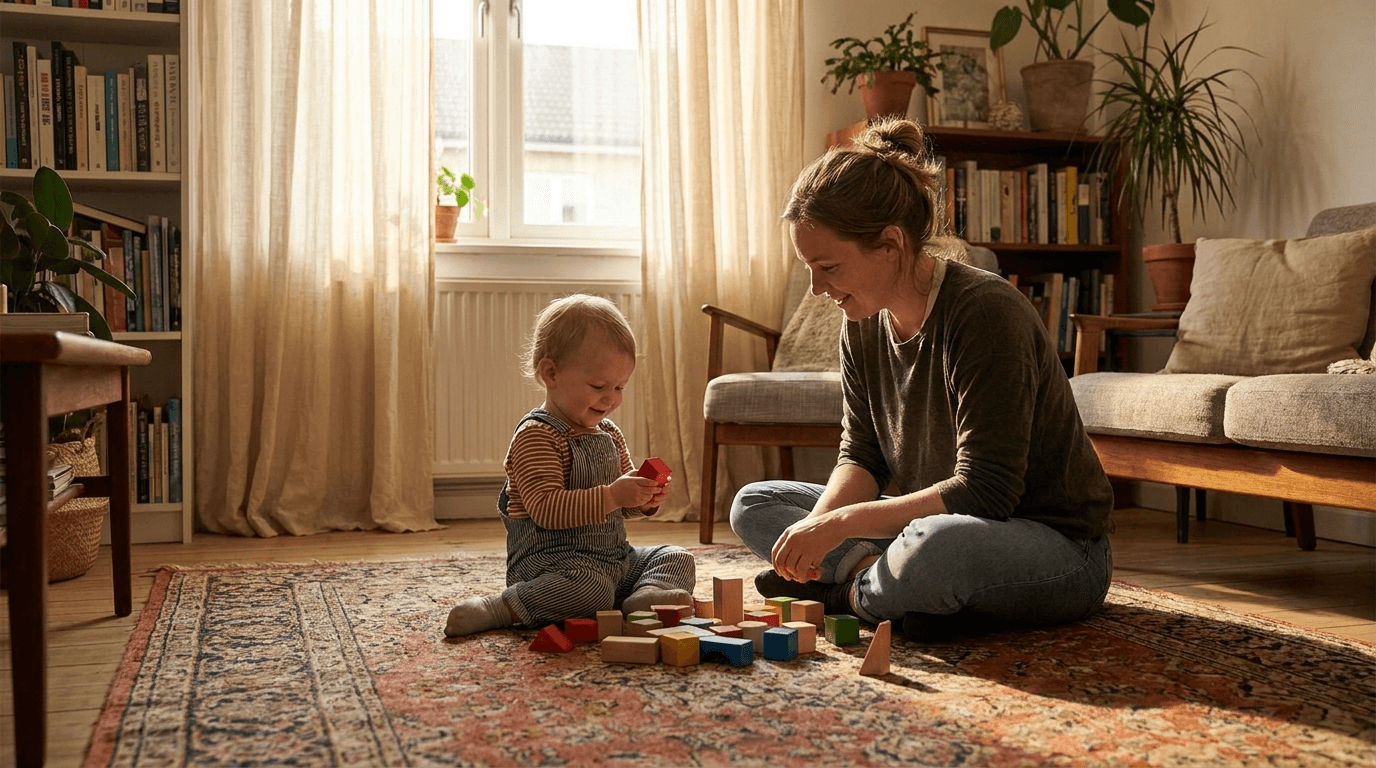
- Observe your child during natural play, following their lead rather than directing them
- Use structured tasks to measure both expressive language (what your child says) and receptive language (what they understand)
- Assess the clarity of speech sounds and how effectively your child communicates overall
- Take a detailed history from you about your child's development, environment, and any concerns
At the end of the assessment, you should leave with a clear picture of your child's current abilities relative to expectations for their age, as well as specific goals and a recommended plan if therapy is indicated. There should be no ambiguity about what was found or what the next steps are.
xlr8well offers speech and language therapy at home in Dubai and across the UAE, meaning assessments and sessions can take place in your child's natural environment — where they are most relaxed and where their true communication abilities are easiest to observe. You can explore speech and language therapy at home to learn more.
A Practical Note for Parents in Dubai and the UAE
If you have genuine concerns about your child's speech or language development, the most productive first step is to raise them with your paediatrician or a speech-language pathologist directly. You do not need to wait until the next routine check-up. In parallel, keep a simple diary of the words your child uses across all languages, note the contexts in which they communicate most freely, and observe how they interact with other children and familiar adults. This information is genuinely useful to a clinician and takes only a few minutes a day to gather.
Trust your instincts. Parents are often the first to notice that something feels different, and professional assessors take parental concern seriously. Acting on a concern that turns out to be nothing is far less costly than waiting through a window when meaningful support could have been provided.