%2520(350%2520x%2520150%2520px)%2520(90%2520x%252040%2520px)%2520(4).png%3Falt%3Dmedia%26token%3Dbed5580f-de12-4061-ac20-36c16b313f14&w=384&q=75)
4 Years Milestones: What to Expect, Red Flags & How to Help

TL;DR: At 4 years, most children tell simple stories, use words like "because", and play cooperatively with roles and rules. Red flags such as an inability to retell a simple event deserve a professional conversation — early support changes trajectories, and waiting rarely does.
Why the Fourth Year Is a Developmental Leap
The year between a child's third and fourth birthday is often described by developmental paediatricians as a period of rapid integration. Language, social awareness, physical coordination, and early reasoning all begin to work together in new ways. A four-year-old is no longer simply imitating the world around them — they are starting to interpret it, explain it, and share it with others.
Understanding what is typical at this age helps parents and caregivers notice genuine strengths, spot areas that may benefit from extra support, and — crucially — avoid unnecessary anxiety about the enormous natural variation in child development. This guide walks through the key domains, explains what the research community broadly considers within the typical range, and outlines the signs that warrant a conversation with a healthcare professional.
What Most Children Do at 4 Years
Developmental milestones are best understood as a broad window, not a precise deadline. The following are skills that many children demonstrate somewhere around their fourth birthday, often within a range of several months either side.
Language and Communication
- Tells simple stories with a beginning, middle, and end
- Uses connecting words such as "because", "so", and "but" to explain ideas
- Speaks in sentences of four to six words or more
- Can be understood by most adults outside the family, even if some sounds are still developing
- Asks many "why" questions and expects real answers
Language at this age is not just vocabulary — it is the ability to sequence, reason, and communicate intention. A child who has a large vocabulary but struggles to connect ideas into a narrative may still benefit from a speech and language check.
Social and Emotional Development
- Plays cooperatively with peers, including negotiating roles and following shared rules
- Shows interest in pleasing friends and may have a "best friend"
- Distinguishes fantasy from reality, though the line can still be blurry
- Expresses a wide range of emotions and is beginning to manage them with adult support
- May show early signs of empathy — noticing when others are upset
Physical and Motor Development
- Hops on one foot and can balance briefly on each foot
- Throws a ball overhand with reasonable aim
- Draws a person with two to four recognisable body parts
- Uses scissors, holds a crayon or pencil with a functional grip
- Manages buttons and zips mostly independently
- Is largely independent with toileting, though accidents still happen
Cognitive and Early Academic Skills
- Understands the concepts of "same" and "different"
- Can count five or more objects correctly
- Follows two- to three-step instructions given in sequence
- Recognises some letters, especially those in their own name
- Sorts objects by colour, shape, and size
Every child develops on their own curve. A single skill arriving slightly later than the window above is usually not cause for concern. It is patterns across multiple domains — or clear regression — that carry the most meaning.
Red Flags Worth Acting On
The following signs, if persistent, suggest it is worth discussing your child's development with a qualified professional. They are not a diagnosis, and no single item here means something is definitively wrong — but they are signals worth taking seriously rather than dismissing.
- Cannot retell a simple, familiar event (such as what happened at a birthday party or at breakfast)
- Consistently ignores other children or shows little interest in peer interaction
- Cannot follow two- to three-step instructions in familiar settings
- Frequent, intense meltdowns that go well beyond what is typical for toddler-age emotional regulation
- Speech that is very difficult to understand, even for familiar adults
- Avoids eye contact consistently across different settings
- Marked difficulty with transitions or insistence on rigid routines that interfere with daily life
One flag is a conversation, not a conclusion. However, any loss of previously mastered skills — speech, motor abilities, social engagement — at any age always warrants prompt professional assessment, without waiting.
Understanding the "Wait and See" Dilemma
Many parents in the UAE — as everywhere — are advised informally to "wait and see" when they raise early concerns. While it is true that development is not a race and individual variation is real, research broadly supports earlier identification and intervention over prolonged watchful waiting when specific red flags are present.
The brain's capacity for change (neuroplasticity) is generally greatest in the early years. Therapy and support delivered during this window may have a different impact than the same input provided years later. This is not to create alarm — it is simply a reason not to delay a conversation if your instincts are telling you something.
A developmental assessment does not label a child. It maps current skills and identifies where targeted support could help. No diagnosis is required to begin speech therapy, occupational therapy, or other forms of early intervention.
How to Support Development at Home
While professional input is valuable where needed, there is a great deal parents can do in everyday life to support a four-year-old's development.
For Language and Communication
- Ask open-ended questions about stories, outings, and events ("What happened next? Why do you think she did that?")
- Read together daily — books with narrative structure help children practise story sequencing
- Avoid finishing sentences for your child; give them time to find their words
For Social Skills
- Arrange regular, small-group playdates rather than relying solely on large class settings
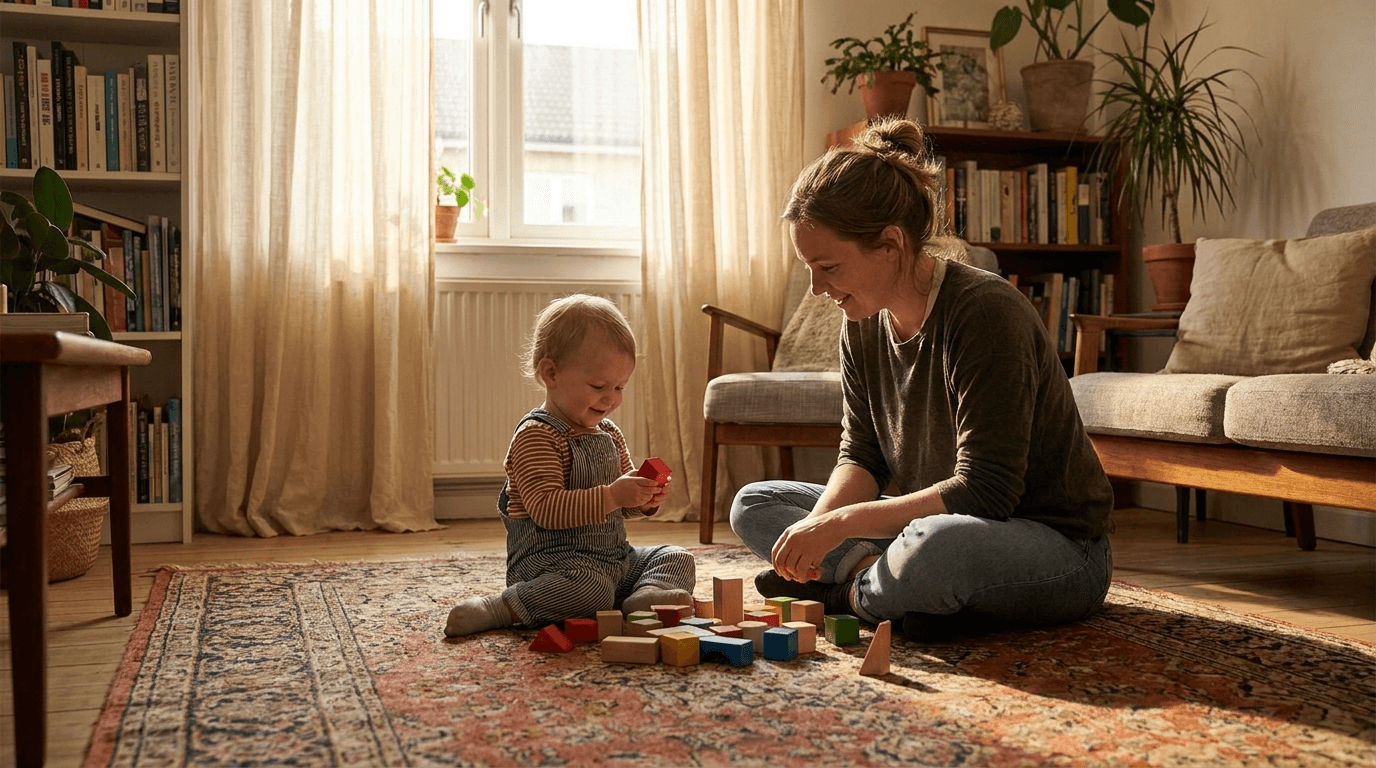
- Play cooperative pretend games together at home — sharing roles in a single storyline is the key social milestone of this year
- Name emotions explicitly: "You look frustrated. I wonder if it's because the blocks fell down."
For Physical Development
- Provide daily opportunities for outdoor play, climbing, and running — this supports both gross motor skills and emotional regulation
- Offer fine motor activities such as playdough, threading, and drawing to support pencil grip and hand strength
A Practical Tip for This Week
Watch your child at the playground or in a group setting. Are they entering a shared game — one where another child assigns a role and your child accepts it, or vice versa? This kind of cooperative pretend play is a meaningful marker at four years. If it is absent or very limited, it is worth noting.
A Note on Dubai and the UAE Context
Families in Dubai often navigate development in multilingual, multicultural households — which adds a genuinely enriching dimension but can sometimes make milestone tracking less straightforward. Bilingual children, for instance, may mix languages or reach certain language milestones at a slightly different pace than monolingual peers; this is typically not a concern in itself, but the overall communication picture should still be developing. If you have questions specific to your child's language environment, a bilingual speech and language therapist can offer more tailored guidance.
Access to developmental support in the UAE has improved significantly. DHA-regulated therapy providers operate across Dubai, and home-based services are increasingly available — removing some of the logistical barriers that previously caused families to delay assessment.
Getting Support in Dubai
If you have concerns about your child's development, the most important step is to start a conversation with someone qualified to help. xlr8well delivers speech therapy, ABA therapy, occupational therapy, and physical therapy at your home anywhere in Dubai, as well as at Bloom Autism Center (Office 702, Yes Business Tower, Al Barsha 1, Dubai). Every journey begins with a free, judgement-free consultation — and a formal diagnosis is never required to get started. You can reach the team directly on WhatsApp. Explore our autism therapy services to learn more.
This article is general educational information for parents and caregivers. It is not a substitute for professional assessment of your individual child. If you have concerns about your child's development, please consult a qualified healthcare professional.