%2520(350%2520x%2520150%2520px)%2520(90%2520x%252040%2520px)%2520(4).png%3Falt%3Dmedia%26token%3Dbed5580f-de12-4061-ac20-36c16b313f14&w=384&q=75)
Social Development by Age Milestones: What to Expect, Red Flags & How to Help
Understanding Social Development by Age: Milestones, Red Flags & How to Help
Social development is one of the most meaningful — and most overlooked — areas of childhood growth. While first steps and first words tend to steal the spotlight, the quieter milestones of eye contact, shared laughter, and cooperative play are among the earliest and most clinically significant signals of how a child's brain is wiring itself for connection. This guide walks through what most children do at each stage, which signs are worth acting on, and what families in Dubai can do to get the right support early.
Why Social Milestones Matter So Much
Social development is not simply about friendships. It underpins language acquisition, emotional regulation, academic readiness, and long-term wellbeing. A child who learns to share attention at 12 months is building the scaffolding for two-way conversation, empathy, and collaboration — all skills that compound over years. This is why developmental paediatricians and therapists place such weight on early social indicators: they are windows into how the brain is processing and responding to the social world.
It is also why the phrase "wait and see" can carry real cost. The brain is at its most plastic — most adaptable to learning and rewiring — in the first three years of life. Early support, when it is needed, is genuinely more effective than later support. This does not mean every variation from a milestone chart is cause for alarm, but it does mean that patterns of concern deserve a prompt, professional conversation rather than a prolonged period of observation.
Social Development Milestones by Age
Every child develops on their own curve, and a single skill arriving a little later than average is usually not meaningful on its own. What matters clinically is a pattern across areas, and whether there is overall forward momentum. With that in mind, here is what most children typically show at each stage:
Birth to 6 Months
- Gazing at faces and making eye contact from birth
- Social smiling in response to a caregiver's smile (usually by 6–8 weeks)
- Shared laughter and vocalisations — back-and-forth "conversations" of sounds
- Calming or brightening in response to a familiar voice
6 to 12 Months
- Reaching arms up to be held — deliberately seeking connection
- Stranger anxiety emerging, which is a sign of healthy attachment to caregivers
- Social referencing — looking to a caregiver's face to gauge whether something is safe or exciting
- Joint attention beginning: following a caregiver's gaze or pointing gesture to look at the same thing
12 to 18 Months
- Joint attention consolidating — by 12 months most children will follow a pointed finger; by 14–15 months they typically point themselves to share interest
- Showing objects to others simply to share enjoyment, not just to request something
- Waving bye-bye and other simple social gestures
- Showing affection spontaneously, such as hugging a familiar adult
18 Months to 2 Years
- Imitating adults and older children in play
- Parallel play — playing contentedly alongside (rather than with) other children
- Noticing when other children are upset, and sometimes attempting comfort
- Beginning to understand simple social rules, such as taking turns in a simple game
2 to 3 Years
- Simple cooperative play emerging — doing something together toward a shared goal
- Showing strong preferences for familiar playmates
- Beginning imaginative or pretend play (feeding a doll, pretending to cook)
- Managing frustration imperfectly but increasingly — tantrums are normal; rapid escalation without any self-regulation emerging less so
3 to 5 Years
- Genuine friendships forming, with named preferred friends
- Complex role play and collaborative storytelling with peers
- Negotiating, compromising, and beginning to understand another person's perspective
- Following and caring about the rules of group games
- Increasing comfort in group settings such as nursery or kindergarten
Red Flags Worth Acting On
The following are patterns that developmental professionals consider significant. None of these, on their own, is a diagnosis — they are signals that a skilled assessment would be valuable. One flag is a conversation starter, not a conclusion.
- Missing joint attention by 12–15 months: Not following a point, not pointing to share interest, not looking back at a caregiver when something interesting happens.
- No interest in other children by age 3: Some shyness is normal; consistent disregard for peers is different.
- Interaction only on rigid, self-directed terms: Withdrawing or becoming significantly distressed when social play does not follow a specific script.
- No imaginative or pretend play emerging by age 3.
- Significant difficulty understanding facial expressions or social cues beyond what is typical for their age.
- Loss of any previously mastered social skill, at any age: This always warrants prompt professional assessment, without waiting.
What You Can Do at Home
Caregiver interaction is the primary engine of early social development — no programme or therapy replaces the hours of day-to-day connection a child has with the people who love them. Some approaches that research and clinical practice support include:
- Follow the child's lead in play: Join what they are already doing rather than redirecting. This builds the experience of being understood and responded to.
- Narrate shared attention: When your child looks at something, name it and comment — "Oh, a cat! You spotted the cat." This reinforces the reward of sharing interest.
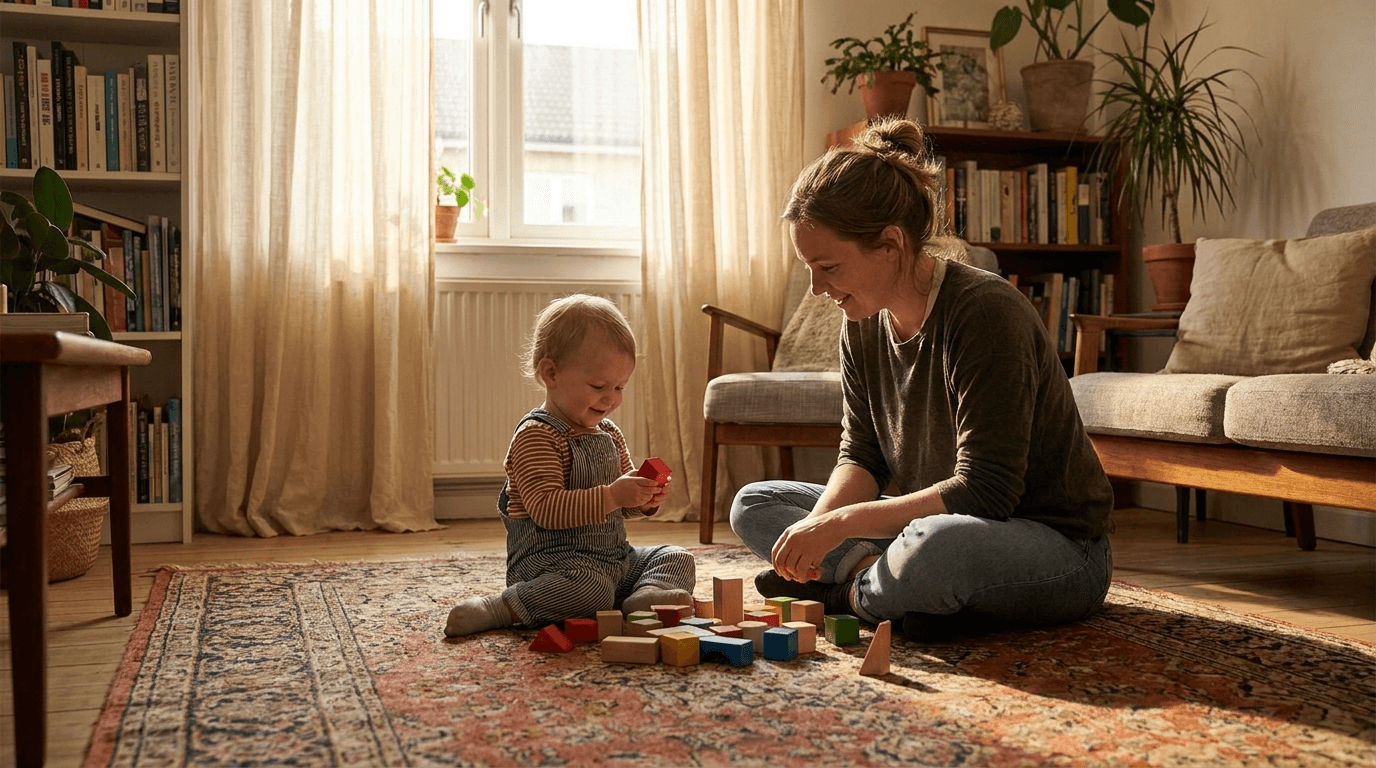
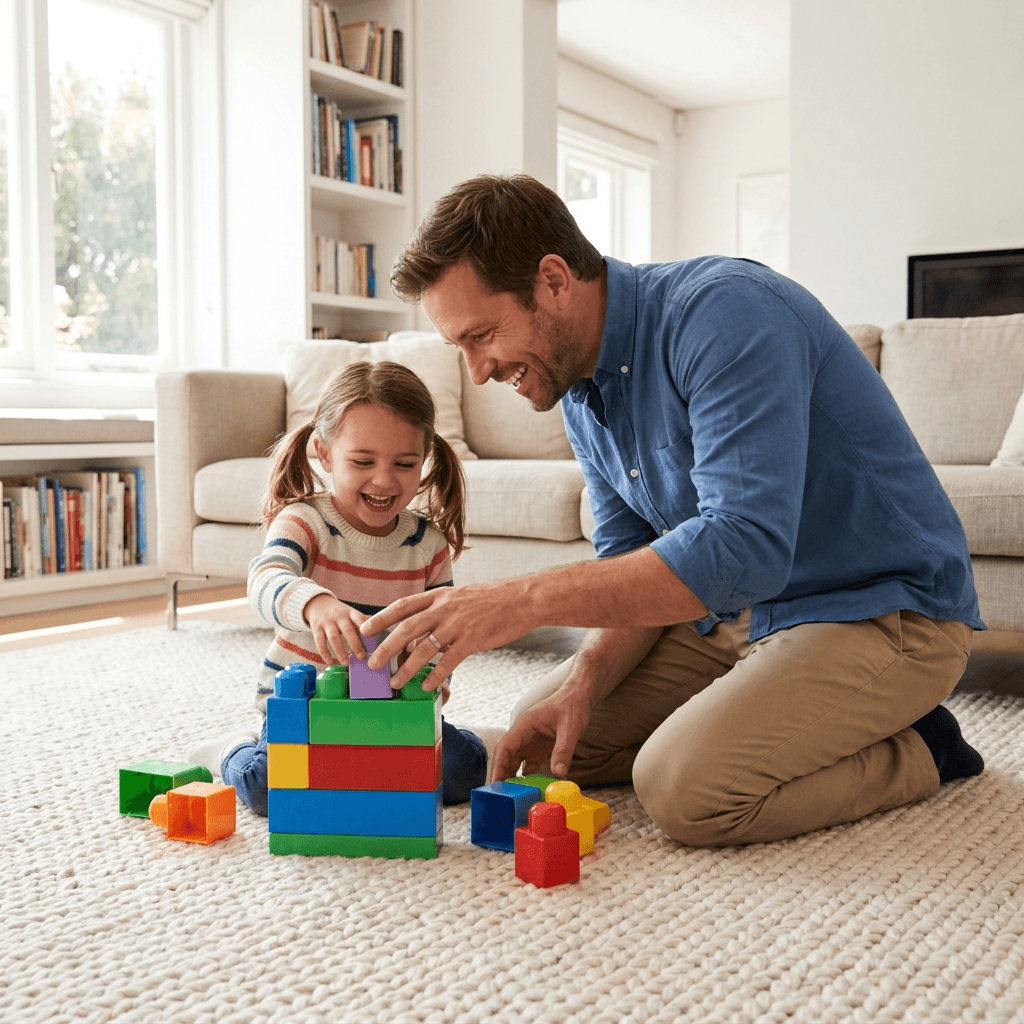
- Create natural turn-taking moments: Simple back-and-forth games — rolling a ball, taking turns stacking blocks — lay the groundwork for conversational reciprocity.
- Read together face-to-face: Books with expressive characters give children language for emotions and a safe space to talk about how people feel.
- Limit pressure around social situations: Forced sharing or scripted greetings can increase anxiety. Modelling warm interaction is more effective than drilling it.
If you have concerns, these strategies are helpful regardless — and they do not replace an assessment if one is warranted.
When to Seek Professional Support
If a red flag persists for more than a few weeks of attentive observation, booking a professional assessment is the right next step. The purpose of a developmental assessment is not to label a child; it is to map their current skills and needs so that any support can be precisely targeted. No diagnosis is required to begin speech therapy, occupational therapy, or behavioural support — a therapist will meet your child where they are.
In Dubai, families sometimes feel uncertain about where to start or worry that seeking help carries stigma. It is worth knowing that early intervention services are well established here, that assessments are available in both Arabic and English, and that the vast majority of children who receive timely support make meaningful progress.
Getting Support in Dubai
The xlr8well team delivers speech therapy, ABA therapy, occupational therapy, and physical therapy at your home anywhere in Dubai — removing the logistical burden that often causes families to delay. Services are also available at Bloom Autism Center (Office 702, Yes Business Tower, Al Barsha 1, Dubai). Every journey starts with a free, judgement-free consultation on WhatsApp, and a diagnosis is never required to begin. You can explore the full range of autism therapy services to understand what each discipline involves.
This article is general information for parents and caregivers. It is not a diagnosis and is not a substitute for a professional assessment of your individual child. If you are concerned about your child's development, please speak with a licensed healthcare professional.