%2520(350%2520x%2520150%2520px)%2520(90%2520x%252040%2520px)%2520(4).png%3Falt%3Dmedia%26token%3Dbed5580f-de12-4061-ac20-36c16b313f14&w=384&q=75)
At-Home Vitamin D Injection in Dubai: Price, What's Included & How to Book at Home (2026)
What Is a Vitamin D Injection — and Why Might You Need One?
Vitamin D is a fat-soluble nutrient that plays a central role in bone health, immune function, muscle strength, and mood regulation. Unlike most vitamins, your body can produce it when skin is exposed to sunlight — but in practice, many people in the UAE fall short of optimal levels. Long hours spent indoors in air-conditioned offices and homes, the use of high-SPF sunscreen, and cultural dress practices that limit sun exposure all contribute to widespread vitamin D insufficiency across the region.
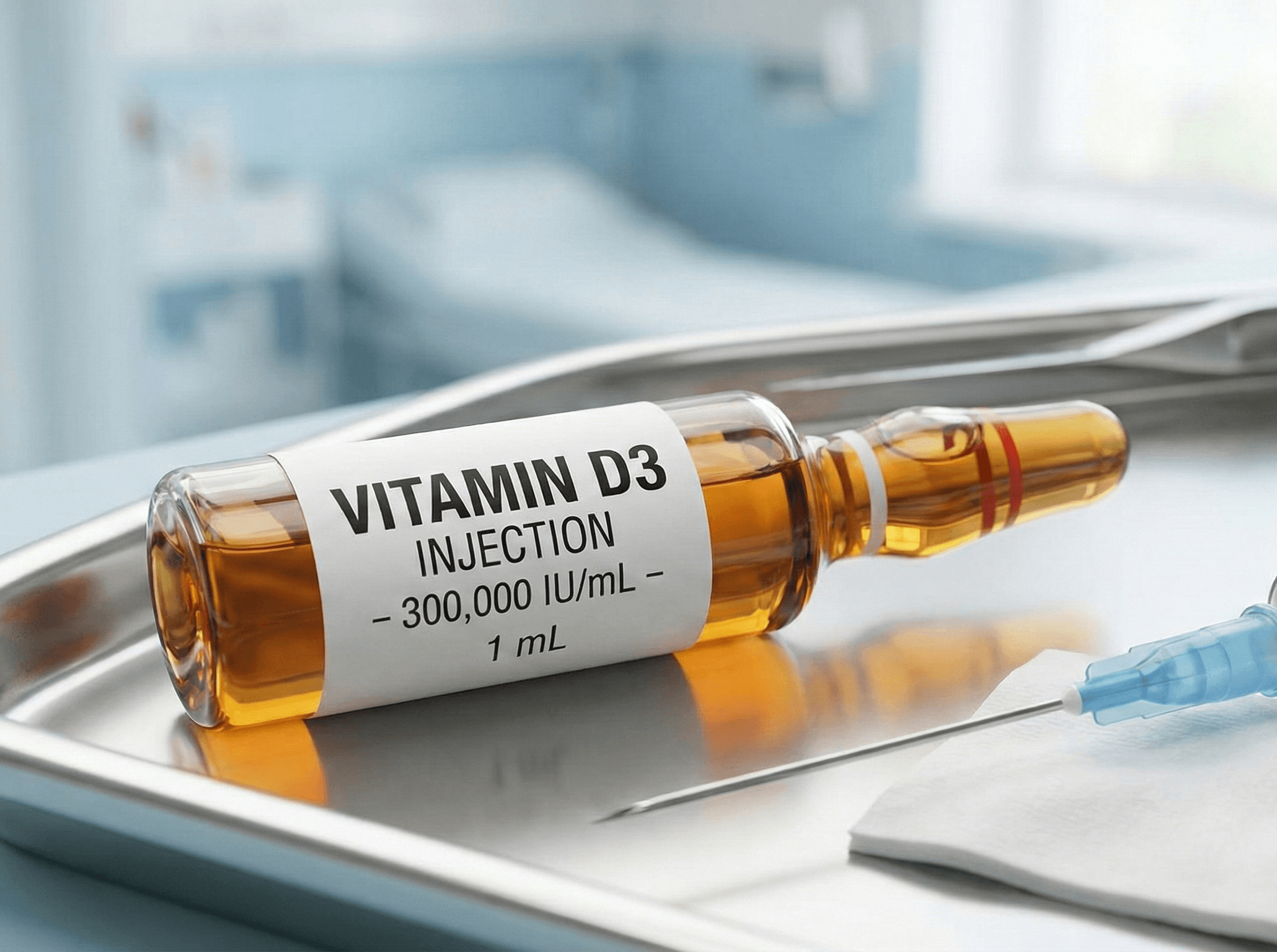
A vitamin D injection delivers a concentrated dose of the vitamin — typically cholecalciferol (vitamin D3) — directly into the muscle. This intramuscular route bypasses the digestive system entirely, which means absorption is not affected by gut conditions, dietary fat intake, or issues with the gastrointestinal tract. For people whose blood levels are significantly low, an injection can raise levels more rapidly than oral supplementation, though a doctor will advise on the most appropriate form and dose for your individual situation.
Who Is It For? Common Reasons People Seek Vitamin D Injections in Dubai
A vitamin D injection is not a one-size-fits-all treatment. It is most commonly considered for people who:
- Have been diagnosed with vitamin D deficiency or insufficiency on a blood test.
- Have a medical condition that affects vitamin D absorption, such as coeliac disease, Crohn's disease, or following certain gastrointestinal surgeries.
- Spend limited time outdoors due to lifestyle, work schedule, or health reasons.
- Are older adults, in whom skin synthesis of vitamin D becomes less efficient.
- Have darker skin tones, which require longer sun exposure to produce equivalent amounts of vitamin D.
- Are pregnant or breastfeeding and have been advised by a doctor to correct a deficiency.
- Prefer a reliable, one-time dose over the daily habit of oral supplements.
It is worth noting that vitamin D injections are not recommended as a general wellness boost for people whose levels are already adequate. A blood test — such as a 25-hydroxyvitamin D (25-OH-D) test — is the standard way to assess your current status. If you have not had your levels checked recently, it may be worth doing so before or alongside treatment.
How the Injection Works: What to Expect During a Home Visit
The procedure itself is straightforward and typically takes just 10 to 15 minutes from start to finish. Here is a general overview of what the visit involves:
- Brief health check: The DHA-licensed professional will ask about your medical history, current medications, and any known allergies before administering the injection.
- Site preparation: The injection is usually given into the upper arm or gluteal muscle. The area is cleaned with an antiseptic wipe.
- Administration: The vitamin D solution is injected intramuscularly. Most people report minimal discomfort — a brief pressure or mild sting at most.
- Post-injection observation: You will be monitored briefly for any immediate reactions before the professional concludes the visit.
No special preparation is required in most cases. You can eat and drink normally beforehand. Wearing loose, comfortable clothing that allows easy access to the upper arm can make the process quicker and more comfortable.
Potential Benefits — and What the Evidence Suggests
Correcting a confirmed vitamin D deficiency through injection may offer a range of health benefits, though it is important to understand that these apply primarily to people who are genuinely deficient, not those with already-adequate levels.
- Bone and muscle health: Vitamin D is essential for calcium absorption. Deficiency is associated with bone softening conditions such as osteomalacia in adults, and some evidence suggests it plays a role in reducing the risk of falls and fractures in older adults.
- Immune support: Vitamin D receptors are present on most immune cells. Some research suggests that adequate levels may support a healthy immune response, though this is an active area of investigation.
- Mood and mental well-being: Low vitamin D levels have been associated with depressive symptoms in some studies, and correcting a deficiency may support better mood — though this should not be viewed as a standalone treatment for depression. Always consult a doctor for mental health concerns.
- Energy levels: Fatigue is a commonly reported symptom of vitamin D deficiency. Some people notice an improvement in energy after treatment, though individual responses vary.
- Cardiovascular and metabolic markers: Research into vitamin D's broader roles in metabolism, blood pressure, and cardiovascular health is ongoing, and findings remain mixed. No definitive clinical recommendations have been established in these areas.
Safety Considerations and Limitations
Vitamin D injections are generally considered safe when administered by a qualified healthcare professional and when the dose is appropriate to your needs. However, there are important considerations to be aware of:
- Vitamin D toxicity is possible: Unlike many water-soluble vitamins, vitamin D is stored in body fat and can accumulate. Excessive intake — whether from injections, oral supplements, or both — can lead to hypervitaminosis D, causing elevated calcium in the blood (hypercalcaemia). Symptoms can include nausea, weakness, frequent urination, and kidney problems. This is why injections should only be undertaken based on clinical need, ideally guided by a blood test.
- Drug interactions: Certain medications, including some diuretics and heart medications, can interact with high-dose vitamin D. Always inform the healthcare professional of any medicines you are currently taking.
- Not a replacement for medical care: If you have an underlying condition causing vitamin D deficiency, an injection addresses the deficiency but not the root cause. A consultation with a licensed doctor is advisable.
- Injection site reactions: Minor bruising, soreness, or redness at the injection site is possible but usually resolves within a day or two.
If you experience chest pain, difficulty breathing, or severe swelling following any injection, call 999 immediately.
Vitamin D Deficiency in the UAE: A Relevant Context
Research conducted in the UAE and across the broader Gulf region has consistently highlighted vitamin D deficiency as a prevalent public health concern, affecting a substantial portion of the population — including both residents and expatriates. The paradox of living in a sun-rich environment while being vitamin D deficient is well recognised here. Factors such as indoor lifestyles, UV-blocking glass in buildings and vehicles, and cultural clothing choices all reduce the skin's opportunity to synthesise vitamin D, even under the Gulf's bright sunshine.
Healthcare providers in Dubai, including those regulated by the Dubai Health Authority (DHA), are increasingly attentive to this issue, and testing and treatment options are widely available. Getting a baseline blood test is a practical first step for anyone who has not checked their levels recently.
At-Home Vitamin D Injection in Dubai: Price and How to Book
xlr8well offers at-home vitamin D injections across Dubai, administered by DHA-licensed healthcare professionals. The service is priced at AED 300 and includes the home visit — there are no additional call-out fees for locations within Dubai. The appointment typically takes 10 to 15 minutes, and same-day or next-day slots are usually available.
Booking is straightforward: you can arrange your appointment online or via WhatsApp, select a time that suits you, and a qualified professional will come to your home, hotel, or workplace. Any relevant records or documentation are accessible through your private xlr8well dashboard. A doctor review can be added to any service if you would like clinical guidance alongside your treatment.
For a broader range of home healthcare options, you can explore all Doctor at Home services, or consider related options such as the At-Home Electrocardiogram (ECG) and the At-Home Shingles Vaccine.