%2520(350%2520x%2520150%2520px)%2520(90%2520x%252040%2520px)%2520(4).png%3Falt%3Dmedia%26token%3Dbed5580f-de12-4061-ac20-36c16b313f14&w=384&q=75)
Occupational & Sensory Therapies in Dubai: Price, What's Included & How to Book at Home (2026)
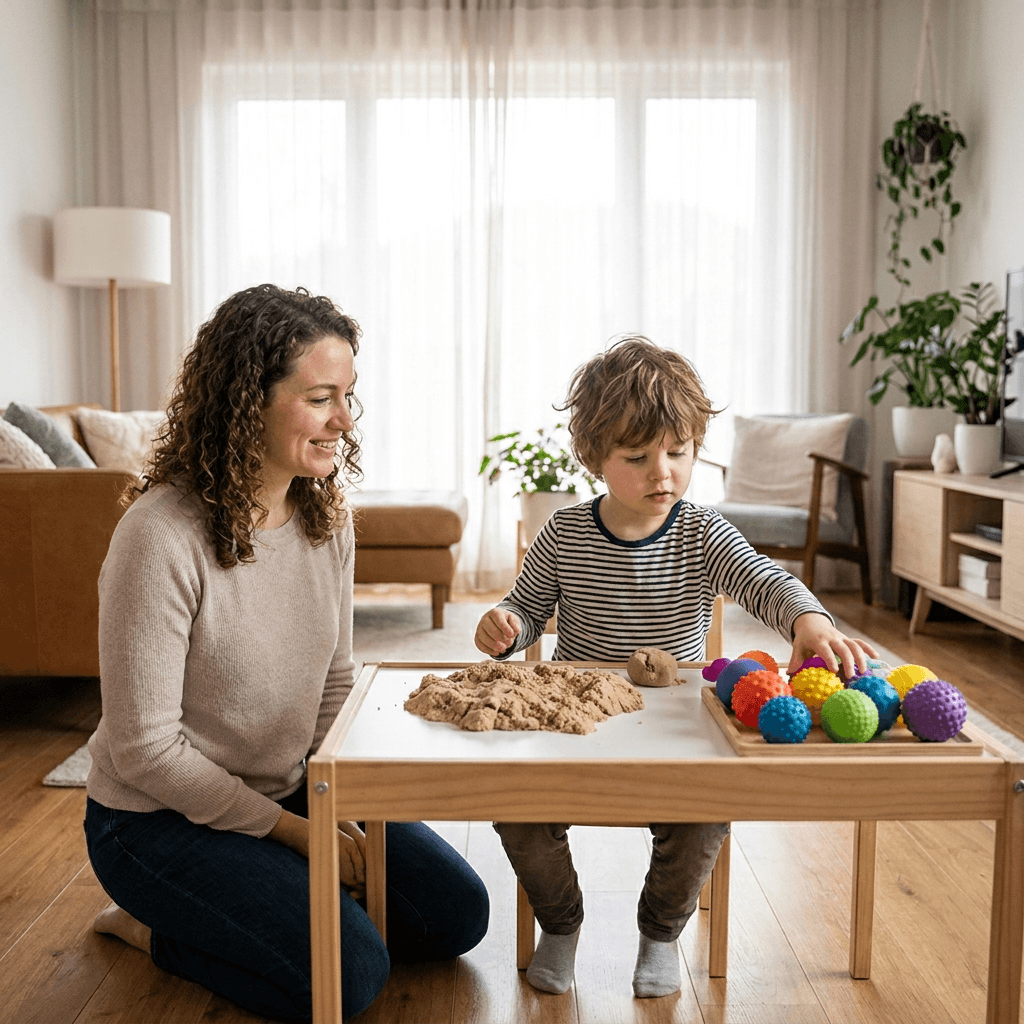
Occupational & Sensory Therapies at Home in Dubai: A Parent's Complete Guide (2026)
When a child struggles to button their school shirt, becomes overwhelmed in a busy supermarket, or refuses foods because of their texture, these are not simply behavioural problems — they are often signs that the child's brain is processing sensory and motor information differently. Occupational therapy (OT) and sensory integration therapy address exactly these challenges, and for many families in Dubai, receiving this support at home makes the difference between a session that works and one that doesn't. This guide explains what these therapies involve, who they are designed for, what a session looks like, and what to realistically expect.
What Is Occupational Therapy for Children?
Paediatric occupational therapy focuses on the everyday tasks — or "occupations" — that fill a child's day: eating, getting dressed, brushing teeth, holding a pencil, playing with peers, and managing a classroom environment. An occupational therapist (OT) assesses where a child faces difficulty and works with them, and their family, to build the skills and strategies needed to participate more fully and independently.
For children on the autism spectrum or with developmental differences, daily tasks can present specific challenges. Fine motor weaknesses may make handwriting frustrating; sensory sensitivities may make mealtimes distressing; difficulties with sequencing and planning may mean that seemingly simple routines feel overwhelming. Occupational therapy addresses all of these areas through structured, goal-directed activity — most of which, for younger children, looks a great deal like purposeful play.
What Is Sensory Integration Therapy?
Sensory integration refers to the way the brain receives, organises, and responds to information from the senses — not just sight and sound, but also touch, movement, body awareness (proprioception) and balance (the vestibular system). For some children, this processing does not happen efficiently, which can result in over-responsiveness (finding certain textures, sounds or lights intensely distressing) or under-responsiveness (seeking out intense sensory experiences, appearing not to register pain, or craving constant movement).
Sensory integration therapy, developed originally by occupational therapist Dr A. Jean Ayres, uses carefully graded, play-based activities to help the nervous system become better at organising sensory input. This may include activities involving swinging, jumping, deep pressure, textured materials, and balance challenges — all selected and adjusted by a trained therapist based on the child's individual sensory profile. Over time, these experiences can support improved regulation, attention, and participation in daily life. It is worth noting that research into sensory integration therapy is ongoing; families are encouraged to discuss the evidence base and realistic expectations with their therapist.
Who Can Benefit from These Therapies?
Occupational and sensory therapies are most commonly recommended for children who:
- Have a diagnosis of autism spectrum disorder (ASD) or are awaiting assessment
- Experience sensory over- or under-sensitivity that affects their daily life or behaviour
- Have delays in fine motor skills, handwriting, or self-care tasks
- Struggle with feeding difficulties, particularly those related to food texture or smell
- Find transitions, routines, or new environments especially challenging
- Have been diagnosed with developmental coordination disorder (DCD), attention difficulties, or other developmental conditions
A paediatric OT assessment can help clarify whether occupational or sensory therapy is appropriate for your child. If you are unsure, speaking with your child's paediatrician or developmental doctor first is always a good starting point.
Why At-Home Therapy Makes a Difference
A significant advantage of home-based occupational therapy is that intervention happens within the real environment where challenges actually occur. Rather than teaching a child to dress in a clinic, the therapist can work with the child in their own bedroom, using their own clothes, within their actual morning routine. Strategies can be tailored to your specific home layout, your child's existing belongings, and the rhythms of your family's day.
For children who are sensitive to new environments or who find travel and transitions stressful, this approach can also reduce anxiety and allow the child to engage more readily with therapy activities. Parents and caregivers are closely involved throughout, learning the techniques and language used so that therapeutic strategies can be embedded into everyday life between sessions.
xlr8well provides at-home occupational and sensory therapy sessions across Dubai, delivered by DHA-licensed professionals. Sessions can also take place at Bloom Autism Center in Al Barsha for families who prefer that setting.
What to Expect: A Typical Session
Initial Assessment
The first session is an assessment. Your therapist will observe your child, gather information from you about their daily routines, challenges and strengths, and may use standardised assessment tools to understand their sensory profile and functional skill level. Goals are set collaboratively — focusing on what matters most to your family right now.
Ongoing Sessions
Subsequent sessions typically last around 45 to 60 minutes. Activities are play-based and child-led where possible, keeping engagement high. Your therapist will gradually increase challenge as skills develop, adjusting the programme based on your child's progress and your feedback. A personalised "sensory diet" — a scheduled set of sensory activities designed to help your child maintain an optimal state of alertness and regulation throughout the day — may be introduced as part of the home programme.
Parent Involvement
Parents and carers are an essential part of every session. Your therapist will explain the reasoning behind activities, demonstrate techniques, and provide guidance on how to continue strategies at home. Progress notes and reports are delivered to your private xlr8well dashboard, giving you a clear record of goals and developments over time.
Preparation: How to Get Ready for Your First Session
- Clear a comfortable space where your child can move freely — a living room or bedroom is usually ideal
- Have your child in comfortable, easy-to-move-in clothing
- Let your child know someone is coming to play and work with them — keep the language positive and calm
- Note down any specific concerns, recent changes in behaviour, or goals you want to prioritise before the session
- Gather any previous assessment reports, school observations, or medical letters that may be relevant
Realistic Expectations and Timeframes
Occupational and sensory therapy is a process, not a quick fix. Progress depends on many factors including the child's age, the nature and complexity of their difficulties, consistency of home practice, and the frequency of sessions. Many families notice early improvements in cooperation and regulation within a few weeks, while more significant gains in independence and skill may take several months of regular therapy. Your therapist will review goals regularly and discuss progress openly with you.
Therapy works best as part of a broader support network. If your child is also receiving speech and language therapy, ABA, or school-based support, it is worth ensuring these teams communicate with one another. xlr8well's platform makes it straightforward to share reports across your child's care circle.
Safety and Professional Standards
All occupational therapists delivering sessions through xlr8well hold DHA (Dubai Health Authority) licences, as required for healthcare practice in Dubai. If at any point during the course of therapy you have concerns about your child's health or safety, or if your child is in distress, contact your child's doctor. In an emergency, call 999.
Occupational & Sensory Therapies Pricing in Dubai (2026)
- Single Session — AED 400
- 8-Session Programme (Save 10%) — AED 2,880 (AED 360 per session)
The price includes the home visit anywhere in Dubai, with no hidden travel fees. Same-day and next-day appointments are usually available, and booking can be completed online or via WhatsApp.
Related Services
Browse all Autism Therapy & Treatments services, or explore how occupational therapy can complement Speech & Language Therapy and Behavioural & Developmental Therapies (ABA) as part of a coordinated support plan for your child.