%2520(350%2520x%2520150%2520px)%2520(90%2520x%252040%2520px)%2520(4).png%3Falt%3Dmedia%26token%3Dbed5580f-de12-4061-ac20-36c16b313f14&w=384&q=75)
12 Months Milestones: What to Expect, Red Flags & How to Help
Why the 12-Month Mark Matters
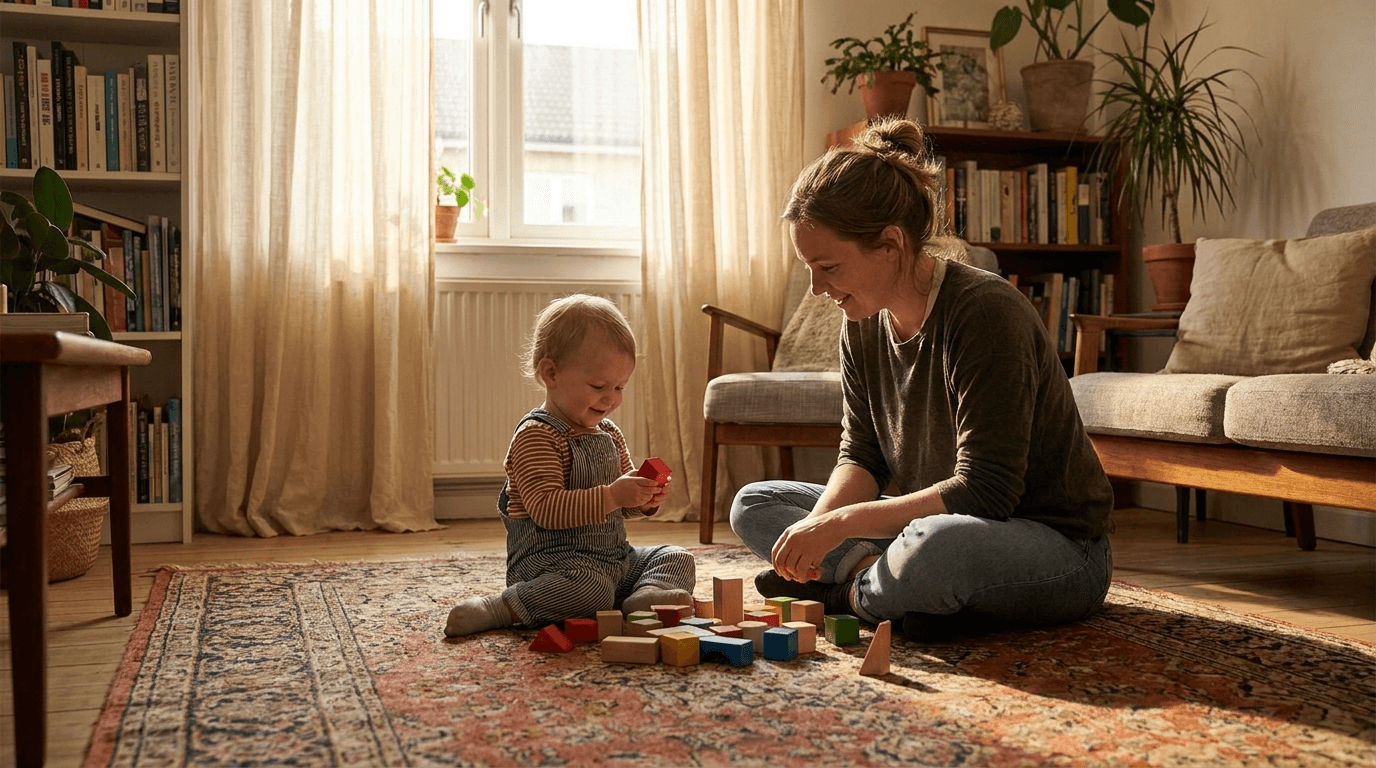
A child's first birthday is far more than a milestone for the photo album. The period between 9 and 15 months is widely regarded by developmental specialists as one of the most information-rich windows in early childhood. Skills that emerge around 12 months — communicating with intent, understanding simple language, exploring objects, and beginning to move independently — lay the groundwork for everything that follows: speech, social connection, learning, and emotional regulation.
This guide is written for parents and carers who want to understand what typical development looks like at 12 months, which patterns genuinely warrant professional attention, and what practical steps you can take at home and in Dubai to support your child's growth.
What Most Children Do at 12 Months
Child development rarely follows a fixed timetable. That said, research in developmental paediatrics has identified a cluster of skills that most children demonstrate around their first birthday. Think of these as signposts rather than strict deadlines.
Communication and Language
- First words or clear word-attempts — sounds like "mama" or "dada" used with obvious meaning, not just random babble. Many children have one to three consistent words by 12 months.
- Proto-declarative pointing (pointing to show) — extending a finger to share something interesting with you, such as a bird or a toy, without necessarily wanting it. This is a key social-communication milestone that many parents are unaware of.
- Proto-imperative pointing (pointing to request) — pointing to indicate a want or need, such as reaching toward a cup or a book.
- Babbled "conversations" — strings of varied sounds ("bababa," "dadadada") delivered with eye contact and intonation that mimic the back-and-forth rhythm of real dialogue.
- Responding to their own name consistently, even in a mildly distracting environment.
- Following a point — when you point across the room, your child's gaze follows to the target, not just to your hand.
- Understanding simple phrases like "give me," "no," or "where's your shoe?" — receptive language often runs slightly ahead of expressive language at this age.
Social and Emotional Development
- Waves bye-bye and imitates gestures such as clapping.
- Shows clear attachment to familiar caregivers and may show wariness around strangers.
- Looks to a carer's face to gauge reactions in unfamiliar situations — a behaviour known as social referencing.
- Enjoys simple back-and-forth games such as peek-a-boo and handing objects back and forth.
Cognitive and Play Development
- Object permanence — understanding that an object still exists when it is hidden. A child at 12 months will actively search for a toy placed under a cloth.
- Explores objects in varied ways: banging, shaking, dropping, examining. This is purposeful investigation, not just random play.
- May begin simple pretend play, such as pretending to drink from an empty cup.
Motor Development
- Pulls to stand using furniture and may "cruise" sideways along surfaces.
- Some children take their first independent steps around 12 months; others walk closer to 15 months — both are within a typical range.
- Uses a pincer grip (thumb and index finger) to pick up small objects.
- Can release objects intentionally, which is a more complex skill than grasping.
An important note: a single skill arriving a few weeks late is rarely cause for concern on its own. Developmental specialists look at patterns across multiple areas, and the overall trajectory of progress matters far more than any isolated checklist item.
Red Flags Worth Acting On
The following patterns, if present at or beyond 12 months, are worth discussing with a developmental paediatrician, speech and language therapist, or other qualified professional. They are not a diagnosis — they are a signal to seek a professional conversation sooner rather than later.
- No pointing or showing gestures of any kind — the absence of both proto-declarative and proto-imperative pointing is particularly significant, because pointing to share interest is one of the earliest markers of social-communicative development.
- No babbled "conversations" — limited or absent back-and-forth vocalisation with varied sounds.
- Not following a point — if your child looks at your hand rather than at what you are pointing to, this may indicate a difference in joint attention.
- No consistent response to their own name.
- Loss of any previously gained skill — regression in language, social behaviour, or motor abilities, at any age, always deserves prompt professional assessment. This is not a wait-and-see situation.
- Very limited eye contact or little interest in the faces or voices of familiar people.
One red flag in isolation is a reason for a conversation, not a conclusion. However, multiple flags, or any regression, should prompt you to seek assessment without delay. Early support consistently offers more opportunity than delayed support — the first three years represent a period of exceptional brain plasticity.
The Milestone Most Parents Have Never Heard Of
Pointing to show — proto-declarative pointing — deserves its own mention. Many parents are familiar with a child pointing to ask for something, but pointing purely to share an experience ("Look at that dog!") is a qualitatively different, and developmentally significant, behaviour. It requires the child to understand that another person has a separate mind and a separate viewpoint — the very beginning of what developmental scientists call "theory of mind." If your child is not yet pointing to share interest by 12 months, this is the most important single thing to mention to your child's doctor or therapist.
What You Can Do at Home This Week
You do not need to wait for a clinic appointment to start supporting communication development. Simple, consistent interactions are among the most effective tools available.
- Follow your child's lead. Comment on whatever they are looking at or reaching for, using simple language: "A ball! A red ball."
- Create opportunities to communicate. Pause before giving something they want, giving them space to gesture, point, or vocalise.
- Model pointing. Point to interesting things throughout the day — a plane in the sky, a cat on the wall — and name them enthusiastically.
- Read together daily. Board books with clear pictures of familiar objects support vocabulary, joint attention, and page-turning turn-taking.
- Limit background screen time during interactions. Language is learned through live, contingent interaction — not from a screen playing in the background.
- Narrate your day. Talk through what you are doing as you do it: "I'm putting on your shoes. One shoe. Two shoes."
These strategies are beneficial for all children and carry no risk. If your child is already receiving therapy, discuss these activities with your therapist so they complement any goals already being worked on.
Getting Support in Dubai
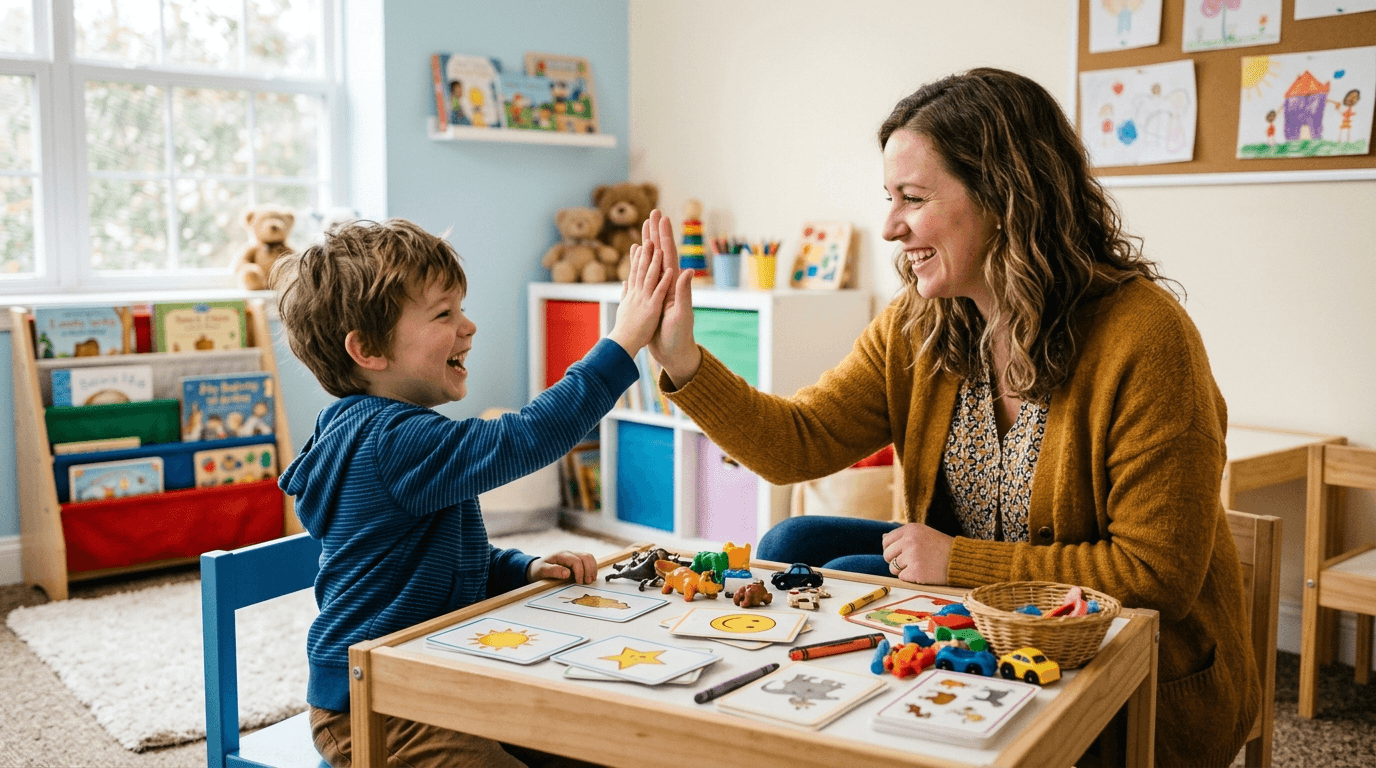
If you have concerns about your child's development, accessing qualified support in Dubai is straightforward. You do not need a diagnosis to begin therapy — speech and language therapy, occupational therapy, ABA therapy, and physical therapy can all be initiated based on identified needs and parental concern.
xlr8well delivers speech, ABA, occupational, and physical therapy at home anywhere in Dubai, removing the need for travel with a young child. Support is also available at Bloom Autism Center (Office 702, Yes Business Tower, Al Barsha 1, Dubai). Every journey begins with a free, judgement-free consultation on WhatsApp. Explore our autism therapy services to learn more.
If you are unsure whether to seek assessment, speak with your child's paediatrician or contact a qualified speech and language therapist — they are accustomed to guiding families through exactly this question.
This article is general information for parents and carers, not a diagnosis, clinical assessment, or substitute for professional evaluation of your individual child. If you have concerns about your child's development, please consult a licensed healthcare professional.