%2520(350%2520x%2520150%2520px)%2520(90%2520x%252040%2520px)%2520(4).png%3Falt%3Dmedia%26token%3Dbed5580f-de12-4061-ac20-36c16b313f14&w=384&q=75)
18 Months Milestones: What to Expect, Red Flags & How to Help
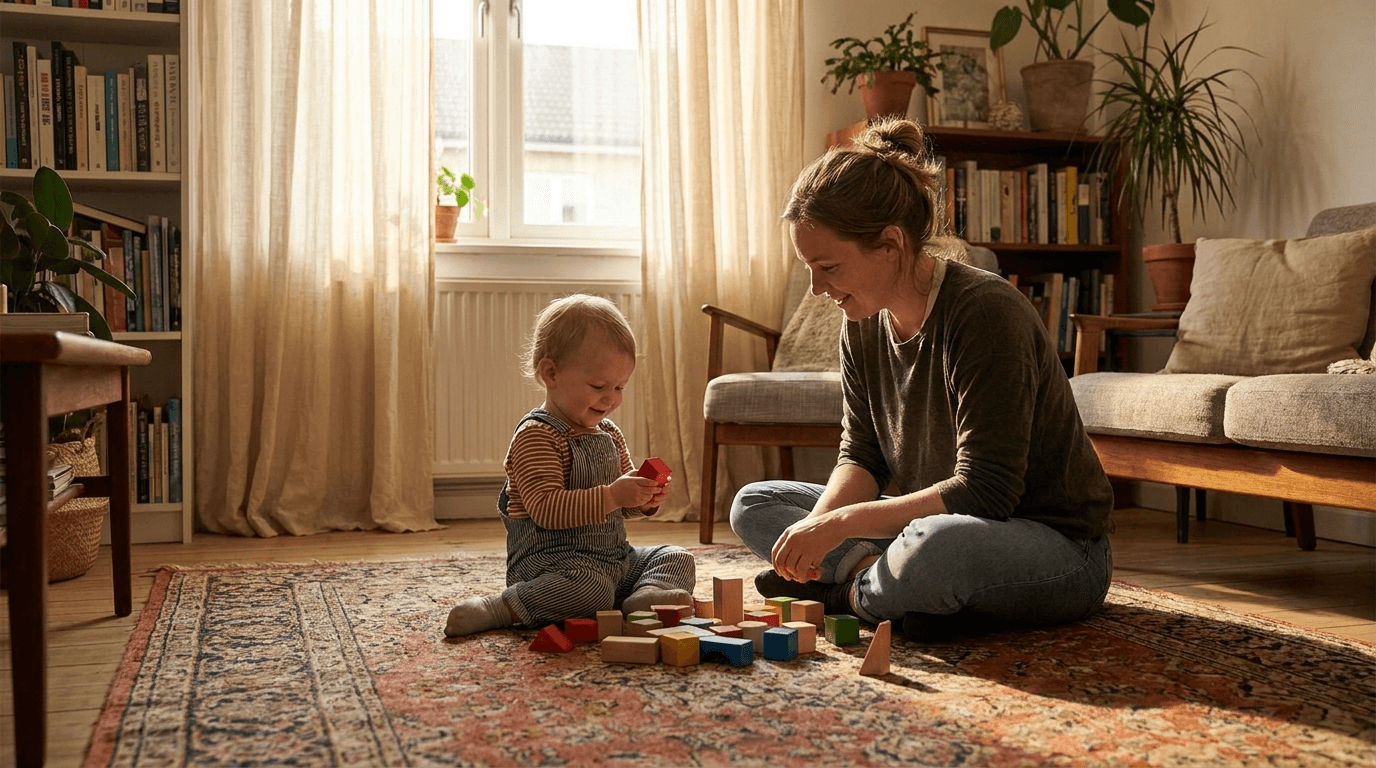
TL;DR: At 18 months, most children use 10–20+ words, point to body parts and pictures on request, and are beginning simple pretend play. Red flags such as fewer than 6–10 words or no pointing deserve a professional conversation — early support can make a meaningful difference, and waiting rarely helps.
Why 18 Months Is a Significant Milestone Age
The 18-month mark is one of the most closely watched points in early childhood development. It sits at the intersection of rapid language growth, emerging social awareness, and increasingly complex motor skills. For parents, it can also be a moment of anxiety — particularly when a toddler seems to be developing differently from their peers or siblings.
It is important to remember that child development is not a single straight line. Each child follows their own unique curve, and a skill arriving slightly later than average in one area is usually not cause for alarm on its own. What developmental professionals look at is the overall pattern — how language, social engagement, motor skills, and play are developing together.
This guide is designed to give parents in the UAE a clear, honest picture of what to look for at 18 months, when to seek support, and what that support might look like.
What Most Children Do at 18 Months
The following are typical skills seen in many children around this age. Not every child will demonstrate all of these at exactly 18 months — there is a normal range for each.
Communication and Language
- Using between 10 and 20 or more words, with the vocabulary growing weekly
- Pointing to familiar body parts and pictures in books when asked
- Following simple one-step instructions ("Give me the ball")
- Using gestures such as waving, shaking the head for "no," and reaching
- Bringing objects to a caregiver to share interest or request help
Social and Emotional Development
- Showing clear attachment to familiar caregivers and some wariness of strangers
- Seeking comfort when upset, and looking to caregivers for reassurance in new situations
- Beginning to show empathy — noticing when others are distressed
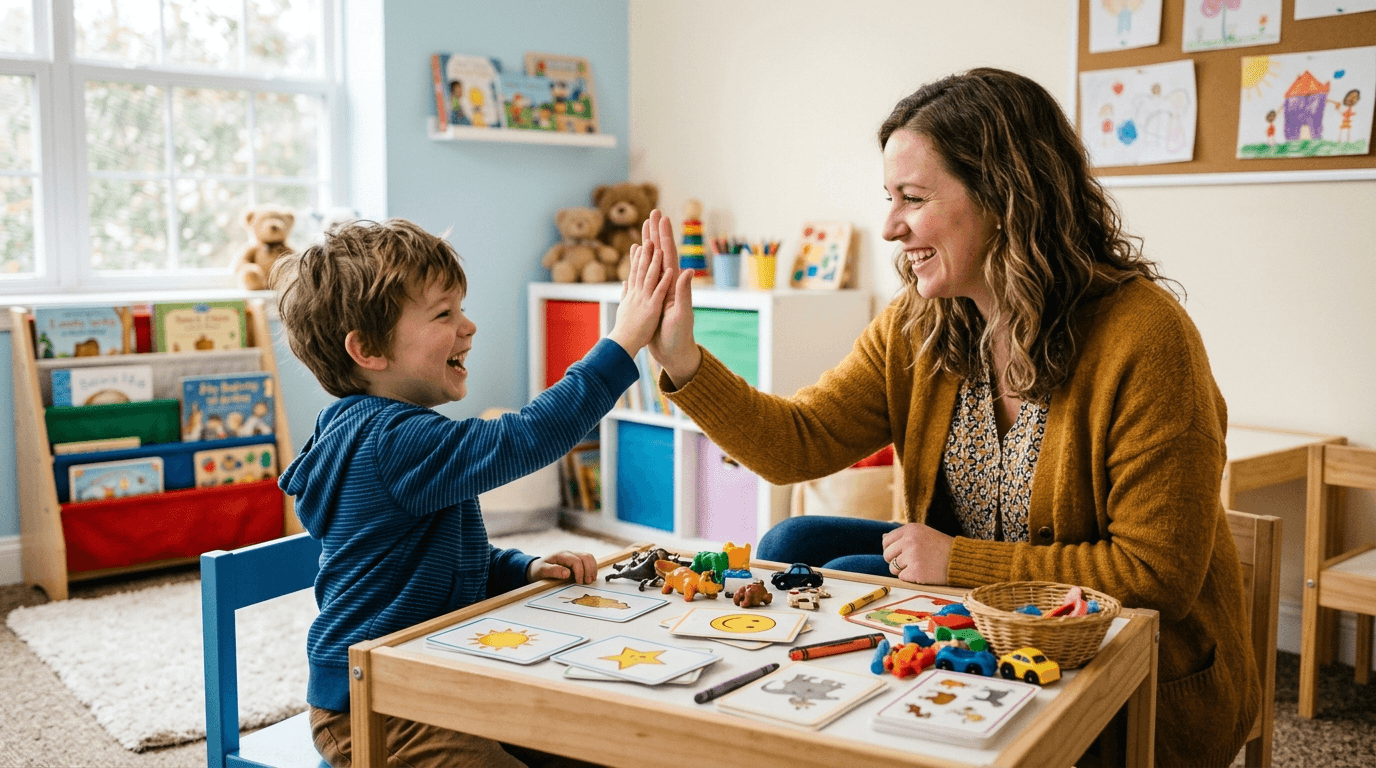
- Enjoying simple back-and-forth play and social games
Play and Cognition
- Beginning simple pretend play — feeding a teddy bear, pretending to drink from an empty cup
- Exploring objects with purpose rather than just mouthing everything
- Stacking two or more blocks
- Showing curiosity about how things work
Gross and Fine Motor Skills
- Walking independently and fairly confidently
- Beginning to run, though movement may still appear stiff
- Climbing onto low furniture
- Using a spoon with reasonable success, even if mealtimes are still messy
- Turning pages in a board book, scribbling with a crayon
Red Flags Worth Acting On
The following signs, particularly when they occur together or persist over time, are worth discussing with a paediatrician or developmental specialist. They are not a diagnosis — they are indicators that a professional conversation could be valuable.
- Fewer than 6–10 words: A limited expressive vocabulary at this age may suggest a speech or language delay that could benefit from early support.
- No pointing: Pointing — particularly "declarative" pointing to share interest in something ("Look at that dog!") — is a key indicator of joint attention, an important building block for language and social development.
- No pretend play emerging: The absence of early imaginative or symbolic play can sometimes be an early sign of developmental differences worth exploring.
- Not following simple instructions: Difficulty understanding basic requests may indicate receptive language difficulties.
- Limited eye contact or social engagement: While shyness is normal, consistent difficulty connecting socially with familiar caregivers is worth noting.
- Regression of any previously mastered skill: Loss of words, social behaviours, or motor skills that a child had already developed — at any age — always warrants prompt professional assessment. This is not a "wait and see" situation.
One red flag is a conversation, not a conclusion. Most children assessed for developmental concerns are found to be developing within normal variation. The value of an early assessment is in the clarity it provides — either reassurance, or the opportunity to begin support during the window when it can have the greatest impact.
The M-CHAT Screening: What It Is and Why 18 Months Matters
18 months is the internationally recognised age for administering the M-CHAT (Modified Checklist for Autism in Toddlers), a brief screening questionnaire that helps identify children who may benefit from further developmental evaluation. It is not a diagnostic tool — it is a structured way of flagging whether a more detailed assessment is worthwhile.
The M-CHAT can be completed with a paediatrician, developmental therapist, or other qualified professional. Many parents find that going through it formally — rather than trying to self-assess at home — provides a much clearer picture and relieves the anxiety that comes from weeks of searching online.
If your child's 18-month check-up has not included a developmental screening conversation, it is entirely reasonable to ask for one.
How to Support Development at Home
Research in early childhood development consistently points to the importance of the everyday environment. Professional therapy, when needed, works best when it is complemented by rich interactions at home. Some practical approaches include:
- Talk constantly and simply: Narrate what you are doing ("Now we're washing hands"), name objects, and use short sentences at a level just above what your child is currently producing.
- Read together every day: Board books with clear pictures and simple text are excellent tools for building vocabulary. Point to pictures and name them.
- Follow their lead in play: Join your child in whatever they are doing and add language to it, rather than redirecting them to a different activity.
- Limit passive screen time: Interactive engagement — real conversations, shared play, physical exploration — is the primary driver of early development.
- Respond to communication attempts: Whether your child uses words, gestures, or sounds, consistently responding encourages more communication.
Getting Support in Dubai
If you have concerns about your child's development, seeking an assessment early is nearly always the right instinct. Early intervention — particularly in the 18-month to three-year window — is widely considered to be the period when therapeutic support can have the greatest positive effect on long-term outcomes.
In the UAE, support is available through paediatric clinics, DHA-registered developmental specialists, and home-based therapy services. The xlr8well team delivers speech therapy, ABA, occupational therapy, and physical therapy at home anywhere in Dubai, as well as at Bloom Autism Center (Office 702, Yes Business Tower, Al Barsha 1, Dubai). Importantly, a formal diagnosis is never required to begin. Every journey starts with a free, judgement-free consultation — reach out via WhatsApp to find out what the right first step looks like for your child. You can also explore our autism therapy services for more information.
A Note on Multilingual Families
Many families in the UAE raise children in two, three, or even more languages. It is worth knowing that multilingualism does not cause language delay. A bilingual or multilingual child may have a slightly different distribution of words across languages, but their total vocabulary should still be growing. If you are concerned, a speech and language therapist with experience in multilingual development can assess your child in the context of all the languages they are exposed to.
Frequently Asked Questions
Should I wait and see, or get an assessment?
If a red flag persists beyond a month of focused attention, it is generally worth booking a professional assessment. The worst outcome of assessing early is reassurance; the worst outcome of waiting is losing time during a high-impact developmental window.
Does an assessment mean my child will be labelled?
No. Developmental assessments map a child's skills and areas of need — they are not about labelling. Therapy targets skills, not diagnoses, and no formal diagnosis is required to begin speech therapy, occupational therapy, or other developmental support.
My child speaks two languages — could that explain the delay?
Multilingualism does not cause language delay, though it can affect how vocabulary is distributed across languages. A qualified speech and language therapist can assess your child with multilingual development in mind and give you a clearer picture.
What happens during a developmental assessment at this age?
A typical 18-month developmental assessment involves a structured observation of your child's play and communication, a detailed history taken from parents, and may include standardised checklists or screening tools such as the M-CHAT. The aim is to understand your child's current profile of skills — not to reach a verdict.
Is early intervention really worth starting before a formal diagnosis?
Many developmental specialists recommend beginning support as soon as a need is identified, rather than waiting for a formal diagnosis. Early speech or occupational therapy focuses on building functional skills, and children who begin support earlier generally have more time to benefit from that input during critical developmental windows.
This article is general information for parents and caregivers, not a diagnosis or a substitute for professional assessment of your individual child. If you have concerns about your child's development, please consult a licensed healthcare professional.