%2520(350%2520x%2520150%2520px)%2520(90%2520x%252040%2520px)%2520(4).png%3Falt%3Dmedia%26token%3Dbed5580f-de12-4061-ac20-36c16b313f14&w=384&q=75)
2.5 Years Milestones: What to Expect, Red Flags & How to Help
TL;DR: At 2.5 years, most children experience a vocabulary explosion — using 200–500 words and asking simple questions such as "what's that?" Red flags like speech that remains mostly unintelligible to family deserve a professional conversation. Early support can meaningfully change developmental trajectories, and waiting rarely helps.
Why 2.5 Years Is a Meaningful Checkpoint
The period around two-and-a-half years sits at a fascinating crossroads in early childhood. The toddler brain is undergoing rapid neural pruning — strengthening the connections used most and trimming those used least. Language, social understanding, and motor coordination are all accelerating at the same time, which means this window offers both rich opportunities for development and an important moment to notice if something warrants a closer look.
It is worth remembering that developmental milestones describe ranges, not strict deadlines. A single skill arriving a few weeks later than average is rarely a cause for concern on its own. What paediatricians, therapists, and developmental specialists look for is a pattern — how a child is progressing across language, play, movement, and social connection together.
What Most Children Do at 2.5 Years
The following milestones reflect what many children are doing around this age. They are starting points for observation, not a pass/fail checklist.
Language and Communication
- Vocabulary explosion: Many children use between 200 and 500 words, with new words appearing almost daily.
- Two- to three-word phrases: "More juice please," "Daddy go work," and similar combinations are common.
- Simple questions: "What's that?", "Where Mama?", and "Why?" begin to appear.
- Refers to themselves by name and may start using "me" or "I" inconsistently.
- Strangers can understand roughly half of what a child says — familiar adults understand considerably more.
Play and Thinking
- Pretend play sequences: A child may "cook" a meal and then "feed" a toy, linking imaginative actions together rather than playing in isolation.
- Simple sorting and matching: Grouping objects by colour or shape emerges.
- Interest in stories: Many children enjoy being read to and can anticipate familiar phrases in favourite books.
- Beginning cause-and-effect reasoning: Understanding that pressing a button makes something happen, or that crying brings comfort.
Physical and Motor Skills
- Jumps with both feet off the ground and lands with reasonable balance.
- Walks up and down stairs, often still holding a railing or wall.
- Kicks a ball with some direction and throws overhand.
- Uses a spoon and fork with increasing independence.
- Turns pages in a book one at a time and may attempt simple puzzles.
Social and Emotional Development
- Begins turn-taking in simple games with adult support.
- Names friends and familiar people and shows preference for certain children or adults.
- Big emotions are normal: Tantrums may still be frequent — the ability to regulate feelings is still very much in development.
- Parallel play (playing alongside, rather than with, other children) is typical; co-operative play is just beginning.
Red Flags Worth Acting On
The following signs are worth discussing with a developmental professional if they persist. One flag alone is a conversation starter, not a conclusion — but a pattern across several areas, or any loss of previously mastered skills, always deserves prompt assessment.
- Speech mostly unintelligible to family: If the people who know a child best struggle to understand most of what they say, a speech and language evaluation is warranted.
- Echolalia without functional use: Repeating phrases heard on television or from adults (echolalia) can be a normal part of language learning at this age. The concern is when a child echoes but does not use language to communicate wants, needs, or ideas — function matters more than the echo itself.
- No pretend play at all: An absence of any imaginative or symbolic play by this age is worth exploring.
- Limited or no two-word phrases: Most children are combining words regularly by 2.5 years.
- Persistent toe-walking or unusual movement patterns: Occasional toe-walking in toddlers is common, but persistent, consistent toe-walking alongside other concerns is worth raising.
- Significant difficulty with transitions or very restricted interests: All toddlers resist change to some degree; the question is whether it is significantly impacting daily life.
- Loss of any previously mastered skill: At any age, regression in language, motor, or social skills always warrants prompt professional review, without delay.
How to Support Development at Home
Parents and caregivers in Dubai are often the single most powerful influence on a child's development. There is a great deal that can be woven naturally into everyday routines.
For Language
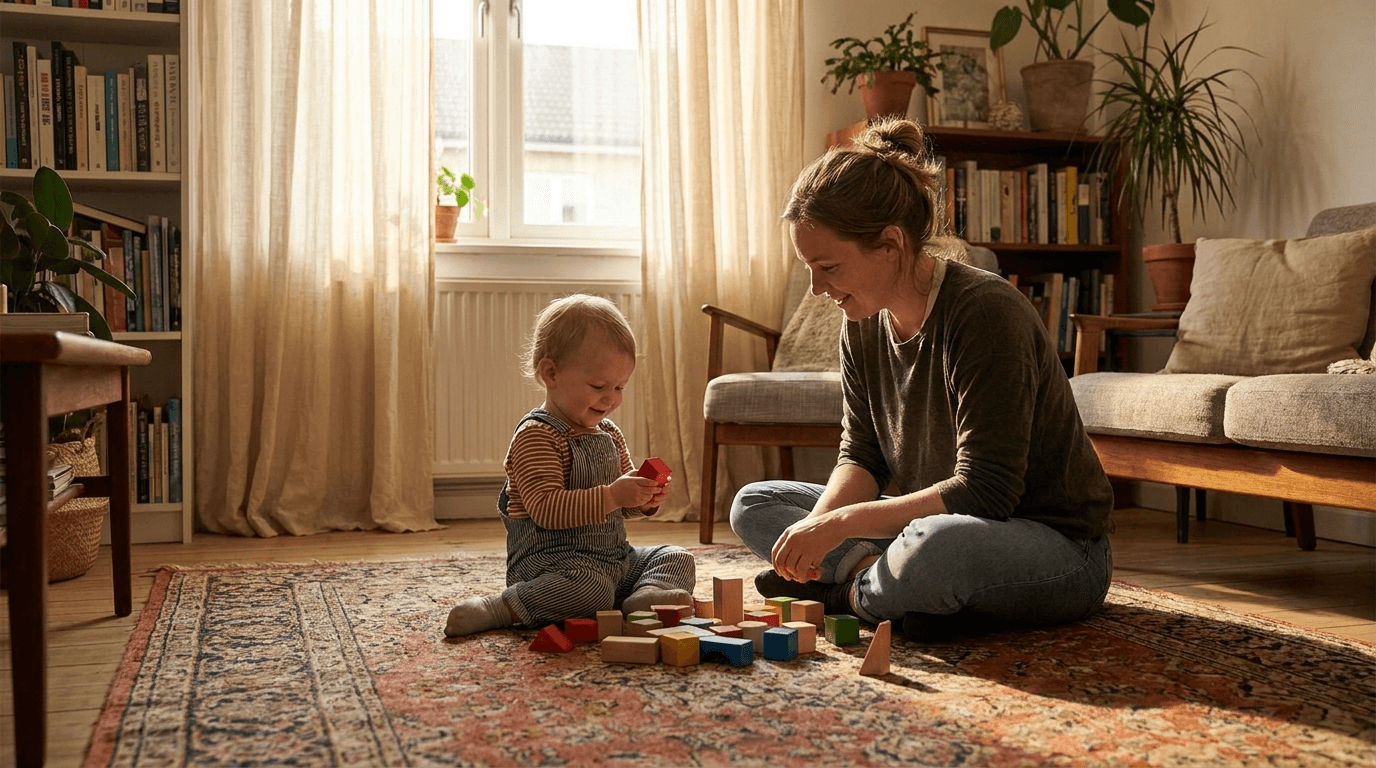
- Follow the child's lead: Comment on what they are already looking at or doing rather than directing their attention. "Oh, you found the red block!" builds vocabulary without pressure.
- Expand slightly: When a child says "dog run," respond with "Yes, the big dog is running fast!" This models the next level of language without correcting them.
- Read together daily: Even ten minutes of shared reading — pausing to point, label, and ask simple questions — builds vocabulary and comprehension significantly over time.
- Reduce background noise during conversations: The UAE's busy home environments, with television or music constantly on, can make it harder for children to tune in to speech.
For Play and Thinking
- Offer open-ended toys: Blocks, playdough, simple dolls, and containers foster imagination far more than single-function electronic toys.
- Join the play without taking over: Sit at their level, imitate what they do, and add one small step to build on it.
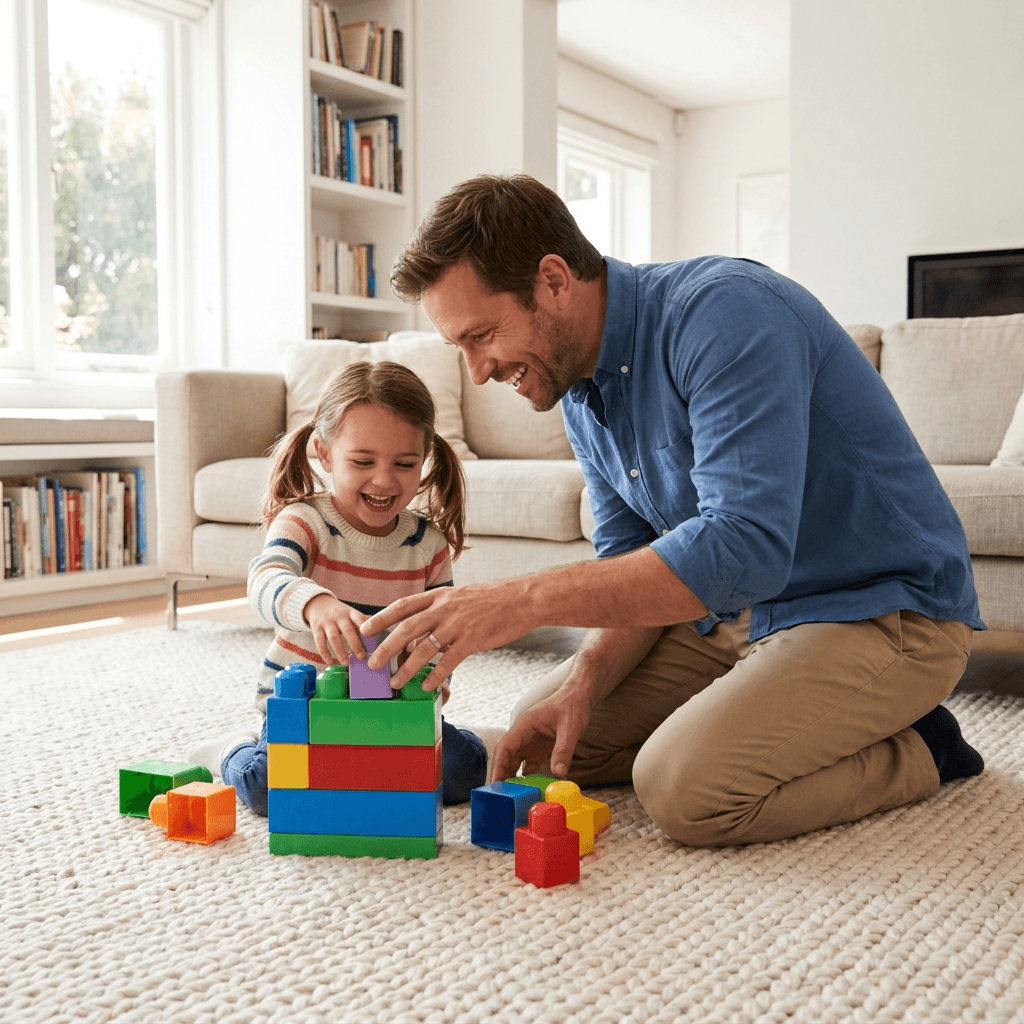
- Simple turn-taking games: Rolling a ball back and forth, taking turns stacking blocks, or simple board games all build the social foundations for later learning.
For Movement
- Outdoor play matters — even in Dubai's warmer months, early mornings or evenings in a park, play area, or outdoor space provide essential opportunities for gross motor development.
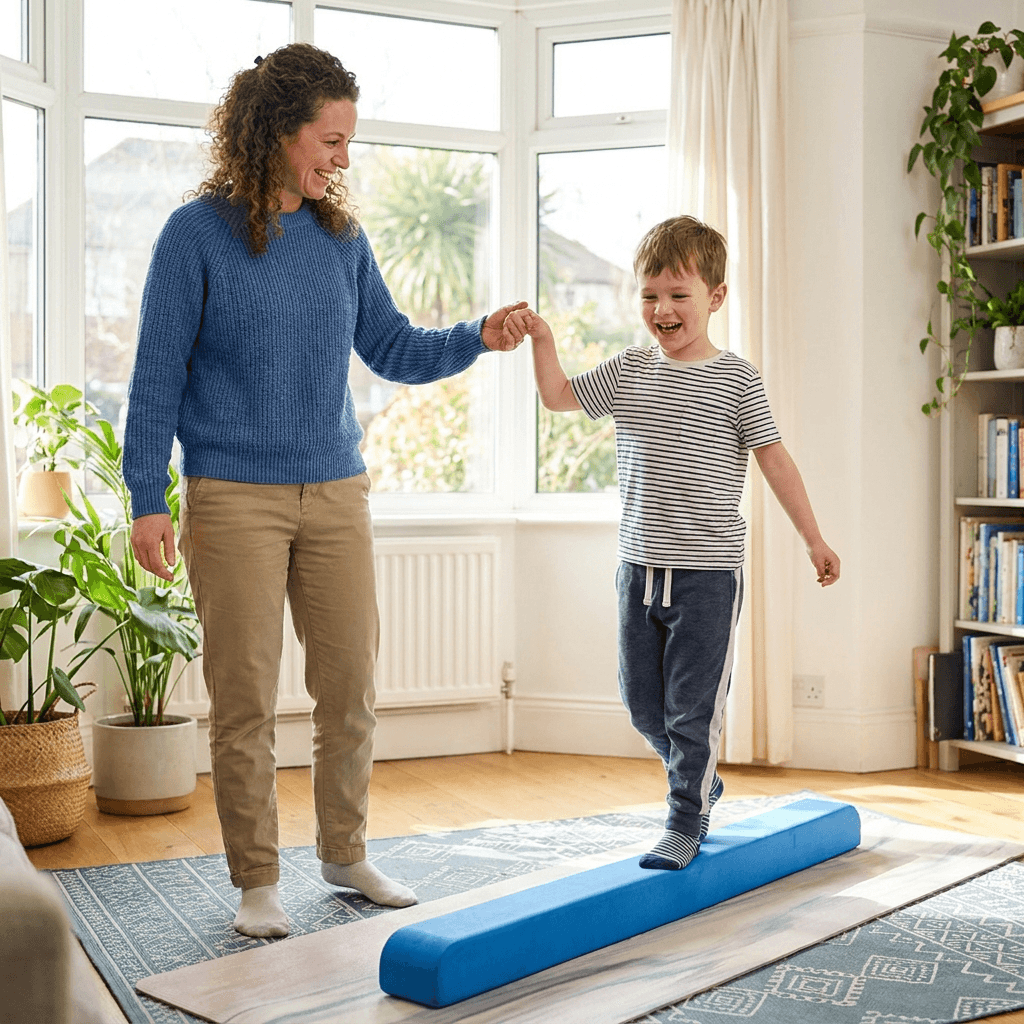
- Activities like climbing, jumping on soft surfaces, and running on uneven ground build core strength and coordination.
A Note on Bilingual and Multilingual Children
Many families in the UAE raise children in two or more languages simultaneously — Arabic, English, Urdu, Hindi, Tagalog, and many others are spoken across Dubai homes. Research consistently suggests that bilingualism does not cause language delay. However, word counts should ideally consider the child's total vocabulary across all languages combined. If you are concerned, a therapist experienced with multilingual families can provide a much more accurate picture than a monolingual assessment alone.
Getting Support in Dubai
If something feels off, the most useful step is almost always to seek an assessment sooner rather than later. The worst outcome of assessing early is reassurance; the cost of waiting can be months of lost time during a highly sensitive developmental window.
xlr8well delivers speech therapy, ABA, occupational therapy, and physical therapy at home anywhere in Dubai — meaning children can receive support in the environment where they are most comfortable. Sessions are also available at Bloom Autism Center (Office 702, Yes Business Tower, Al Barsha 1, Dubai). Every journey starts with a free, judgement-free consultation on WhatsApp, and a formal diagnosis is never required to begin. Explore our autism therapy services to learn more.
This article is general information for parents and caregivers. It is not a diagnosis and is not a substitute for professional assessment of your individual child. If you have concerns about your child's development, please consult a licensed healthcare or developmental professional.