%2520(350%2520x%2520150%2520px)%2520(90%2520x%252040%2520px)%2520(4).png%3Falt%3Dmedia%26token%3Dbed5580f-de12-4061-ac20-36c16b313f14&w=384&q=75)
5 Years Milestones: What to Expect, Red Flags & How to Help
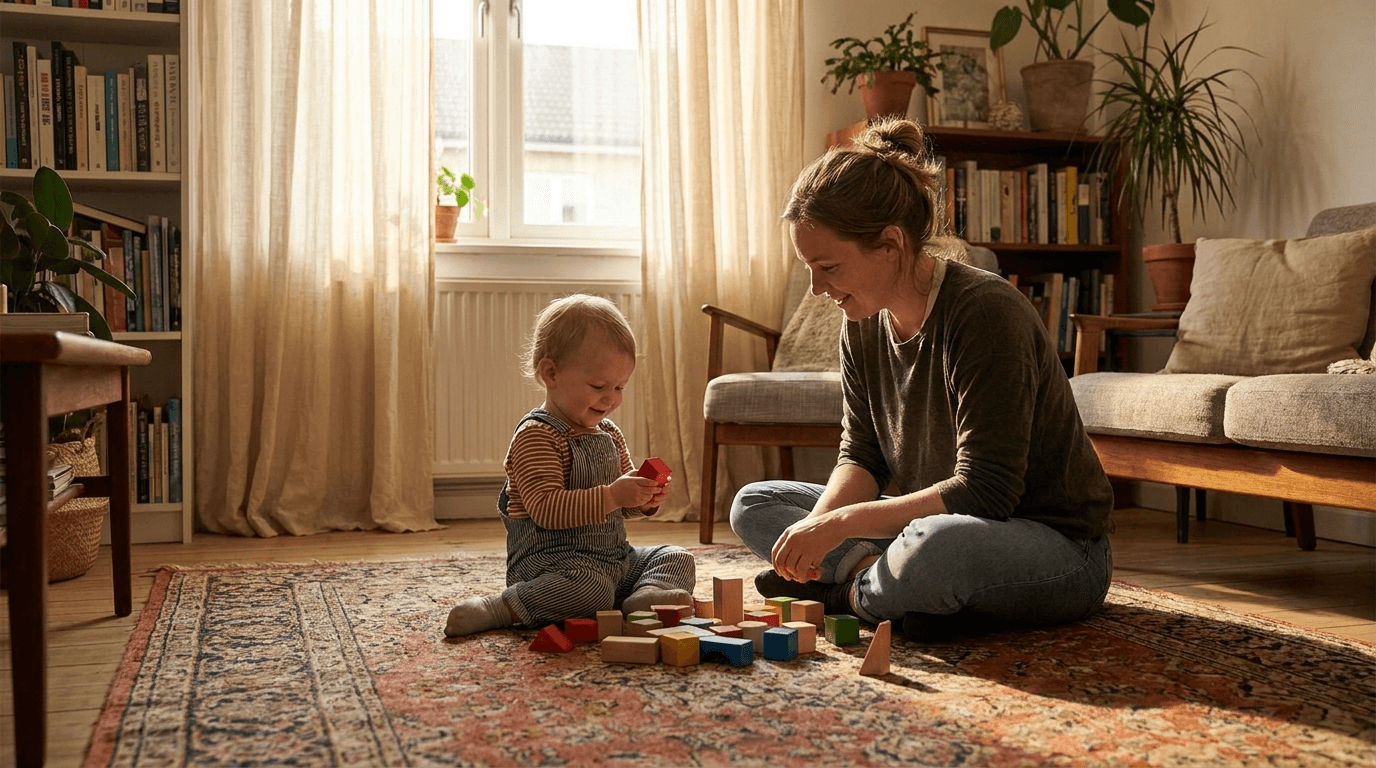
Summary: At age 5, children are stepping into a remarkable new chapter — starting school, forming real friendships, and showing the world a personality that is distinctly their own. Understanding what is typical at this age, what warrants a closer look, and how to offer meaningful support can make a genuine difference to your child's trajectory. This guide is written for parents and carers in Dubai and across the UAE.
Why Age 5 Is a Significant Developmental Milestone
The fifth year of life sits at the crossroads of early childhood and formal schooling. The brain is still in a period of high plasticity — meaning it is particularly responsive to learning, language, and experience. Skills that consolidate now, from self-regulation and social reasoning to early literacy and motor coordination, form the scaffolding for everything that follows in primary school and beyond.
In the UAE, children typically begin KG2 or Year 1 around their fifth birthday. The demands of a structured classroom — following multi-step instructions, managing frustration, sitting for group tasks, and navigating peer relationships — make this a natural moment for developmental strengths and challenges to become more visible.
What Most Children Do at Age 5
Developmental milestones describe what the majority of children can do by a given age. They are useful guides, not rigid checklists. That said, they offer a shared language for noticing when a pattern of difference may be worth exploring.
Language and Communication
- Holds full back-and-forth conversations, not just short exchanges
- Uses mostly grammatically correct sentences, including past tense and plurals
- Tells stories with a beginning, middle, and end — even if the logic is charmingly five-year-old
- Asks "why" and "how" questions frequently, and understands the answers given
- Most speech sounds are clear enough to be understood by strangers, not just family
Social and Emotional Development
- Friends genuinely matter — children name specific friends and seek them out
- Understands basic rules of turn-taking, fairness, and simple games
- Manages emotions with adult support, though big feelings still happen
- Shows empathy — notices when others are upset and may try to help
- Engages in cooperative, imaginative play with peers rather than just alongside them
Physical and Motor Skills
- Hops, skips, and may be learning to ride a bicycle with training wheels
- Catches a ball reliably; can kick with aim
- Uses scissors with reasonable control; copies shapes and simple patterns
- Draws recognisable people and scenes — a house, a sun, a family
- Writes some letters, particularly those in their own name
Cognitive and School-Readiness Skills
- Counts to ten or beyond and understands basic number concepts
- Recognises some letters and may begin associating them with sounds
- Sustains attention on structured tasks for roughly 10–15 minutes
- Follows two- to three-step instructions reliably
- Understands concepts like yesterday, today, and tomorrow
It is worth repeating: every child develops on their own curve. A single skill arriving a little later than average is usually unremarkable. What carries more meaning is a pattern of differences across several areas, or skills that seem to be going backwards rather than forwards.
Red Flags Worth Acting On
The following are signs that a conversation with a developmental professional may be worthwhile. They are not a diagnosis, and one flag in isolation is rarely cause for alarm — but persistence over time, or combinations of concerns, generally warrant assessment rather than a wait-and-see approach.
- Speech that is hard to understand: By age 5, unfamiliar adults should be able to understand most of what your child says. Frequent sound errors that persist beyond this point can benefit from speech therapy support.
- No genuine peer relationships: If your child shows little interest in other children, struggles to sustain play, or consistently prefers solitary activity, this is worth exploring — particularly if combined with other social communication differences.
- Difficulty sitting for short structured activities: An inability to focus for even brief periods, when combined with impulsivity or difficulty following classroom routines, may indicate attention or regulation challenges that respond well to early support.
- Extreme or prolonged distress at routine transitions: All children can struggle with change, but distress that is very intense, very frequent, or resistant to reassurance is a pattern to discuss with a professional.
- Limited or unusual play: Play that is highly repetitive, lacks imagination, or rarely involves other children in any way may reflect areas worth assessing.
- Regression in any previously mastered skill: Loss of language, toileting, social skills, or motor abilities — at any age — always deserves prompt professional assessment without delay.
If you are in any doubt, a developmental assessment costs nothing but time, and the earlier a need is identified, the earlier meaningful support can begin.
School Readiness: It Is Not About ABCs
A common misconception is that school readiness is primarily about academic knowledge — knowing the alphabet, being able to count, recognising colours. In reality, research and educators consistently highlight that the foundations of school success lie elsewhere:
- Self-regulation: The ability to manage emotions and behaviour well enough to participate in group settings
- Transition tolerance: Moving from one activity to another without significant distress
- Instruction following: Listening to and acting on multi-step directions
- Peer interaction: Engaging cooperatively, sharing, and resolving small disagreements
These are precisely the areas that speech and language therapy, occupational therapy, and behavioural support can strengthen — often within a relatively short intervention window. If your child is starting school in Dubai this year and any of these areas feel shaky, early support is far more effective than waiting until difficulties compound in a classroom setting.
Practical Tips for Supporting Development at Home
You do not need to be a therapist to meaningfully support your five-year-old's development. Some evidence-informed approaches that families can incorporate into daily routines include:
- Read together daily: Shared reading supports vocabulary, comprehension, narrative skills, and attention — all at once. Ask questions about the story rather than just reading it aloud.
- Name emotions explicitly: When your child is upset or excited, labelling the feeling ("it sounds like you're feeling really frustrated") builds emotional vocabulary and self-awareness over time.
- Use visual routines: A simple picture schedule for the morning or bedtime routine can reduce transition distress significantly for children who find change difficult.
- Play is learning: Imaginative play, board games, and outdoor physical play all build skills that matter. Screen time is not a substitute.
- Give instructions in steps: Rather than "get ready for school," break it down: "First shoes, then bag, then we go." This builds instruction-following skills gradually.
Getting Support in Dubai
If you have concerns about your child's development, early assessment is almost always the right call. In Dubai, parents have access to a range of developmental services, including speech and language therapy, occupational therapy, applied behaviour analysis (ABA), and physical therapy.
The xlr8well team delivers speech, ABA, occupational, and physical therapy at your home anywhere in Dubai — removing the logistical barriers that so often delay support in a busy city. Sessions are also available at Bloom Autism Center (Office 702, Yes Business Tower, Al Barsha 1, Dubai). Every journey starts with a free, judgement-free consultation on WhatsApp, and a formal diagnosis is never required to begin therapy. Explore our autism therapy services to learn more about what support looks like in practice.
This article is general information for parents and carers, and does not constitute a diagnosis or a substitute for professional assessment of your individual child. If you have specific concerns, please consult a licensed healthcare or developmental professional.