%2520(350%2520x%2520150%2520px)%2520(90%2520x%252040%2520px)%2520(4).png%3Falt%3Dmedia%26token%3Dbed5580f-de12-4061-ac20-36c16b313f14&w=384&q=75)
9 Months Milestones: What to Expect, Red Flags & How to Help

TL;DR: At 9 months, most children sit steadily without support and respond to their own name most of the time. Red flags like not responding to their name deserve a professional conversation — early support changes trajectories, and waiting rarely does.
Why 9 Months Is a Meaningful Window
The nine-month mark sits at a fascinating crossroads in early childhood. By now, a baby has moved from a largely reflexive newborn into a small person with emerging personality, social awareness, and a growing understanding of the world around them. Clinicians and developmental paediatricians pay particular attention to this age because it captures a cluster of skills — social, motor, language, and cognitive — that tend to mature around the same time and, when they do, open the door to rapid learning in the months that follow.
It is also an age at which early indicators of developmental differences may become more visible. This does not mean that every delay signals a lifelong condition — many do not — but it does mean that nine months is a genuinely useful point at which to take stock, celebrate what is going well, and ask thoughtful questions about anything that gives you pause.
What Most Children Do at 9 Months
Developmental milestones are best understood as a range of expected behaviours, not a single pass-or-fail test. That said, the following skills are commonly observed in typically developing nine-month-olds:
- Sits steadily without support — most babies can hold an upright sitting position independently, freeing their hands to explore objects.
- Responds to their own name — reliably turning toward the sound of their name most of the time is a key social-communicative signal.
- Plays peekaboo and anticipates the reveal — this reflects the development of object permanence, the understanding that things continue to exist even when out of sight.
- Uses a pincer-ish grasp — babies begin coordinating the thumb and index finger to pick up small objects, a precursor to the refined pincer grip that typically develops around 12 months.
- Babbles strings of sounds — repeated consonant-vowel combinations such as "mamama," "bababa," and "dadada" signal healthy speech-language development; these are not yet meaningful words, but they are the building blocks.
- Emerging joint attention — looking where a caregiver points, or directing a caregiver's attention toward something interesting (by gazing or reaching), is one of the most important social-cognitive skills to watch for at this age.
- Stranger anxiety — increased wariness of unfamiliar faces and heightened clinginess to primary caregivers is developmentally normal at this stage and reflects healthy attachment.
- Pulls to stand or attempts to bear weight on legs — many babies begin pulling themselves upright using furniture, though the timing varies considerably.
Every child develops on their own curve. A single skill arriving a little later than expected is usually within the range of normal variation. What clinicians look for are patterns across multiple areas — social engagement, communication, motor control, and play — rather than isolated delays in one domain.
How These Skills Build on Each Other
It helps to understand why these milestones cluster together. Joint attention — the shared focus between a baby and caregiver on the same object or event — is not simply a social nicety. It is a foundational learning mechanism. When a baby follows your gaze or responds to a pointed finger, they are learning that another person's mind can direct their attention, which later underpins language acquisition, social reciprocity, and cooperative play. Babbling and name response are similarly entwined: both reflect an infant's growing awareness that sounds carry meaning, and that they are a participant in a communicative exchange.
Motor milestones like sitting and early standing, meanwhile, change the baby's relationship with their environment entirely. An upright baby can reach, grasp, and explore in ways a reclined baby cannot, fuelling cognitive and sensory development simultaneously.
Red Flags Worth Acting On
The following patterns, if present at or around nine months, are worth discussing promptly with a paediatrician, developmental specialist, or therapist. They are not diagnoses — they are signals that warrant a closer look:
- Not responding to their own name — occasional misses are normal (particularly in noisy environments), but consistently failing to orient to their name is a meaningful flag.
- No back-and-forth sounds or expressions — the absence of reciprocal babbling, smiling, or facial expressions during interactions with caregivers is worth noting.
- Not sitting even with support by this age — while independent sitting may still be emerging, most babies can sit with minimal support well before nine months.
- Seeming uninterested in caregivers — reduced eye contact, limited social smiling, or appearing generally disengaged from the people around them.
- No pointing or reaching to share interest — the absence of these early gestures of joint attention is one of the better-studied early indicators of developmental differences.
One flag, in isolation, is a conversation starter — not a conclusion. The most important rule, applicable at any age: loss of any previously mastered skill, whether a social behaviour, motor ability, or communication sound, always deserves prompt professional assessment without delay.
What to Do This Week: Simple Activities That Support Development
Parents and caregivers are the most powerful developmental resource a baby has. You do not need specialist equipment or structured sessions to meaningfully support your nine-month-old. Consider the following:
- Name games — use your baby's name frequently in conversation, then pause and wait for them to look toward you before continuing. This reinforces name recognition naturally.
- Follow their gaze, then name it — when your baby looks at something, look with them and label it. This models joint attention and builds early vocabulary.
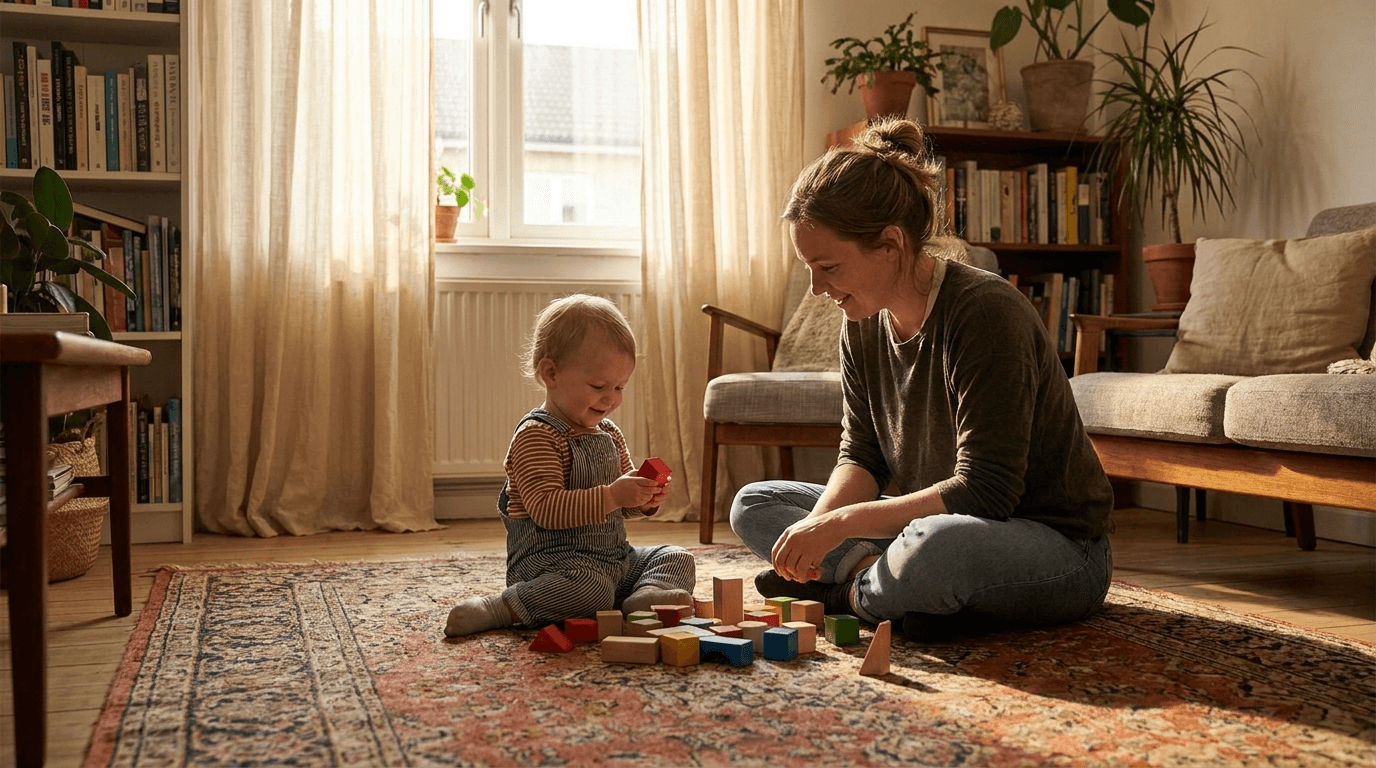
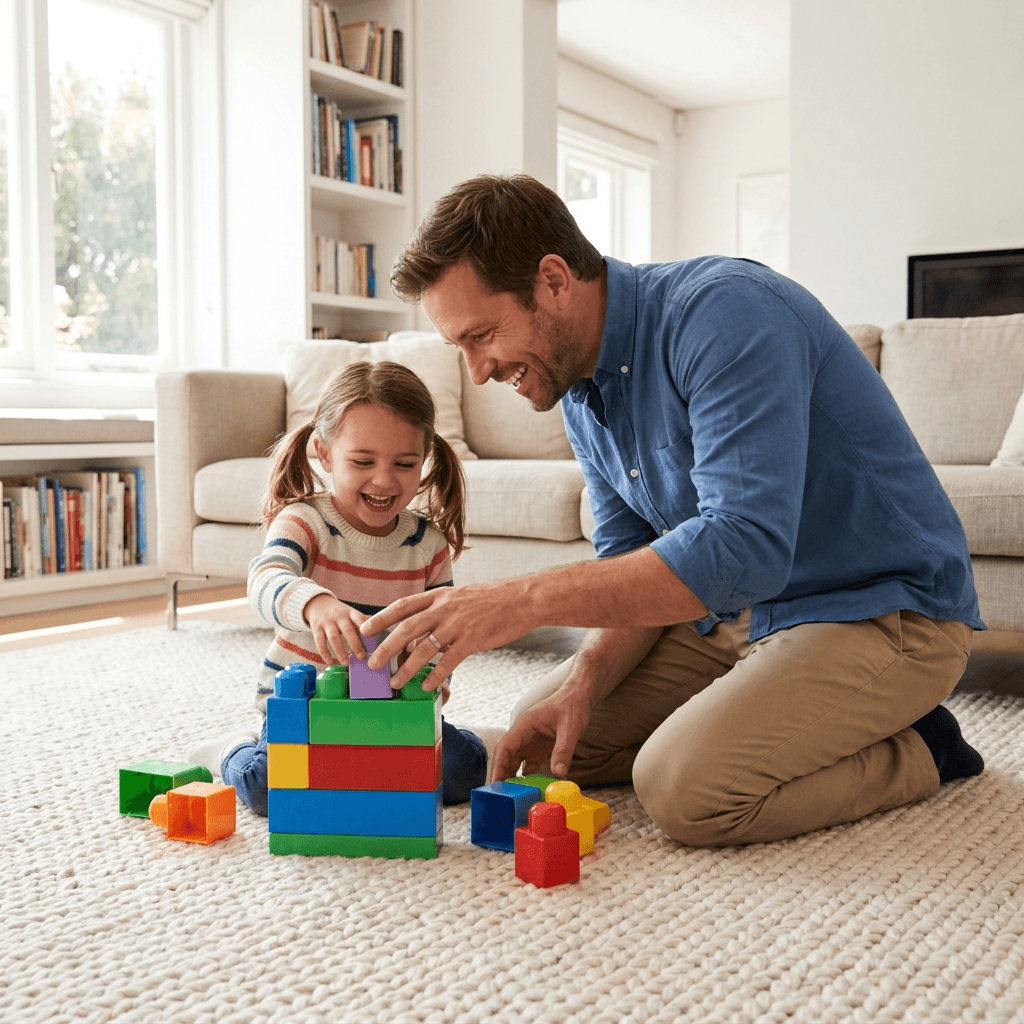
- Peekaboo and hiding games — hide a toy under a cloth and encourage your baby to find it; this strengthens object permanence and turn-taking.
- Floor time with varied textures — safe household objects of different shapes and textures support sensory processing and fine motor exploration.
- Sing and pause — sing familiar songs and pause at a predictable moment, giving your baby the chance to fill the gap with a sound or expression.
Name response and shared looking at nine months are two of the most important social signals clinicians watch. Incorporating these naturally into daily routines — during nappy changes, mealtimes, and play — requires no specialist training and takes no additional time.
Safety and Limitations: What a Milestone Article Cannot Tell You
Articles like this one provide general guidance based on broadly accepted developmental frameworks. They cannot account for individual factors such as prematurity (for which adjusted age should always be used), medical history, family circumstances, or cultural and linguistic variation. If your child was born prematurely, discuss milestones with your paediatrician using their corrected age rather than chronological age.
No online resource replaces a thorough, in-person developmental assessment by a qualified professional. If you have concerns — even mild or hard-to-articulate ones — trust your instinct and raise them. Parents are consistently among the most reliable early detectors of developmental difference, and no concern is too small to mention.
Getting Support in Dubai
If you have questions about your child's development, early support is available in Dubai without the need for a prior diagnosis. xlr8well's team delivers speech therapy, ABA therapy, occupational therapy, and physical therapy at home, anywhere in Dubai — making it easier for families to access consistent, qualified support within a familiar environment. Assessments and therapy are also available in person at Bloom Autism Center (Office 702, Yes Business Tower, Al Barsha 1, Dubai).
Every journey starts with a free, judgement-free consultation on WhatsApp. A formal diagnosis is never required to begin therapy. To learn more about the support available, explore our autism therapy services.
This article is general information for parents and caregivers, not a diagnosis or a substitute for professional assessment of your individual child. If you have any urgent concerns about your child's health, please contact your paediatrician or, in an emergency, call 999.