%2520(350%2520x%2520150%2520px)%2520(90%2520x%252040%2520px)%2520(4).png%3Falt%3Dmedia%26token%3Dbed5580f-de12-4061-ac20-36c16b313f14&w=384&q=75)
Teaching Emotional Regulation: From Co-Regulation to Self-Control
What Is Emotional Regulation — and Why Does It Take So Long to Develop?
Emotional regulation is the ability to notice, understand, and manage one's own feelings and the behaviours that flow from them. For adults, it can feel almost automatic — a deep breath before a difficult conversation, a pause before responding in anger. For children, it is anything but automatic. The brain regions responsible for impulse control and emotional management, particularly the prefrontal cortex, are still developing well into early adulthood. This biological reality means that expecting a toddler or even a young school-age child to "just calm down" is a little like expecting someone to ride a bicycle they have never been taught to ride.
Understanding this arc — from complete dependence on others to genuine independence — can transform the way parents, carers, and educators respond to children's emotional storms. Rather than a discipline problem to be solved, an emotional outburst becomes a developmental opportunity to be guided.
The Foundation: Co-Regulation Comes First
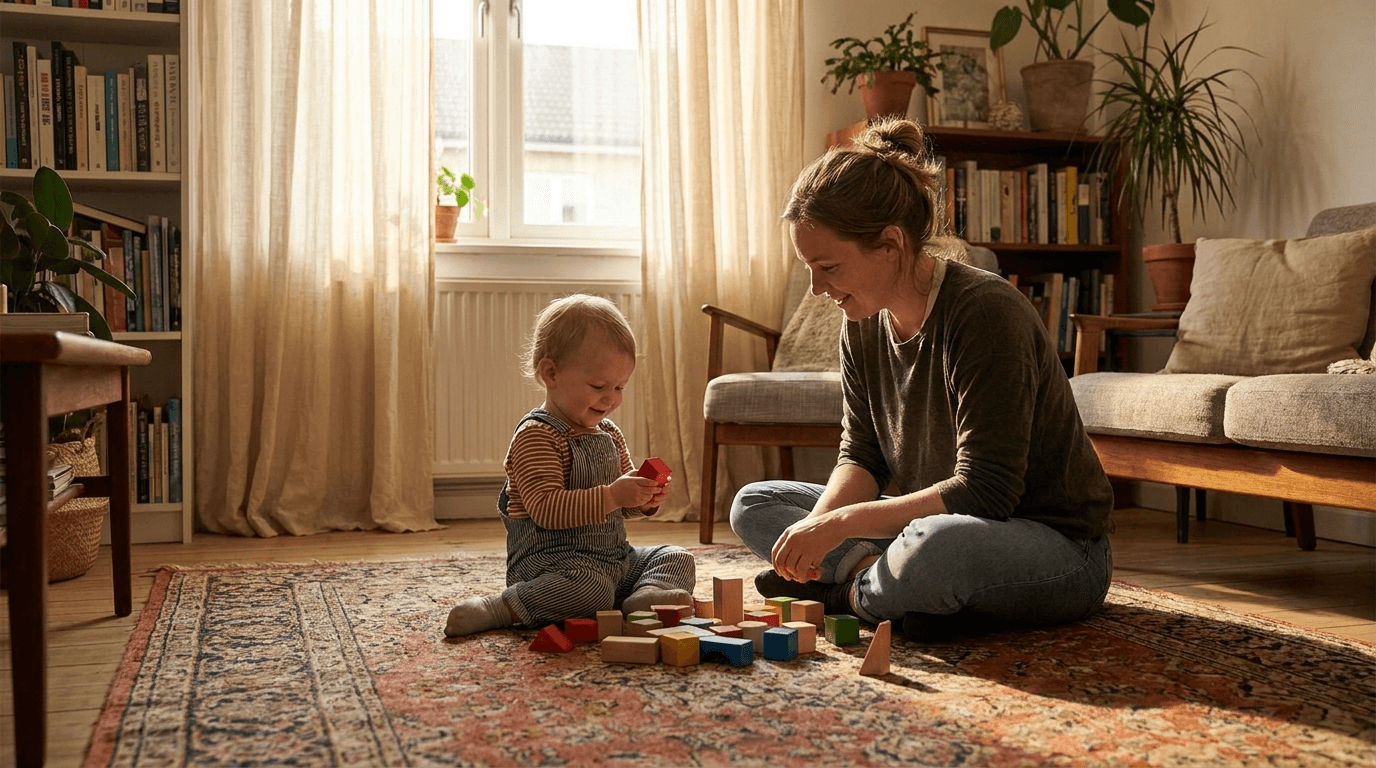
Before a child can self-regulate, they must first experience co-regulation — borrowing the calm nervous system of a trusted adult to help settle their own. This is not simply a parenting philosophy; it reflects how the developing brain actually works. When a caregiver remains steady, lowers their voice, reduces the number of words they use, and stays physically present during a child's distress, they are providing an external scaffold for a system that is not yet capable of managing alone.
Some key principles of effective co-regulation include:
- Regulate yourself first. A child's nervous system is highly attuned to adult cues. Raised voices, tense body language, or visible frustration can escalate rather than de-escalate. Your own calm is, quite literally, the lesson plan.
- Use fewer words during the storm. Mid-meltdown is not the moment for explanations or consequences. Simple, warm language — "I'm here," "You're safe" — is far more effective than lengthy reasoning.
- Stay close without demanding engagement. Some children need proximity; others need a little space. Following the child's lead on physical closeness, while remaining present, signals safety.
Co-regulation is not about removing all discomfort or "giving in." It is about helping a child's nervous system return to a state in which learning and connection are possible.
Name It to Tame It: Building a Feelings Vocabulary
Once calm is restored, language becomes one of the most powerful tools available. Research in developmental psychology suggests that being able to label an emotion — "I am frustrated," "I feel disappointed" — may help reduce its intensity, because naming activates areas of the brain involved in thinking rather than reacting. For children, however, this vocabulary has to be built deliberately and, crucially, during calm moments rather than in the heat of an episode.
Practical ways to build emotional vocabulary
- Use picture books and storytelling to introduce a wide range of emotions, including nuanced ones like "disappointed," "overwhelmed," or "left out."
- Narrate your own feelings in everyday situations: "I felt a bit nervous before that meeting, but it went well."
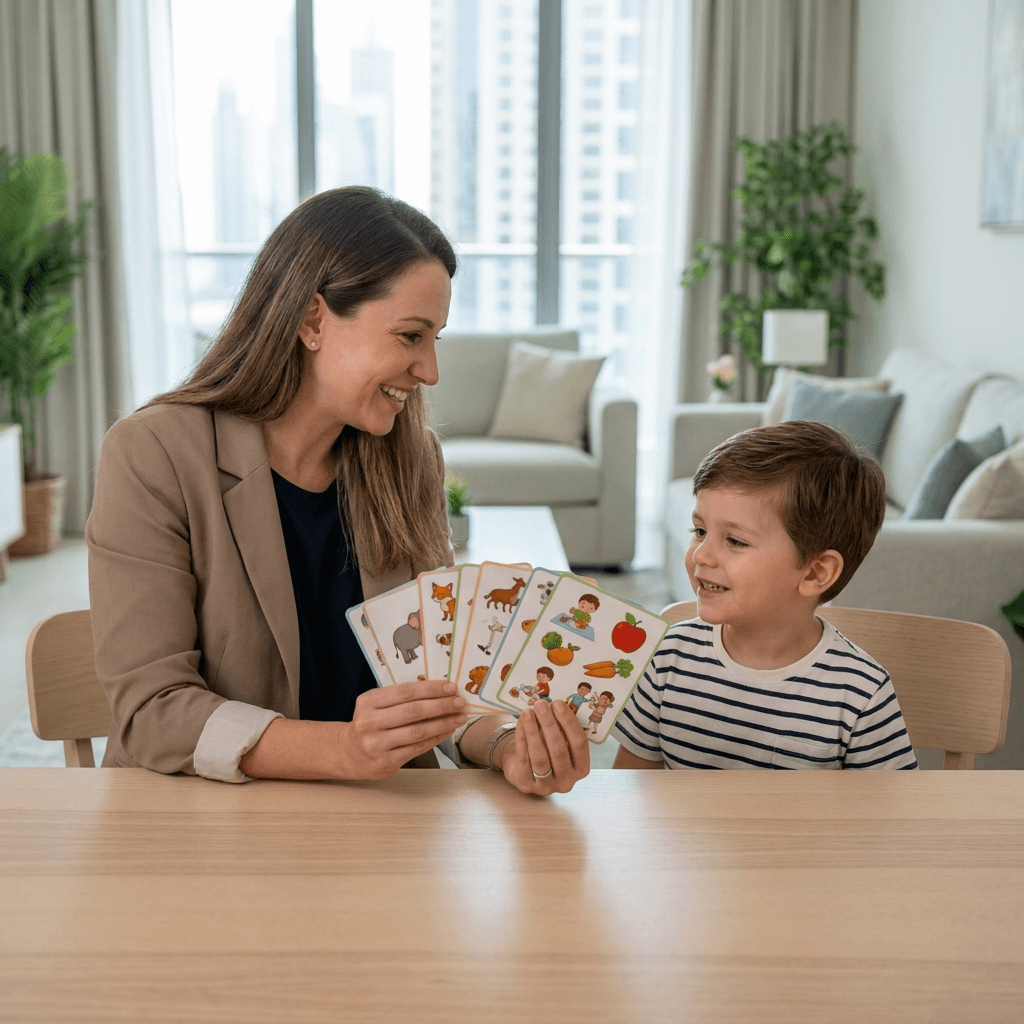
- Use feelings charts or emotion cards as visual anchors, particularly for younger children or those who are still developing expressive language.
- Reflect feelings back during calm conversations: "It sounds like you felt left out when your friend chose someone else — is that right?"
Avoid correcting a child's emotion ("You shouldn't feel angry about that"). Validation does not mean agreement; it means acknowledgement, and it is the necessary first step before problem-solving.
Teaching the Toolkit — Before It Is Needed
One of the most common mistakes well-meaning adults make is attempting to introduce coping strategies during the crisis itself. This is, as the saying goes, like trying to teach someone to swim while they are drowning. Skills need to be installed in calm waters so they can be drawn upon in the storm.
A practical toolkit might include:
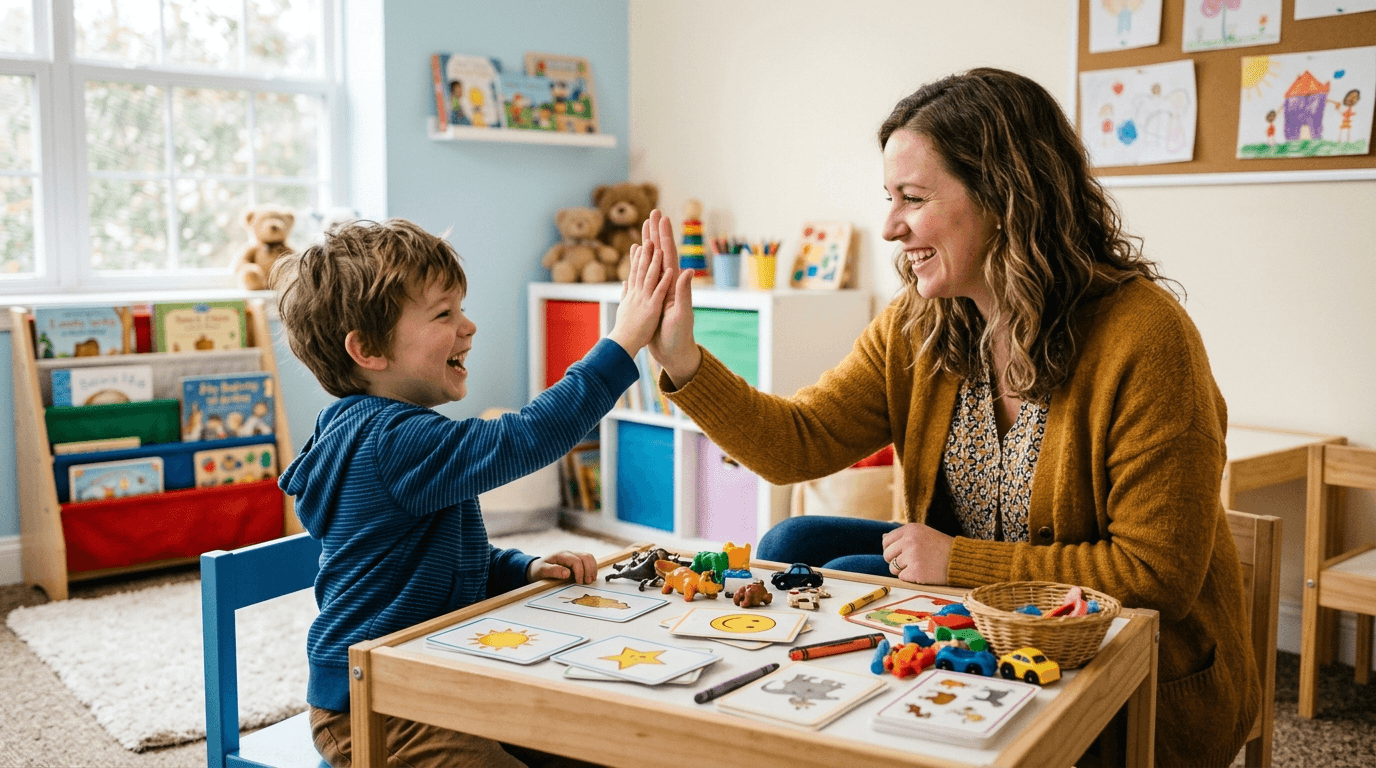
- Balloon breaths (or belly breathing): Breathing slowly into the belly, imagining it inflating like a balloon. Practised regularly during play or bedtime routines, this can become a genuine go-to strategy.
- A calm corner or comfort space: A designated area — not used as punishment — where a child can go when they feel overwhelmed. A few familiar, soothing items (a soft toy, a weighted blanket, a sensory fidget) can support self-soothing.
- Squeeze hugs or self-squeeze: Deep pressure, whether from a caregiver hug or a child squeezing their own arms, can activate the body's calming response.
- Movement breaks: Physical activity can help discharge the physiological energy of strong emotions — a short walk, jumping on a trampoline, or shaking hands and feet.
- Simple scripts: Teaching children a phrase to use — "I need a minute" or "I'm feeling too big right now" — gives them a way to communicate without escalating.
Practise these strategies in playful, low-stakes moments. Make them familiar. Only then will a child be able to access them under pressure.
Realistic Expectations: A Developmental Timeline
Many parents worry when their three- or four-year-old cannot calm themselves independently. It is worth knowing that the capacity for consistent, independent emotional regulation typically begins to emerge around ages five to seven — and even then, it is far from complete. This is a reflection of brain development, not a character flaw or a parenting failure.
A rough developmental guide (bearing in mind that individual variation is wide):
- Under 3: Entirely dependent on co-regulation. Meltdowns are normal and expected.
- 3–5 years: Beginning to understand emotions conceptually; can start learning tools but will need consistent adult support to use them.
- 5–7 years: May begin to deploy simple strategies independently in lower-stress situations, with reminders.
- 7–12 years: Gradually increasing capacity for independent regulation, though still developing. Peer relationships and school demands add complexity.
- Adolescence: Renewed challenge as the emotional brain surges ahead of the still-developing regulatory circuits.
Persistent difficulty regulating emotions, particularly when it is affecting a child's daily functioning, relationships, or learning over a period of months, is worth discussing with a professional.
Dubai Context: Raising Emotionally Resilient Children in the UAE
Families in Dubai navigate a uniquely international environment — frequent transitions, multilingual households, cultural diversity, and at times limited extended family networks close by. These factors can place additional demands on children's regulatory systems. Moves between countries, changes in school, or the loss of a familiar community can all surface as emotional and behavioural challenges. Acknowledging these real-world pressures, rather than pathologising normal responses to them, is an important part of the picture.
At the same time, Dubai's family-focused culture and strong community networks can be genuine assets. Drawing on trusted relationships — with family, with school, with community — forms part of the co-regulation scaffolding that children need.
When Development Needs a Helping Hand
If your child's difficulties with emotional regulation have persisted for several months, are intensifying rather than improving, or are significantly affecting their quality of life or that of your family, it is worth seeking a professional assessment. A thorough evaluation can help distinguish between the wide range of typical development and patterns that may benefit from targeted support — and it can turn generalised worry into a clear and actionable plan.
xlr8well offers speech and language therapy, occupational and sensory therapy, and developmental support delivered at home across Dubai, as well as at Bloom Autism Center (Office 702, Yes Business Tower, Al Barsha 1, Dubai). Working with children in their own familiar environment often allows therapists to see their truest abilities and tailor support accordingly.
This article is general information for parents and carers and is not a diagnosis or a substitute for professional assessment of your child. If you have concerns about your child's development, please consult a qualified healthcare professional.