%2520(350%2520x%2520150%2520px)%2520(90%2520x%252040%2520px)%2520(4).png%3Falt%3Dmedia%26token%3Dbed5580f-de12-4061-ac20-36c16b313f14&w=384&q=75)
Your Child’s First Speech Therapy Session: What Actually Happens
What to Expect at Your Child's First Speech Therapy Session
The moment you decide to book a speech therapy assessment for your child, a mixture of relief and anxiety tends to set in. Relief that you are doing something; anxiety about what "doing something" actually involves. Will your child be seated at a table, failing tests? Will they refuse to cooperate? Will you leave with more questions than answers?
The honest answer is that a well-run first session looks nothing like most parents imagine — and understanding what really happens can make a significant difference to how both you and your child experience it.
The Goal of Session One: A Honest Baseline, Not a Grade
A speech-language pathologist (SLP) begins not by measuring what your child cannot do, but by building a complete picture of how they communicate right now. That picture includes sounds, words, sentences, gestures, eye contact, play skills, and the social intent behind communication — the reach for a toy, the tug on a sleeve, the point towards a biscuit. Every one of those behaviours tells the clinician something useful.
Think of it less like a school exam and more like a skilled observer quietly taking notes while your child goes about being themselves. That is largely what it is.
How the Session Is Typically Structured
Settling in and rapport-building
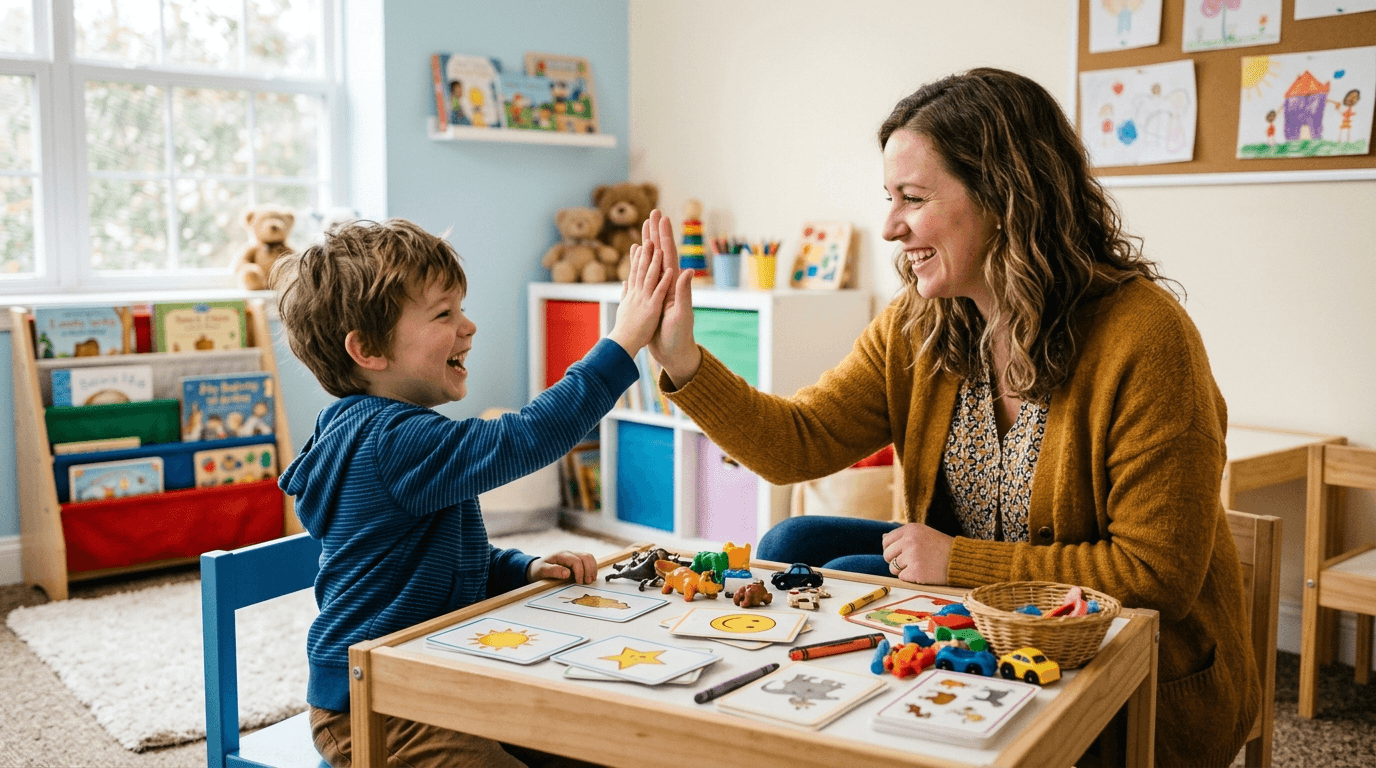
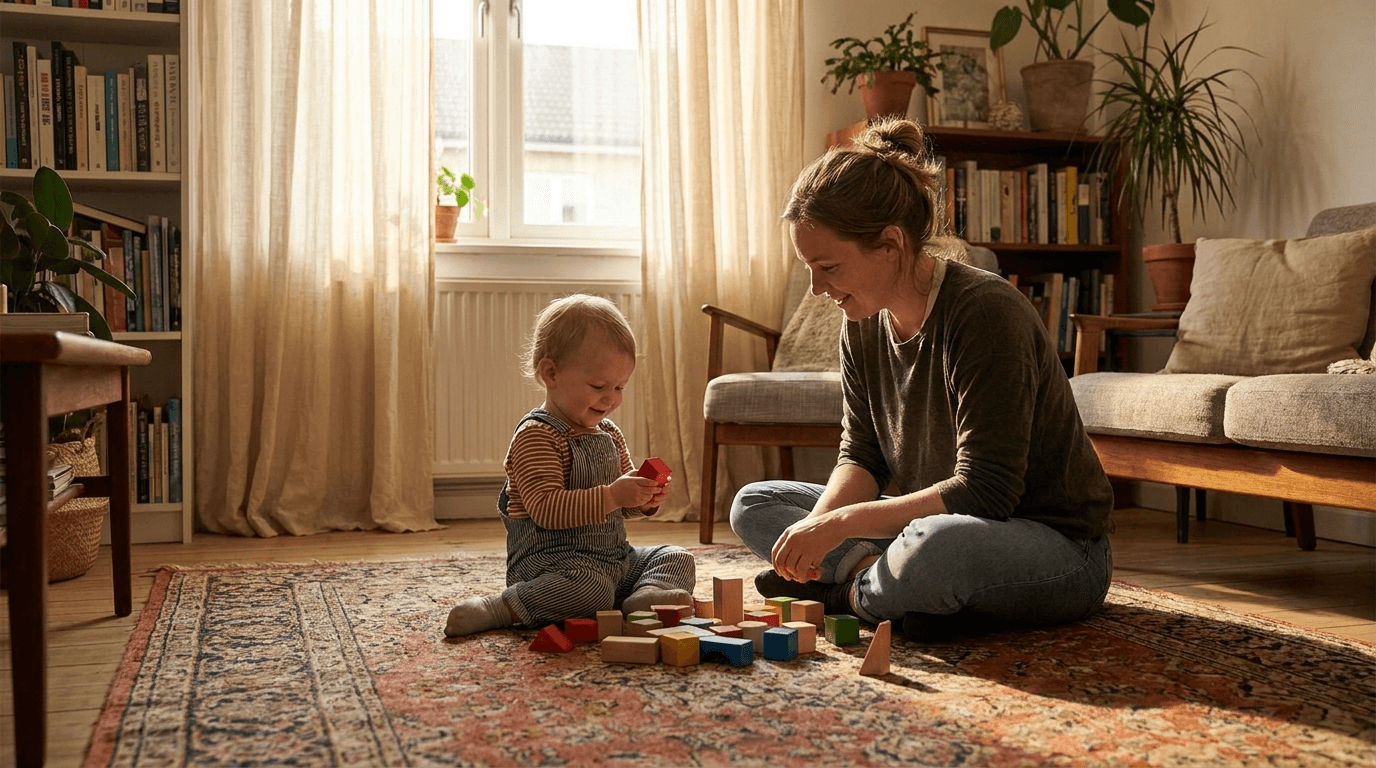
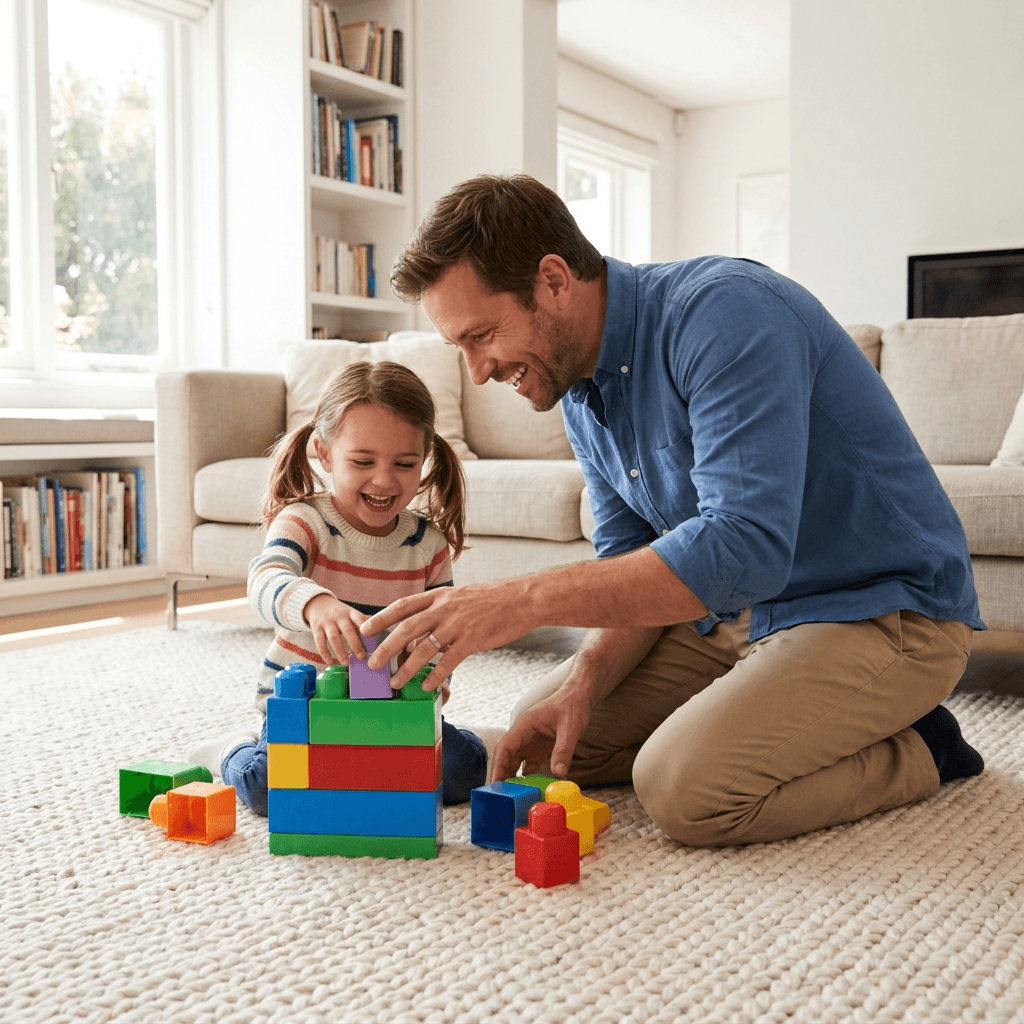
Most experienced SLPs begin by creating a low-pressure environment. Toys, books, or activities chosen to suit your child's developmental level and interests are laid out without instruction. The SLP may sit on the floor, follow your child's lead, and simply play alongside them. This is not wasted time — it is the most important data-collection phase of the session. A child who feels safe and at ease will show their true communicative range; a child who feels tested or anxious will not.
Structured observation and informal probing
Once some comfort is established, the SLP will begin gently steering interactions to probe specific areas. They might present a choice between two objects to see whether your child reaches, points, or verbalises a preference. They might pause mid-routine to see whether your child uses communication to request its continuation. They might model a word or sound and observe whether your child imitates, ignores, or responds in another way. These probes are embedded in play so naturally that your child is rarely aware anything is being "tested".
Standardised assessments — when and whether they happen
Formal, standardised tools (structured picture-naming tasks, listening comprehension measures, and similar protocols) do exist in speech-language pathology and are a valuable part of a comprehensive evaluation. However, many SLPs will defer them until a second or third session, once rapport is established, because the scores from a distressed or disengaged child carry limited meaning. If your child is very young, has significant anxiety, or is non-verbal, the assessment may be entirely observation-based across multiple sessions. Do not interpret the absence of a formal test sheet in session one as a sign that nothing useful was learned.
Parent history and interview
Your role in session one is substantial. The SLP will ask targeted questions: when your child said their first words, whether any words were lost and then regained or lost entirely, how they communicate at home versus in new environments, what concerns you most, and what your child's daily routines look like. This history is clinical information, not small talk. Come prepared with specific examples rather than general impressions where possible.
A short video of your child communicating naturally at home — over a meal, during a favourite game, in a moment of frustration — can be genuinely valuable. Home behaviour often differs from clinic behaviour, and that difference itself is informative.
What the SLP Is Looking At
Across the session, an SLP is typically observing several overlapping domains:
- Speech sound development: Which sounds your child produces, how clearly, and whether their sound system is broadly in line with developmental expectations for their age.
- Language comprehension: How well your child understands what is said to them — following instructions, responding to questions, understanding vocabulary.
- Expressive language: The words, phrases, or sentences your child uses — their vocabulary range, sentence structure, and ability to use language for different purposes (requesting, commenting, asking, refusing).
- Social communication: Eye contact, joint attention (sharing interest in an object or event with another person), turn-taking, and the pragmatic, social use of language.
- Play and cognitive development: Play level is closely linked to language development. A child engaged in symbolic or pretend play is demonstrating cognitive skills that support language growth.
- Non-verbal communication: Gesture, pointing, facial expression, and body language are legitimate forms of communication that the SLP will note carefully, especially in younger or non-verbal children.
What You Should Leave With
A well-conducted first session should give you, at minimum, three things before you walk out:
- A baseline picture: A clear summary (verbal or written, depending on the service) of what the SLP observed — your child's current communication profile and any areas that warrant closer attention.
- Draft goals or a proposed direction: Not a finished therapy plan, but an honest first proposal — what areas would benefit from support, and in what order.
- A recommended cadence: How frequently sessions are suggested, for how long, and whether any additional assessments (hearing tests, developmental paediatrics, occupational therapy) are recommended alongside speech therapy.
A useful question to ask before you leave: "What will meaningful progress look like by the end of the first two months, and how will we know if we are seeing it?" A good SLP will be able to give you a thoughtful, honest answer — and a frank acknowledgement of what remains uncertain.
Your Role Does Not End at the Door
Parent involvement is not a courtesy — it is a core part of how speech therapy produces results. Research and clinical experience consistently suggest that children make faster progress when parents are actively coached to carry communication strategies into everyday life: meals, bathtime, car journeys, play. Expect the SLP to spend time coaching you, explaining the rationale behind techniques, and sending you home with practical things to try. This is not you being given homework; it is the therapy extending into the hours where your child spends most of their waking life.
Common Worries — Addressed Honestly
"My child won't cooperate."
Experienced SLPs are used to children who refuse to engage on demand. A skilled clinician will adapt the session to whatever level of participation your child can offer on the day, and will account for variability in their overall assessment. One session is rarely the whole picture.
"What if they find something serious?"
Early identification of a difficulty is genuinely better than late identification — earlier support tends to be more effective for most speech and language challenges. If the SLP raises concerns, they will also explain the next steps clearly. You will not be left without a path forward.
"My child speaks more at home — does that mean the session is pointless?"
Not at all. The gap between home and clinic performance is itself clinically meaningful. Bring that video of home communication — it directly addresses this concern and gives the SLP a fuller picture.
Speech and Language Therapy at Home in Dubai
For families in Dubai, access to qualified, licensed SLPs has become considerably more straightforward. xlr8well's licensed speech-language pathologists provide speech and language therapy at home anywhere in Dubai, removing the logistical challenge of bringing a young child to a clinic, and often allowing the clinician to observe your child in the environment where they are most relaxed and communicative. Sessions are also available at Bloom Autism Center (Office 702, Yes Business Tower, Al Barsha 1, Dubai). Every session includes parent coaching, and therapy begins from assessment — not after a prolonged waiting period.
This article is general information for parents and carers, and is not a diagnosis or a substitute for professional assessment of your individual child. If you have concerns about your child's development, consult a licensed healthcare professional.