%2520(350%2520x%2520150%2520px)%2520(90%2520x%252040%2520px)%2520(4).png%3Falt%3Dmedia%26token%3Dbed5580f-de12-4061-ac20-36c16b313f14&w=384&q=75)
Gross Motor Development: Why Climbing, Falling and Spinning Are the Curriculum
Why Big-Body Movement Is the Foundation of Child Development
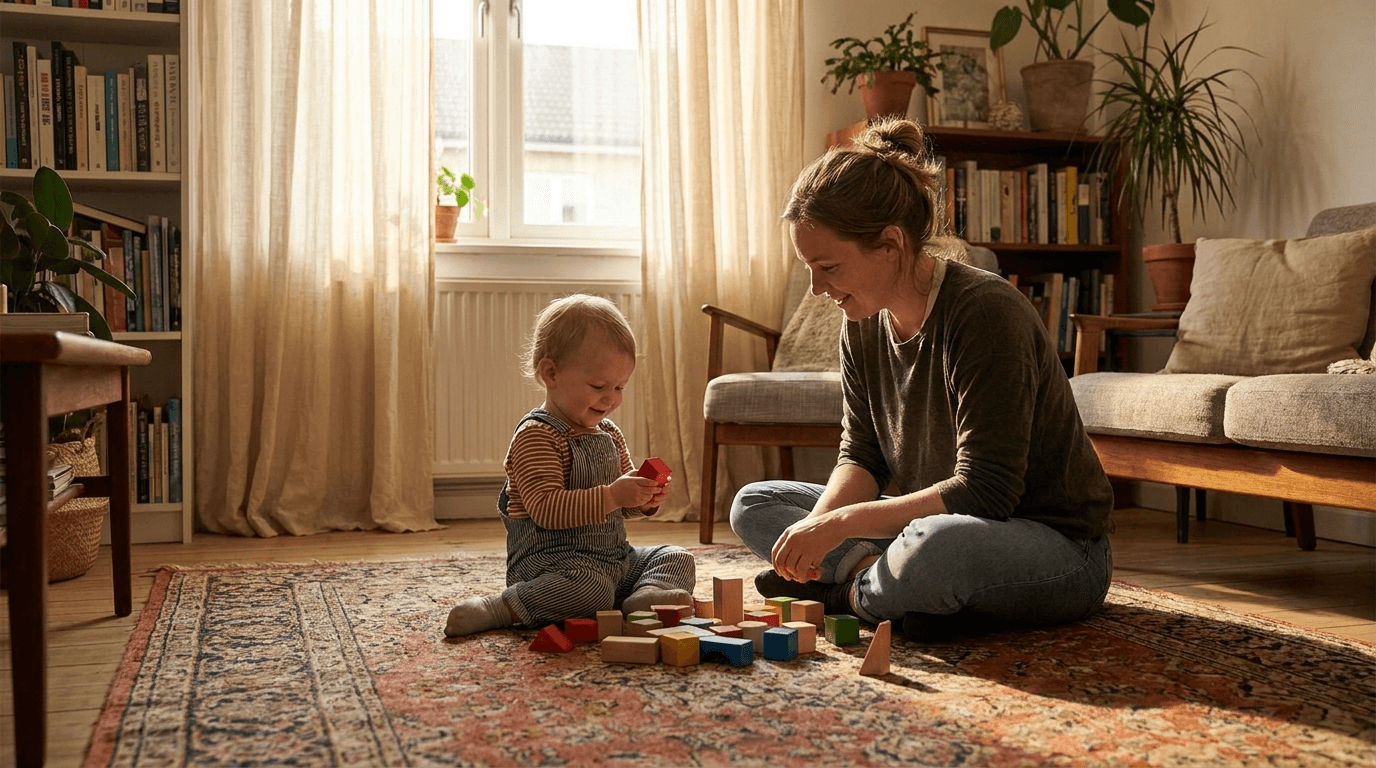
Watch a toddler for ten minutes and you will notice something immediately: they are almost never still. They climb onto sofas, roll down cushions, spin in circles until they fall over laughing, and then do it again. For many parents — especially those raising children in Dubai's apartment-heavy, sun-intense urban environment — the instinct is to slow them down. In reality, that exuberant physical chaos is the curriculum. Gross motor development, the progressive mastery of large-scale body movement, is not a warm-up for "real" learning. It is the platform on which attention, coordination, language and self-regulation are built.
What Gross Motor Development Actually Means
Gross motor skills refer to movements that involve the large muscle groups of the body — the core, legs, arms and shoulders. They are distinct from fine motor skills (the precise finger movements needed for writing or buttoning), though the two are deeply interconnected. Gross motor competence develops in a broadly predictable sequence during the early years:
- Rolling and tummy time (0–6 months): Builds neck, shoulder and core strength — the earliest postural foundation.
- Sitting unsupported (around 6–9 months): Requires coordinated trunk stability rather than simple muscle strength.
- Crawling (around 8–10 months): Promotes cross-body coordination and spatial awareness. Skipping crawling is more common than once thought and is not automatically a red flag, though it is worth noting if other milestones also vary.
- Cruising and standing (9–12 months): Shifts weight-bearing from four points to two — a remarkable balance challenge.
- Walking and early running (12–18 months): The milestone most parents track, though the range of "normal" is wider than most expect.
- Climbing, jumping and throwing (2–4 years): The phase where outdoor play becomes genuinely complex and essential.
These stages are not rigid checklists. Children move through them at their own pace, and individual variation is real and normal. What matters more than hitting each milestone on a specific date is the overall arc of progress over months.
The Hidden Curriculum: What Movement Teaches the Brain
Physical play is not simply exercise for the body — it is exercise for the nervous system. Several interconnected systems develop through repeated gross motor experience:
Vestibular Processing
The vestibular system, housed in the inner ear, detects movement, gravity and spatial orientation. It is stimulated by spinning, swinging, rolling and changing direction — precisely the activities that look like "just playing." A well-regulated vestibular system supports seated attention, eye tracking and the ability to filter out irrelevant sensory information. Children who do not get enough vestibular input may seek it out in the classroom by rocking, spinning on chairs or finding it difficult to sit still for desk work.
Proprioception
Proprioception is the body's internal sense of its own position in space. It is developed through heavy-work activities: climbing, hanging, carrying, rough-and-tumble play. Children with strong proprioceptive processing tend to have better body awareness, are less likely to bump into things or misjudge distances, and often have an easier time with fine motor tasks later on.
Postural Control and Core Stability
The muscles that hold a child upright at a school desk are the same muscles built through climbing frames, crawling tunnels and rolling on grass. Poor core stability is one of the most common reasons children struggle to sit still or tire quickly during learning activities. Strengthening it through play — rather than exercise drills — is the developmentally appropriate path.
Risk Assessment and Emotional Regulation
Supervised "risky-ish" play — climbing a little higher than feels comfortable, navigating uneven surfaces, engaging in friendly rough-and-tumble — builds something that cannot be taught in a classroom: physical judgement. Children learn to assess what their bodies can do, manage the small anxiety of challenge, recover from minor falls and try again. This iterative experience contributes meaningfully to confidence and emotional self-regulation.
The Modern Problem: Opportunity, Not Ability
Today's children are not less capable than previous generations. What has changed is the volume of movement opportunity available to them. Several factors compound in the UAE context in particular:
- Heat and outdoor access: Dubai's summers genuinely limit outdoor time for months at a stretch, compressing the window for outdoor gross motor play into cooler seasons.
- Container time: Bouncers, car seats, high chairs and pushchairs — all useful tools — can accumulate to fill large portions of a young child's day if used habitually rather than purposefully.
- Screen time: Passive screen consumption replaces the unstructured active play that would otherwise fill the same slot.
- Indoor environments: Apartment living, while comfortable, often lacks the irregular terrain, slopes and climbing opportunities of gardens or parks.
The result is a deficit not of developmental potential but of accumulated movement "reps" — the thousands of small motor experiences that wire the nervous system over time. When a child seems wiggly during homework or struggles to sit upright, the question worth asking first is: how many minutes did they actually run, climb and hang today?
Practical Ways to Build Gross Motor Opportunity at Home
Parents do not need specialist equipment or large spaces to meaningfully support gross motor development. Simple environmental audits and habit shifts can make a significant difference:
- Designate a daily "active window" — even 30–45 focused minutes of free movement is valuable, and mornings or evenings in the cooler months are ideal for outdoor play in Dubai.
- Use indoor spaces creatively: sofa cushion obstacle courses, hallway crawling tunnels made from chairs and blankets, or simply allowing floor-based play rather than chair-based screen time.
- Visit Dubai's indoor play spaces and parks during cooler months — many malls and community centres offer appropriate environments with climbing and balancing opportunities.
- Choose active outings intentionally: walks on uneven surfaces, playgrounds with varied climbing equipment, and beach play all offer rich sensory-motor input.
- Allow controlled mess and mild risk. A child who climbs the outside of a slide and slips is gathering data their nervous system needs.
When to Seek Professional Guidance
Milestone variation is normal. Persistent patterns of difficulty across several months — particularly when they affect a child's ability to keep up with peers, participate in play or engage with daily activities — are worth discussing with a professional. Some signs that a paediatric physiotherapy or occupational therapy screening may be helpful include:
- Significant lag across multiple motor milestones without signs of progress over two to three months
- Persistent toe-walking beyond age three
- Frequent falls or obvious difficulty with balance tasks that peers manage with ease
- Marked avoidance of physical play or unusually low stamina for age
- Clumsiness that affects dressing, feeding or other self-care tasks
A professional assessment does not label a child — it turns parental worry into a clear picture and, where needed, a practical plan. Early support, when it is appropriate, makes a meaningful difference to developmental trajectories.
xlr8well's therapists offer occupational and sensory therapy, developmental support, and speech and language therapy in the home environment across Dubai, where children are often most comfortable and show their truest abilities. Assessments and ongoing therapy sessions are also available at Bloom Autism Center (Office 702, Yes Business Tower, Al Barsha 1, Dubai). If your child's gross motor development has appeared to plateau for several months, an occupational and sensory therapy assessment or a conversation with our speech and language therapy team is a practical first step.
This article is general information for parents and carers, not a diagnosis or a substitute for professional assessment of your individual child. If you have specific concerns about your child's development, please consult a licensed paediatrician or qualified therapist.