%2520(350%2520x%2520150%2520px)%2520(90%2520x%252040%2520px)%2520(4).png%3Falt%3Dmedia%26token%3Dbed5580f-de12-4061-ac20-36c16b313f14&w=384&q=75)
Building a Language-Rich Home: The 30-Million-Word Reality
What Is the 30-Million-Word Gap — and Does It Still Matter?
In the 1990s, researchers Betty Hart and Todd Risley published findings suggesting that by age three, children from more talkative households had heard tens of millions more words than children from quieter ones — a figure that was later popularised as the "30-million-word gap." The original research sparked decades of debate, some methodological criticism, and a wave of follow-up studies. The headline number may be imprecise, but the practical core of the finding has held up surprisingly well: the quality and quantity of early language input at home is one of the most consistent predictors of a child's later vocabulary, reading ability, and academic confidence.
For parents in Dubai and across the UAE — where households are often multilingual, schedules are busy, and screen time competes for everyone's attention — understanding what actually drives language development can turn vague worry into genuinely useful daily habits.
Turns, Not Lectures: The Conversational Exchange Is What Counts
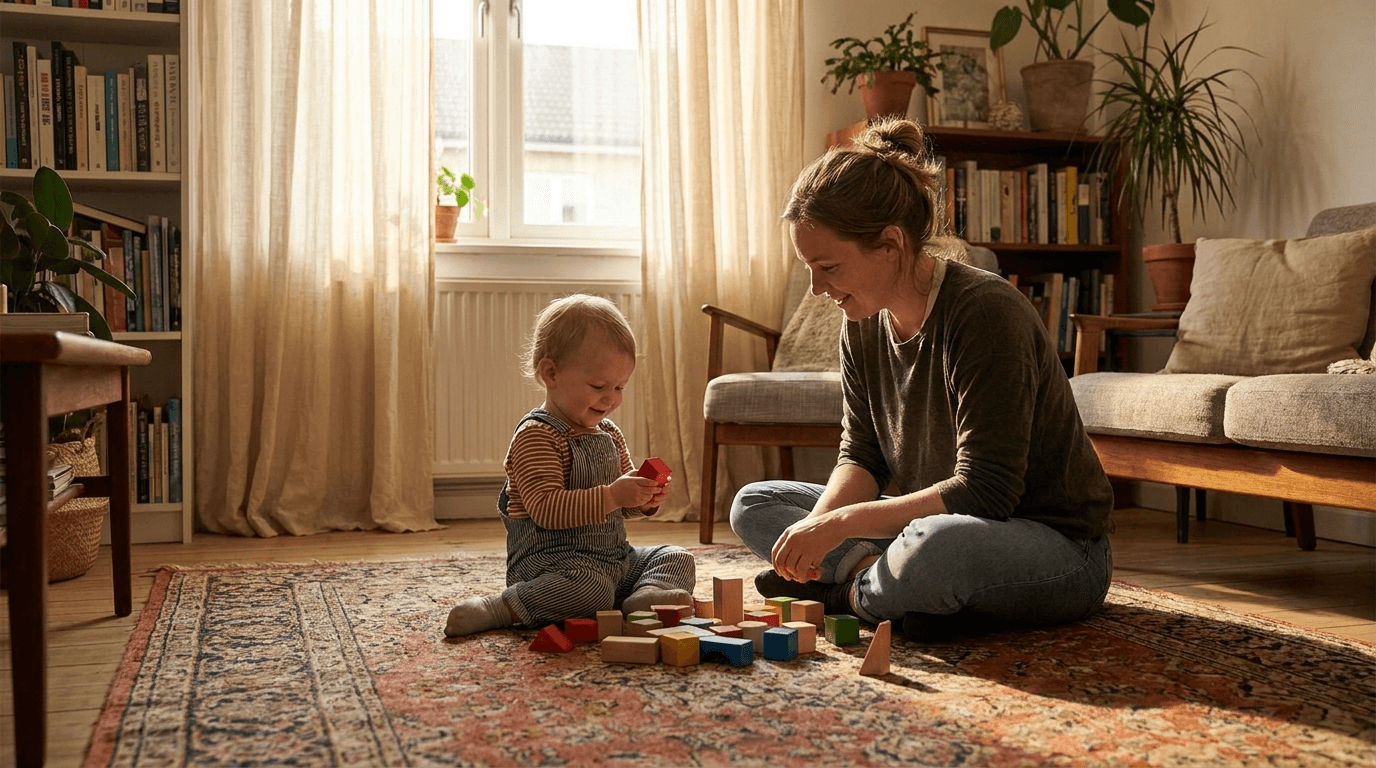
More recent research has refined the original word-gap story in an important way. It is not simply the number of words a child hears that predicts language growth — it is the number of conversational turns. A conversational turn is any back-and-forth exchange: a parent asks a question, a toddler points and babbles, the parent responds to that babble, the toddler babbles again. Even very young infants participate in proto-conversations through eye contact, facial expressions, and vocalisations.
This distinction matters practically. A parent narrating a long monologue at a child ("we're now going to the supermarket, then we'll pick up your sister, then we'll cook pasta...") provides some input, but it does not create the same neural engagement as a genuine exchange. Researchers sometimes call this "serve and return" — the child serves (a gesture, a sound, a word), and the adult returns it (by responding meaningfully and inviting more). Studies using brain imaging have suggested that the density of these exchanges in early childhood is associated with stronger language-network development, though the science in this area is still evolving.
The practical takeaway: aim for volleys, not performances. Short, warm, responsive exchanges — even about very ordinary things — accumulate into a rich language environment.
Narrate the Ordinary: Why "Boring" Commentary Is Curriculum
Many parents assume that language-rich parenting means elaborate storytelling or structured learning activities. In reality, some of the most valuable language input happens during routine tasks. Folding laundry, preparing a meal, driving to school, or unpacking shopping bags are all opportunities to narrate, explain, and question.
- Running commentary: "I'm putting the red towel on top because it's the heaviest — what do you think will happen if I put the small one there first?"
- Cause and effect language: "The onion is making my eyes water because it releases a gas when we cut it."
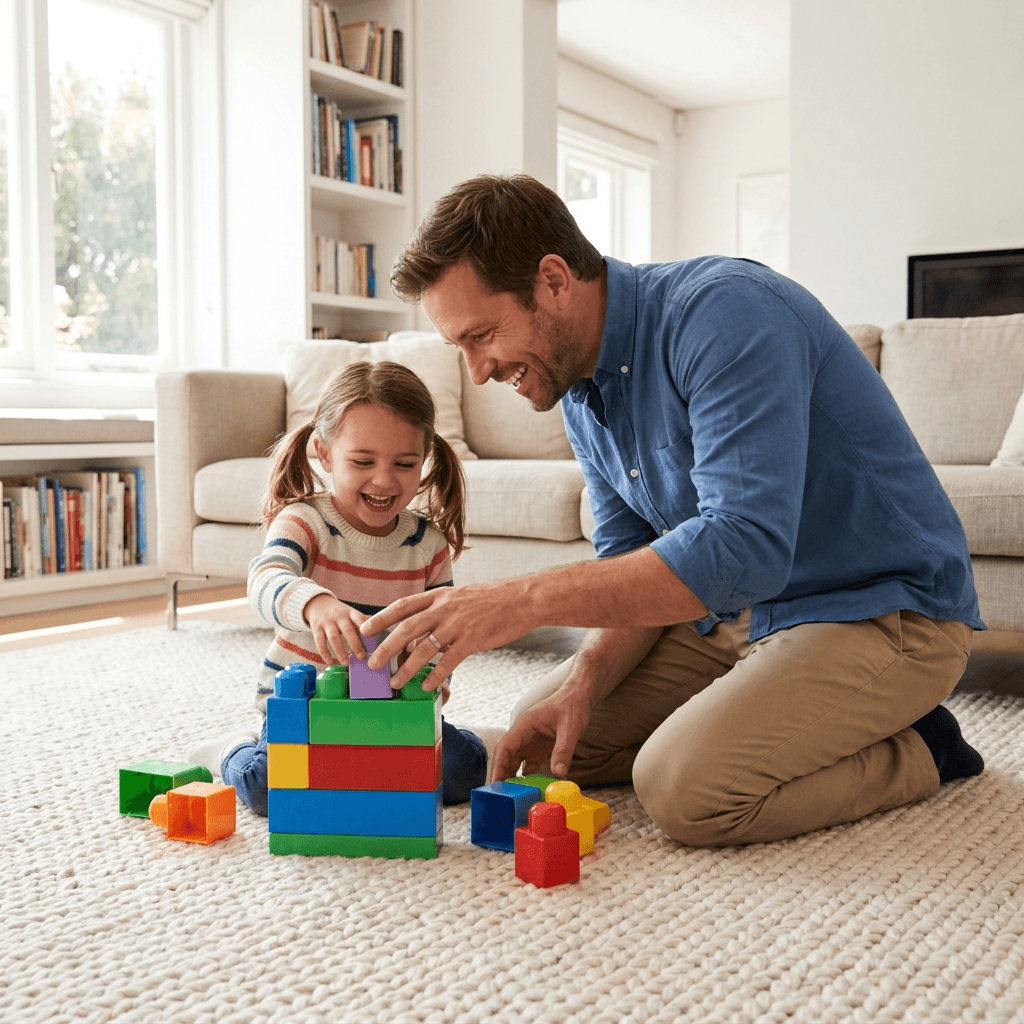
- Emotional labelling: "You look frustrated. Is it because the block won't stay on top?"
- Predictive questions: "We're nearly at the roundabout — which way do you think we turn to get home?"
These moments cost nothing and require no preparation. Over months and years, children who are spoken to this way develop not just broader vocabularies but also a richer understanding of how the world works — sometimes called "world knowledge" — which underpins reading comprehension in later school years.
Reading Together: Discussion Matters as Much as the Text
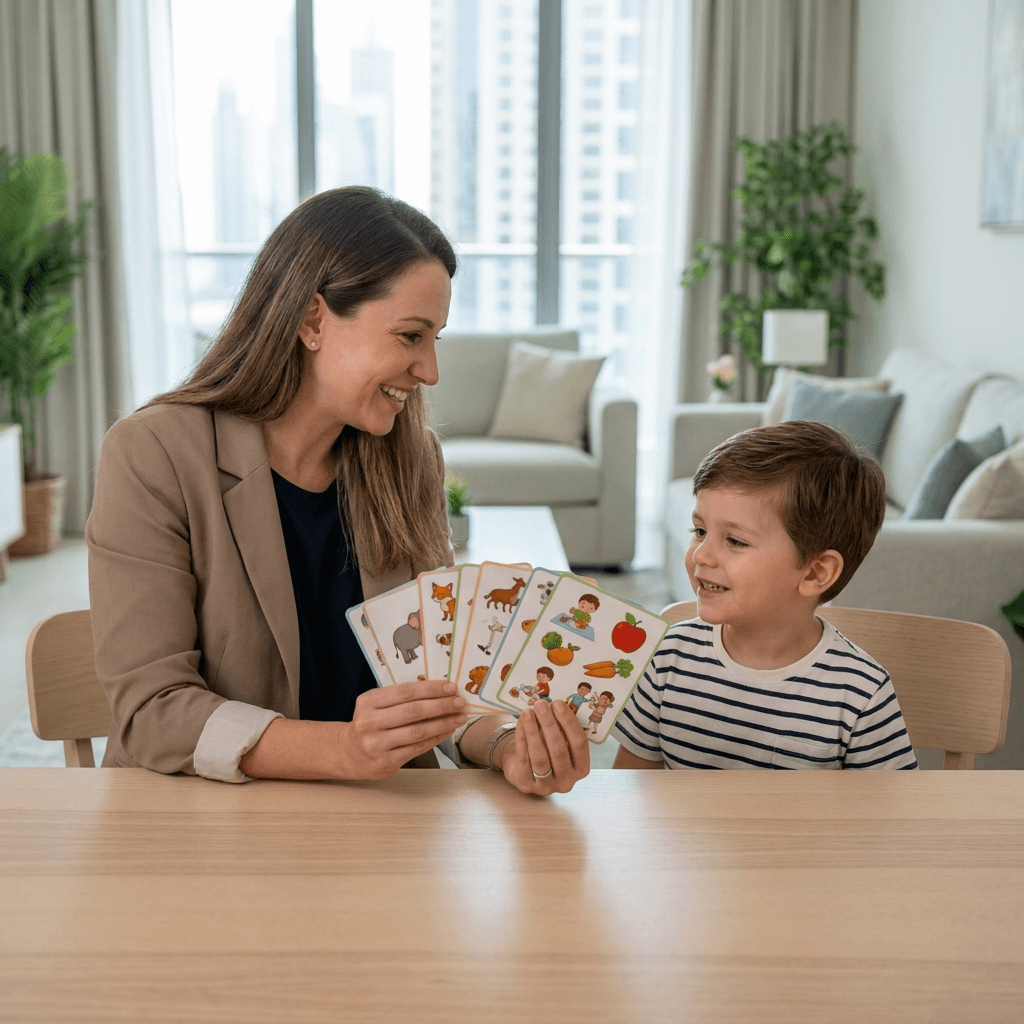
Shared book reading is one of the most well-evidenced language-building activities available to families, but the way you read matters as much as how often. Simply decoding the words on the page is valuable, but dialogic reading — pausing to discuss, question, and connect — appears to offer additional benefits for vocabulary development.
Some simple techniques to try:
- Ask open questions rather than yes/no ones: "Why do you think the bear looks sad?" rather than "Is the bear sad?"
- Make connections to the child's own life: "Have you ever felt like that character?"
- Pause on an interesting word: "The book says 'enormous' — what do you think enormous means? Can you think of something enormous?"
- Let the child lead sometimes: follow their finger, respond to their comments, and resist the urge to always redirect back to the text.
In multilingual UAE households, reading in more than one language is entirely appropriate and does not confuse children. Research generally supports the view that a strong foundation in any language supports overall language development, and that bilingual or multilingual children often develop cognitive flexibility alongside their language skills.
The Dinner Table: Still the Original Language Classroom
Shared mealtimes — when phones are put down and conversation flows across generations — remain one of the richest language environments a family can create. Research has consistently found associations between regular family meals and stronger child vocabulary, narrative ability, and even emotional wellbeing, though it is worth noting that mealtimes are probably one marker of a broader pattern of family engagement rather than a magic fix on their own.
What makes a dinner table conversation rich for language?
- Open-ended storytelling: "Tell me the most interesting thing that happened today" invites narrative — a skill directly linked to literacy.
- Genuine curiosity: When parents model being genuinely interested ("I don't know — how would we find out?"), children learn that questions are valuable, not embarrassing.
- Multiple speakers: Hearing siblings, grandparents, or guests use different vocabularies and sentence structures expands a child's sense of what language can do.
- Devices away: A phone on the table — even face-down — can reduce conversational depth. The dinner table works best when it is a dedicated conversation space.
Practical Starting Point: Count Your Turns
One of the most useful things a parent can do is simply pay attention at one mealtime. Count the conversational volleys between you and your child — not the total words spoken, but the number of back-and-forth exchanges. Then, at the next meal, try to increase that number by responding more to what your child initiates, asking one more follow-up question, or leaving a little more silence to let them fill it.
This is the metric the more recent research has actually validated. It is also genuinely achievable — because turns are not about what you say, but about how you listen and respond.
A Note on Multilingual Homes in the UAE
Dubai's families are among the most linguistically diverse in the world. Many children grow up hearing Arabic, English, Hindi, Tagalog, Urdu, or other languages at home, at school, and in the community. This is a profound asset, not a complication. Language-rich principles — conversational turns, narration, dialogic reading, shared mealtimes — apply equally across all languages. Parents are encouraged to engage richly in whichever language or languages feel most natural and warm to them, rather than forcing a language that feels stilted or formal.
If there are concerns about language development in a multilingual child, it is worth seeking an assessment from a professional experienced in multilingual development — because the developmental markers can look quite different from those of a monolingual peer, and misreading them in either direction can lead to unnecessary worry or missed support.
When Development Needs a Helping Hand
Most children develop language along broadly predictable lines, but there is wide natural variation in timing and style. A child who is quieter at two but highly communicative through gesture and play may simply be following their own trajectory. However, persistent plateaus or regressions across several months — particularly when combined with other changes in social engagement or play — are worth discussing with a professional.
If progress has stalled for months, or if you simply want reassurance about where your child stands, a professional assessment turns worry into a clear picture and, where needed, a practical plan. The xlr8well team offers speech and language therapy, occupational and sensory therapy, and broader developmental support at home across Dubai, as well as at Bloom Autism Center (Office 702, Yes Business Tower, Al Barsha 1, Dubai). Assessments carried out in a child's natural home environment can give a particularly honest picture of how a child communicates when they are at their most comfortable.
This article is intended as general educational information for parents and caregivers. It is not a diagnosis and is not a substitute for professional assessment of your individual child. If you have concerns about your child's development, please consult a qualified healthcare or therapy professional.