%2520(350%2520x%2520150%2520px)%2520(90%2520x%252040%2520px)%2520(4).png%3Falt%3Dmedia%26token%3Dbed5580f-de12-4061-ac20-36c16b313f14&w=384&q=75)
PCOS Management Panel in Dubai: Price, What's Included & How to Book at Home (2026)
What Is PCOS and Why Does Testing Matter?
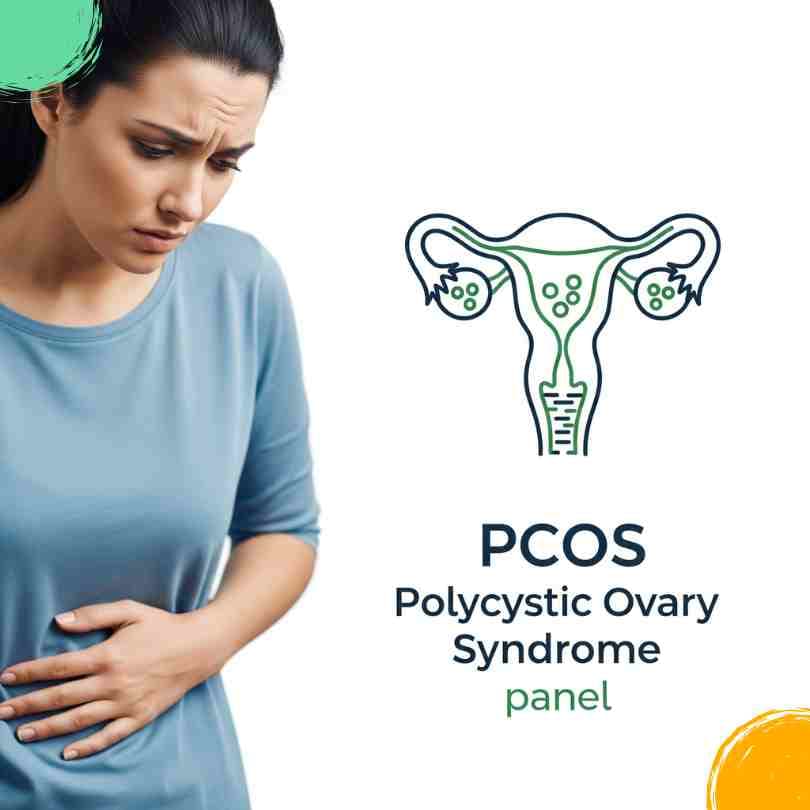
Polycystic Ovary Syndrome (PCOS) is one of the most common hormonal conditions affecting women of reproductive age, yet it remains widely underdiagnosed. Characterised by irregular or absent periods, elevated levels of androgens (male hormones), and the presence of small follicles on the ovaries, PCOS can affect fertility, metabolism, skin, weight, and long-term cardiovascular health.
Because the symptoms of PCOS — such as irregular cycles, acne, unwanted hair growth (hirsutism), hair thinning, and difficulty managing weight — overlap with many other conditions, a targeted laboratory panel is an important step in building a clearer picture. No single symptom or test confirms PCOS on its own; diagnosis is typically made using a combination of clinical assessment, ultrasound, and blood work. A structured PCOS Management Panel provides the hormonal and metabolic data that a doctor needs to assess your situation accurately.
What Is a PCOS Management Panel?
A PCOS Management Panel is a comprehensive blood test designed to investigate the key hormonal and metabolic markers associated with Polycystic Ovary Syndrome. Rather than ordering individual tests separately, the panel groups the most clinically relevant markers together, giving both the patient and their doctor a complete snapshot in a single draw.
The panel typically examines several interconnected systems: the reproductive hormonal axis, androgen levels, thyroid function (since thyroid disorders can mimic PCOS), insulin sensitivity, and general metabolic health. Together, these results help identify whether elevated androgens, hormonal imbalances, or insulin resistance may be contributing to your symptoms.
Key Markers and What They Reveal
- Testosterone (Total and/or Free): Elevated testosterone is one of the hallmark findings in PCOS. Measuring androgen levels helps confirm hyperandrogenism and can explain symptoms such as acne, hirsutism, and scalp hair thinning.
- LH and FSH (Luteinising Hormone and Follicle-Stimulating Hormone): These pituitary hormones regulate the menstrual cycle and ovulation. An elevated LH-to-FSH ratio is frequently observed in women with PCOS, though it is not present in every case.
- Oestradiol (Oestrogen): Helps evaluate ovarian function and the overall hormonal environment.
- Prolactin: Elevated prolactin can disrupt menstrual cycles and is checked to rule out other causes of irregular periods.
- Thyroid-Stimulating Hormone (TSH): Thyroid dysfunction is common in women with hormonal complaints and can produce symptoms very similar to PCOS. Checking TSH helps to either identify or exclude this as a contributing factor.
- Fasting Insulin and/or Fasting Glucose: Insulin resistance is present in a significant proportion of women with PCOS and plays a central role in driving androgen overproduction. These markers help assess how the body is managing blood sugar.
- DHEA-S (Dehydroepiandrosterone Sulphate): An androgen produced mainly by the adrenal glands. Measuring DHEA-S helps distinguish between ovarian and adrenal sources of excess androgens.
- SHBG (Sex Hormone-Binding Globulin): Low SHBG is common in PCOS and means more free androgens are biologically active, even when total testosterone appears borderline.
Who Should Consider This Panel?
You may benefit from a PCOS Management Panel if you are experiencing one or more of the following:
- Irregular, infrequent, or absent menstrual periods
- Unexplained difficulty conceiving
- Persistent acne that has not responded well to standard skincare treatments
- Unwanted facial or body hair (hirsutism)
- Scalp hair thinning or loss (androgenic alopecia)
- Unexplained weight gain, particularly around the abdomen
- A previous suggestion of PCOS that was never formally investigated with blood work
- Monitoring of a confirmed PCOS diagnosis to track how it responds to lifestyle changes or prescribed treatment
It is worth noting that PCOS affects women across all body types — it is not exclusively a condition of those who are overweight. If symptoms resonate with you, speaking with a doctor and obtaining objective data is always the right first step.
Preparing for Your PCOS Blood Test
Preparation is straightforward, but a few points are worth bearing in mind to help ensure accurate results:
- Fasting: You will typically be asked to fast for 8–12 hours before the draw, particularly because the panel includes fasting glucose and insulin markers. Water is fine to drink.
- Timing in the cycle: Where possible, blood tests for reproductive hormones (LH, FSH, oestradiol) are ideally taken on days 2–5 of the menstrual cycle. However, if your cycles are highly irregular or absent, your doctor or our team can advise on the best timing for your situation.
- Medications and supplements: Hormonal contraceptives can significantly alter many of the markers in this panel. Let your doctor know if you are currently taking the pill, a hormonal IUD, or any supplements before interpreting results.
- Recent illness or stress: Acute illness or very high physical stress can transiently affect hormone levels. If you have been unwell recently, it may be worth waiting until you have recovered before testing.
What to Expect: The At-Home Collection Process
xlr8well offers the PCOS Management Panel as a fully at-home service across Dubai, carried out by DHA-licensed healthcare professionals. The visit itself takes approximately 15–20 minutes. A trained phlebotomist comes to your chosen address — whether that is your home, apartment, or workplace — at the time slot you select. You simply need to be available, fasted if required, and comfortable.
Booking is available online or via WhatsApp, and same-day or next-day appointments are generally available. Once your sample is collected, it is transported under proper chain-of-custody conditions to an accredited laboratory for analysis.
Results are delivered securely to your private xlr8well dashboard. If you would like a doctor to review your results and provide personalised guidance, a doctor review can be added to any service at the time of booking.
Understanding Your Results
Receiving a set of hormone results can feel overwhelming, particularly when some values fall outside reference ranges. A few important points to keep in mind:
- Reference ranges for reproductive hormones vary by laboratory, cycle phase, and individual factors. A result slightly outside a range does not automatically confirm a diagnosis.
- PCOS is a clinical diagnosis. Blood work is one piece of a broader picture that also includes symptom history and, where appropriate, pelvic ultrasound. A licensed doctor should always interpret results in context.
- If results suggest elevated androgens, insulin resistance, or hormonal imbalance, your doctor can discuss next steps — which may include lifestyle modifications, further investigation, or medical management.
PCOS in the UAE Context
PCOS is a globally prevalent condition, and the UAE is no exception. Factors common in the region — including vitamin D insufficiency (despite the sunshine, indoor lifestyles reduce sun exposure), dietary patterns, and metabolic health trends — can intersect with PCOS in ways that make thorough investigation particularly valuable. Access to convenient, private, and clinically credible testing at home removes a meaningful barrier for many women who may otherwise delay seeking answers.
PCOS Management Panel: At a Glance
- Price: AED 650 — inclusive of the home visit anywhere in Dubai, no hidden fees
- Duration: Approximately 15–20 minutes for sample collection
- Who performs it: DHA-licensed healthcare professionals
- Results: Delivered to your secure xlr8well dashboard
- Booking: Online or via WhatsApp; same-day and next-day slots typically available
Related Services
If you are exploring broader testing options, you may also find the following useful:
- At-Home Blood Testing — browse all available panels
- Women's Essential Weight Loss Panel — relevant if metabolic health and weight management are a concern alongside your hormonal investigation
- STD Advanced (73 parameters) — for comprehensive sexual health screening