%2520(350%2520x%2520150%2520px)%2520(90%2520x%252040%2520px)%2520(4).png%3Falt%3Dmedia%26token%3Dbed5580f-de12-4061-ac20-36c16b313f14&w=384&q=75)
Why Speech Therapy Looks Like Playing (And Why That’s the Point)
Why Speech Therapy Looks Like Playing (And Why That's the Point)
TL;DR: Play is the native language of childhood learning — a skilled speech-language pathologist (SLP) embeds dozens of communication targets per session inside games the child chose. Engagement is not the opposite of rigour; it is the delivery system.
The Science Behind Play-Based Learning
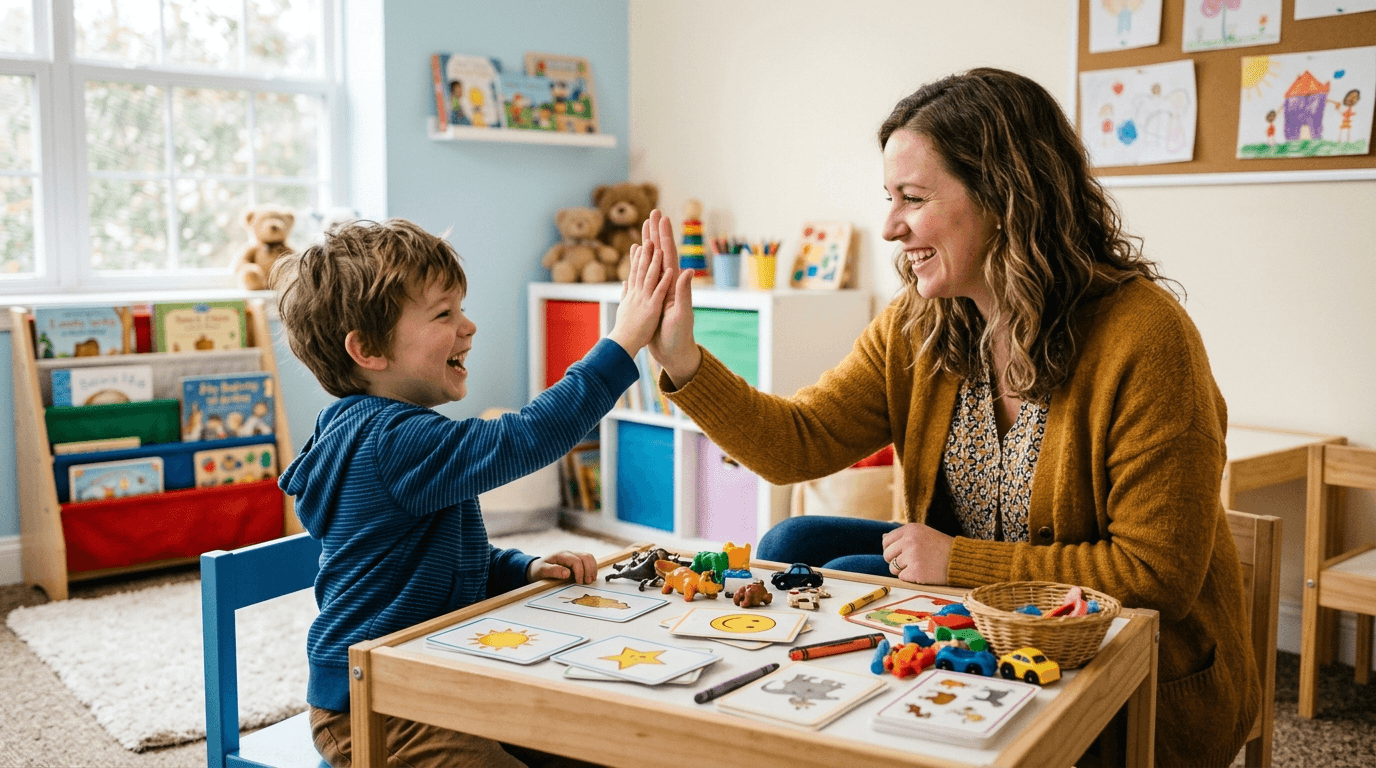
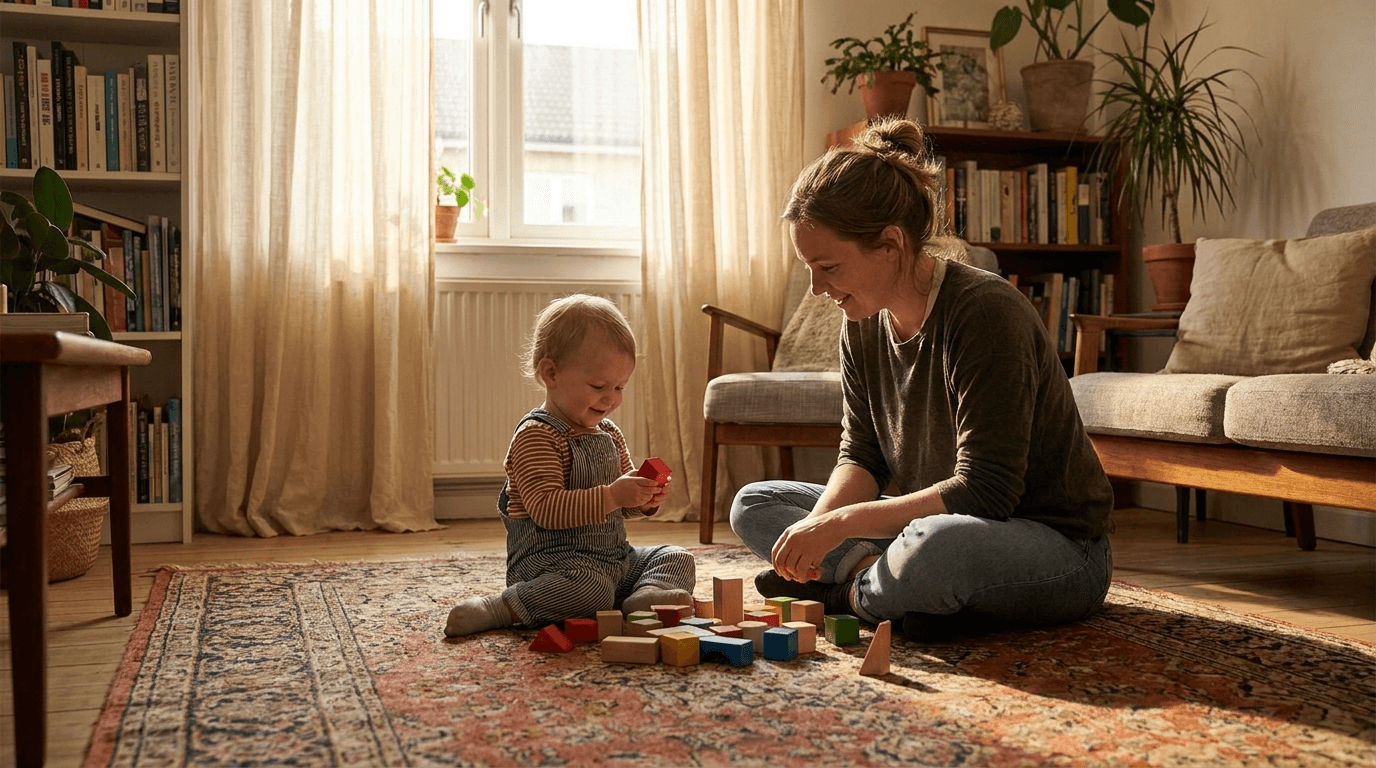
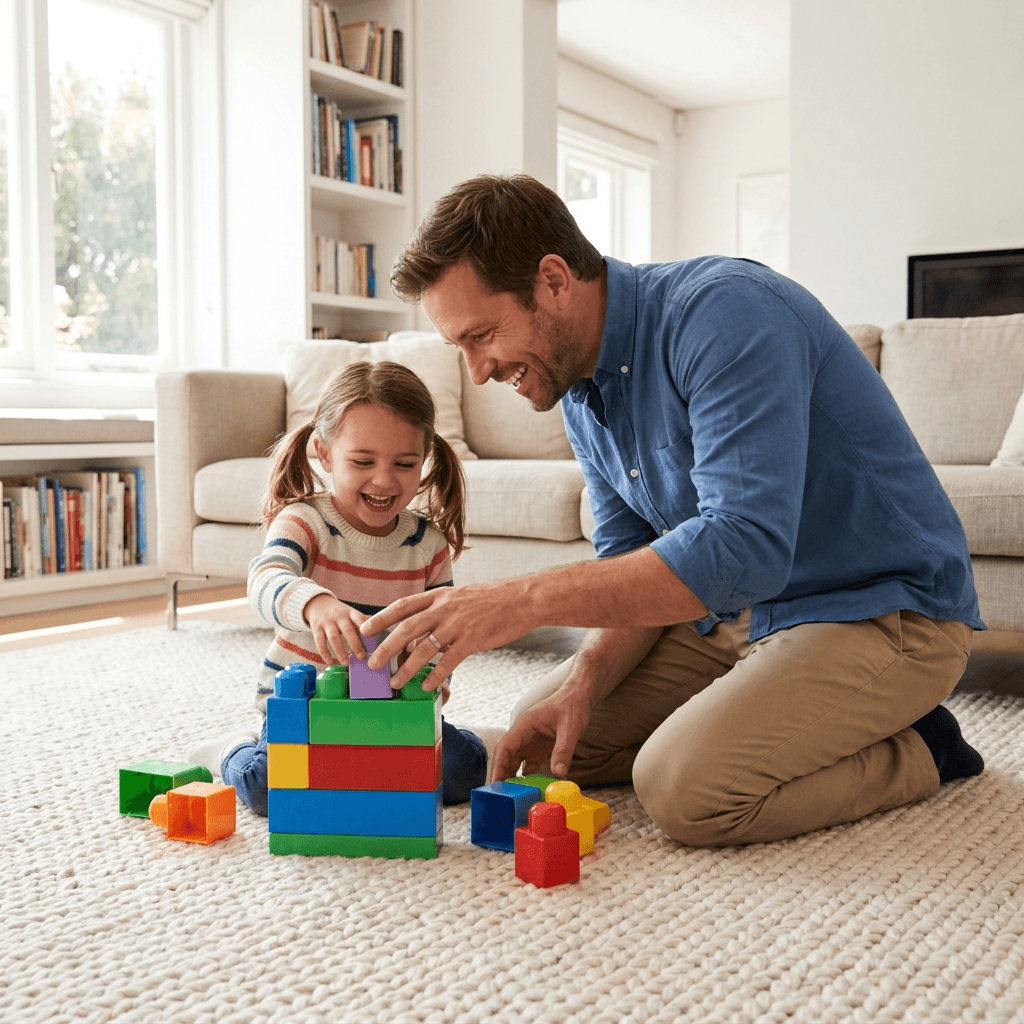
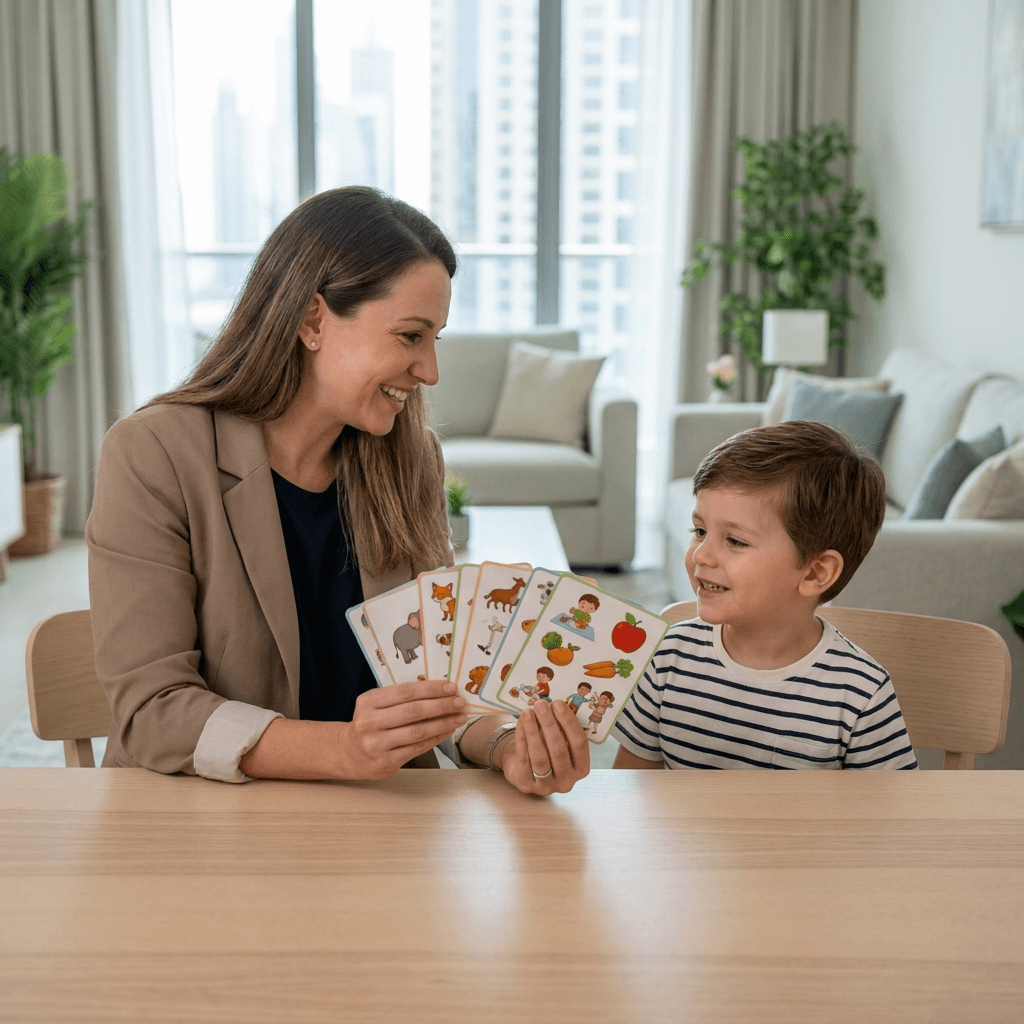
To an outsider, a speech therapy session for a young child can look remarkably like an ordinary playdate — blocks being stacked, toy animals being lined up, bubbles being blown. It can be tempting for parents to wonder whether anything structured is actually happening. The short answer is: a great deal.
Children's brains are not miniature adult brains. They are wired, particularly in the early years, to learn through exploration, repetition, and emotionally engaged interaction. When a child is genuinely invested in an activity — because they chose it, because it is fun, because it involves someone they feel comfortable with — their brain is in an optimal state for forming new language connections. A skilled SLP exploits this biological reality deliberately and systematically.
Play-based therapy is not a softer or easier version of speech therapy. It is a delivery mechanism that has been refined over decades of clinical practice. The targets — whether that is producing a specific sound, expanding sentence length, learning to request rather than point, or practising back-and-forth conversational turns — are precisely the same as they would be in a more formal drill-based approach. What changes is the context in which those targets are practised, and that context makes a significant difference to how readily children engage and how naturally new skills generalise into everyday life.
What "Following the Child's Lead" Actually Means
One of the cornerstones of modern paediatric speech therapy is a technique often called child-led or child-directed interaction. Rather than the therapist dictating the activity, the child selects what they want to play with, and the therapist joins in on the child's terms. This is not permissiveness — it is strategy.
Motivation is one of the most powerful variables in learning. When a child is playing with something they have chosen, their attention is sustained, their emotional engagement is high, and they are far more likely to attempt new communication behaviours to keep the interaction going. An SLP working within a child's chosen play can engineer dozens of natural opportunities to practise a target in a single session — far more than a worksheet or a flash-card drill would typically allow.
Within a simple game of toy cars, for example, a therapist might:
- Pause and wait, creating an expectant moment that prompts the child to request "go" or "more"
- Narrate actions to model vocabulary ("the car goes fast, the car goes slow")
- Introduce turn-taking by physically alternating who pushes the car
- Model target sounds naturally within the play context ("vroom", "crash", "up")
- Expand the child's utterance just one step beyond what they produced — a technique known as recasting
None of this looks like drilling, but each exchange is a carefully engineered learning opportunity aligned to that child's specific goals.
The Targets Hidden Inside Every Game
Speech and language therapy covers a much broader range of skills than many parents realise. Depending on the child's profile, a single session might be targeting several of the following simultaneously:
- Articulation and phonology — the ability to produce speech sounds clearly and accurately
- Expressive language — putting words and sentences together to communicate ideas
- Receptive language — understanding what is being said
- Pragmatics — the social rules of communication, such as eye contact, turn-taking, and reading conversational cues
- Vocabulary development — building a store of words the child can both understand and use
- Narrative and story structure — the ability to sequence events and retell experiences
- Fluency — the rhythm and flow of speech, relevant for children who stutter
- Augmentative and Alternative Communication (AAC) — for children who are non-verbal or minimally verbal, this may include picture exchange systems (PECS), communication boards, or speech-generating devices
Embedding these targets into play means the child is not consciously aware they are "doing therapy". For many children — particularly those who have experienced anxiety around communication, or those on the autism spectrum — removing the pressure of a formal task can itself unlock participation that would otherwise be unavailable.
Data Still Runs Underneath: Playful Does Not Mean Unmeasured
A common misconception is that because a session looks informal, it must also be unstructured or unmeasured. In fact, the opposite is true. During every session, an experienced SLP is tracking data: how many times a target was attempted, how many were accurate or approximate, what prompts were needed, and how the child's performance today compares to previous sessions.
These observations inform goal-setting, shape the next session, and allow progress to be reported to parents and, where relevant, to schools or developmental paediatricians. Measurable, time-bound goals are a standard feature of professional speech therapy practice — the playful surface does not change what is happening underneath.
Why the Home Environment Matters
Research consistently suggests that children make faster, more durable progress when the communication strategies used in therapy are also used consistently at home. This is one reason why parent coaching is considered an essential component of good paediatric speech therapy — not an optional add-on.
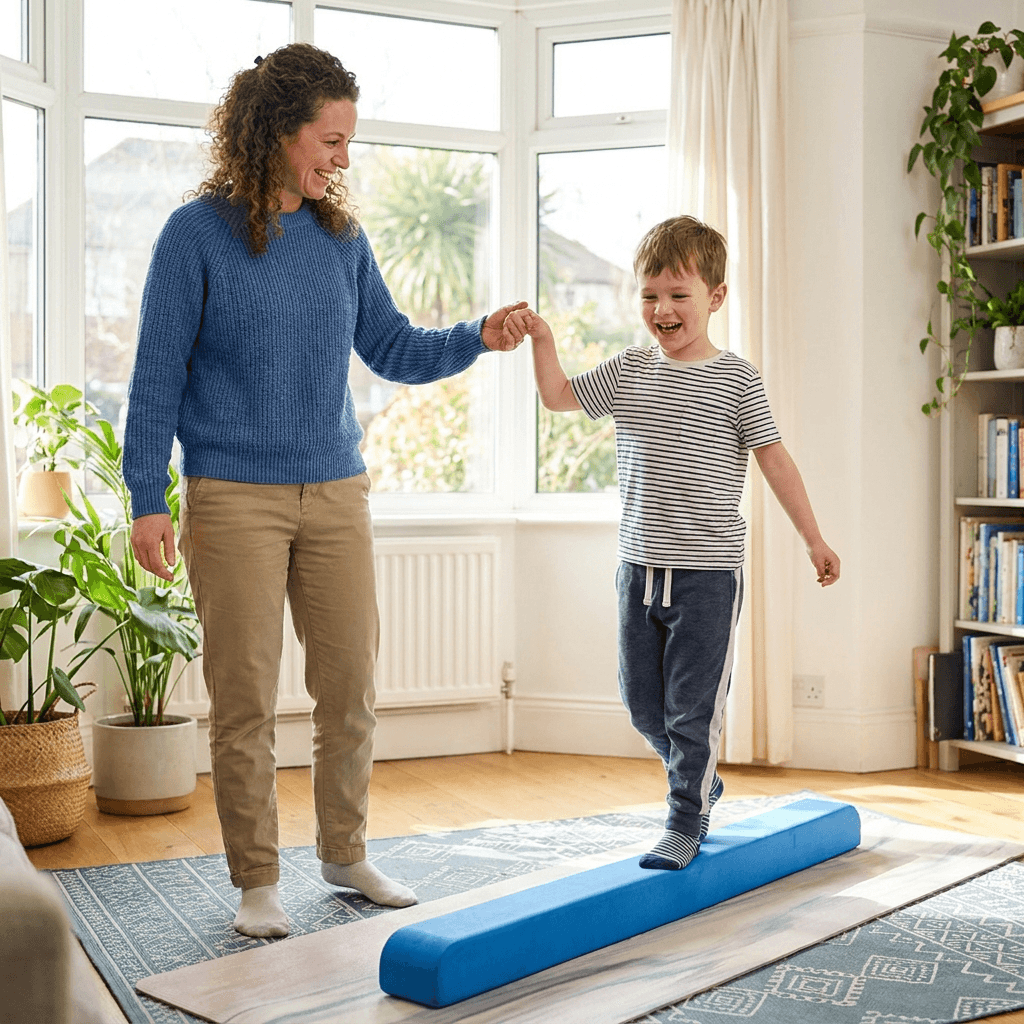
Therapists will typically share strategies that are easy to embed into daily routines: mealtimes, bath time, the car journey to school, bedtime reading. Over a week, these moments can amount to far more practice time than any single therapy session. Parents who understand why a technique works — not just how to do it — tend to carry it out more consistently and more naturally.
For families living in Dubai, this is particularly relevant. The pace of life, the working hours, and the prevalence of multilingual households all shape what "home practice" realistically looks like. A good therapist will tailor strategies to the family's actual daily routine rather than prescribing a generic homework sheet.
Who Might Benefit From Play-Based Speech Therapy?
Play-based approaches are most commonly used with children between approximately 18 months and 8 years of age, though the principles can be adapted for older children and those with developmental differences at any age. It is often particularly well suited to:
- Children who are late to talk or have limited expressive vocabulary for their age
- Children with autism spectrum disorder (ASD) or social communication difficulties
- Children with speech sound disorders who become anxious or resistant during formal tasks
- Children with language delay or disorder
- Children who have experienced early language exposure in multiple languages and need support structuring their communication
It is always worth seeking a professional assessment if you have concerns. A licensed speech-language pathologist can identify whether there is a delay or disorder, or whether your child is simply developing within normal variation — both outcomes are genuinely useful to know.
What to Expect From an Assessment
A first appointment typically begins with a detailed parent interview: what the family has noticed, when it started, the child's medical and developmental history, and the languages spoken at home. The SLP will then observe the child — often through structured play — and may use standardised tools to build a picture of where the child's skills sit relative to age expectations.
From this, goals are set collaboratively with the family. These goals should be specific, measurable, and reviewed regularly. You should always be able to ask your therapist what you are working towards and how progress will be tracked.
Speech Therapy at Home in Dubai
xlr8well's licensed speech-language pathologists deliver speech and language therapy at your home anywhere in Dubai, or at Bloom Autism Center (Office 702, Yes Business Tower, Al Barsha 1, Dubai). Every programme begins with a thorough assessment, is built around measurable goals, and includes parent coaching in every session — because the work that happens between sessions is just as important as the session itself. The team works with verbal and non-verbal children and is experienced with PECS, AAC, and a range of evidence-informed approaches.
The Takeaway
Watch a skilled SLP work with a young child for one hour and count the number of communication attempts that occur. In a well-run play-based session, that number is typically very high — because every moment of genuine engagement is also a learning opportunity. The session looks like playing because, for a child, playing is how learning happens. The rigour is real; it is simply well disguised.
This article is general information for parents and is not a diagnosis, nor a substitute for professional assessment of your child. If you have concerns about your child's communication development, please consult a licensed speech-language pathologist or your child's paediatrician.