%2520(350%2520x%2520150%2520px)%2520(90%2520x%252040%2520px)%2520(4).png%3Falt%3Dmedia%26token%3Dbed5580f-de12-4061-ac20-36c16b313f14&w=384&q=75)
School Readiness: The 5 Skills That Matter More Than Reading
Why "Is My Child Ready for School?" Is the Wrong Question
Every August, parents across Dubai find themselves anxiously checking whether their child can write their name, count to twenty, or recite the alphabet. These feel like measurable proof of readiness. Schools, however, tell a different story. Reception and KG1 teachers consistently report that the children who struggle most in their first term are rarely those who cannot yet read — they are the ones who cannot sit still long enough to hear an instruction, dissolve when they lose a game, or need a grown-up to open every container in their lunchbox.
This is not a criticism of those children or their parents. It is simply a reflection of what the first year of formal schooling actually demands. The academic content — letters, phonics, simple sums — is something teachers are trained and equipped to deliver. What is far harder to retrofit, once a child is already in a classroom of twenty-five peers, is the underlying set of self-regulation and social skills that make learning possible in the first place. Those are the skills worth prioritising in the months before the school gate opens.
Below are the five areas that matter most, along with practical ways to build them at home in the UAE context.
The Five Skills That Define True School Readiness
1. Sustained Attention (10–15 Minutes)
A typical KG1 session might involve a story, a craft activity, or a group task lasting ten to fifteen minutes. A child who can hold attention for this window — without an adult redirecting them every thirty seconds — is in a far stronger position than a child who can read simple words but cannot stay seated long enough to hear a full instruction.
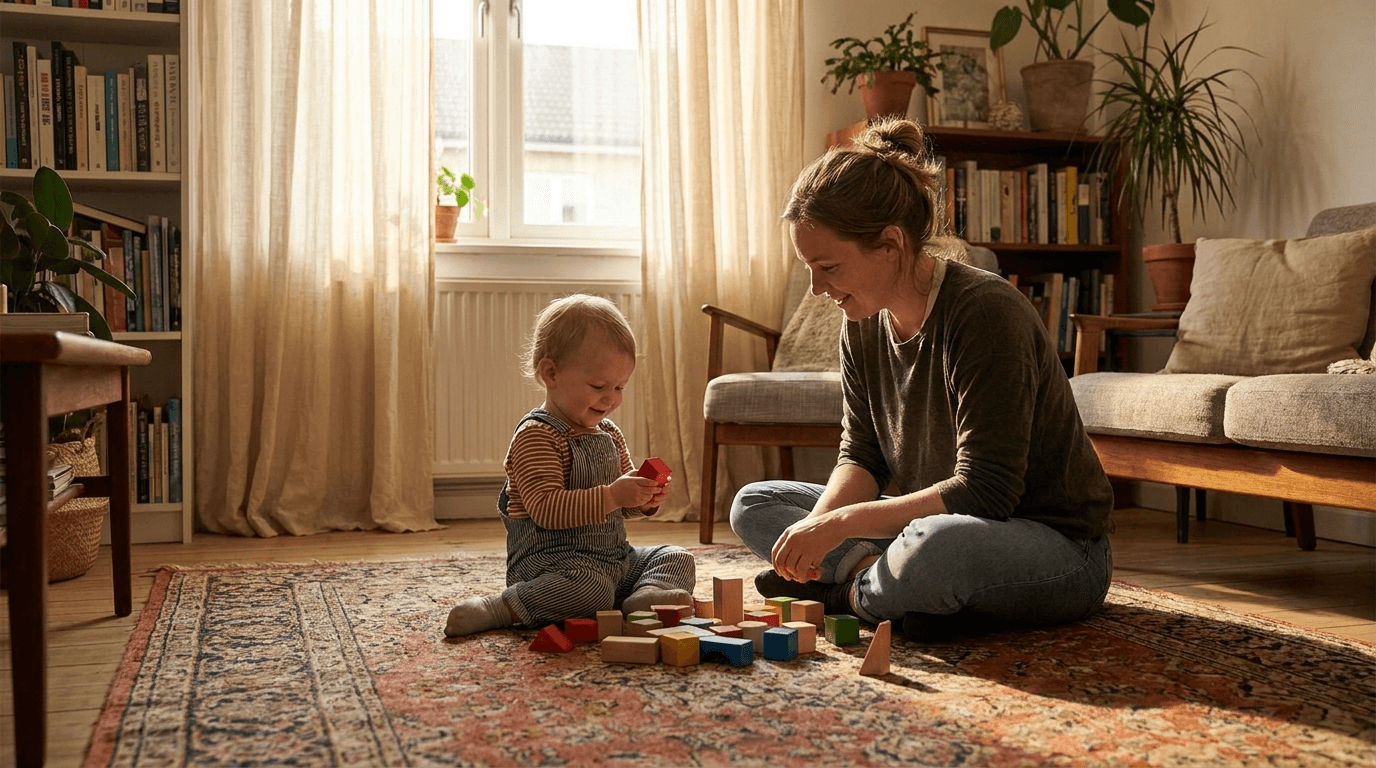
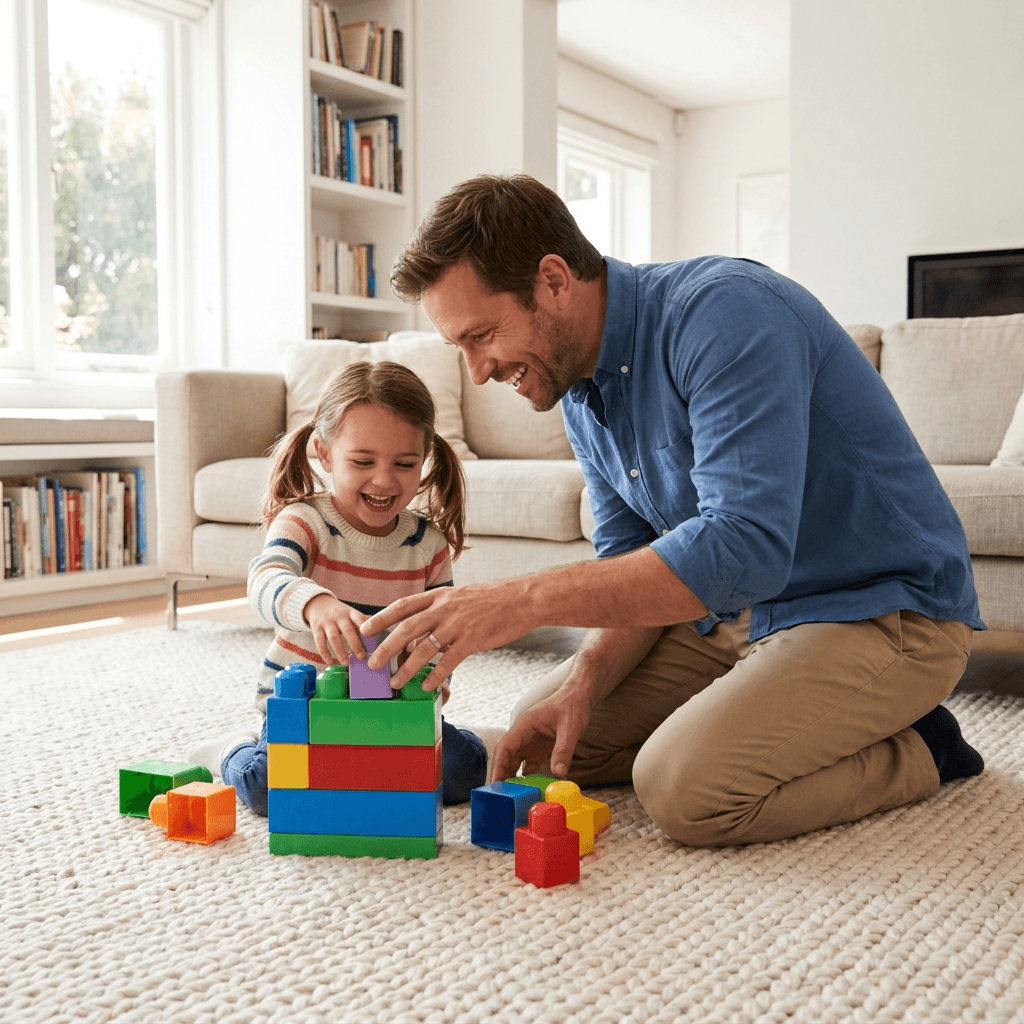
Attention is not fixed. It grows with practice, and the most effective practice uses activities the child already finds interesting. If your child loves building blocks, structured block challenges with a clear goal ("can you build a tower taller than this book before the sand timer runs out?") gently stretch their focus window. Gradually, as the habit of sustained attention develops, it transfers to less preferred tasks — which is exactly what school requires.
A few practical pointers for Dubai families: screen time, while convenient during the hot summer months when outdoor play is limited, tends to provide attention that is reactive rather than self-directed. Mixing in activities that require the child to generate their own focus — drawing, construction, pretend play, simple board games — builds the kind of attention that serves them in a classroom.
2. Following Two- to Three-Step Instructions
Teachers routinely give multi-step instructions: "Put your pencil down, push your chair in, and stand behind it." A child who can follow a single instruction accompanied by a gesture is at one end of the spectrum; a child who can hold a three-step verbal instruction in working memory and execute it independently is at the other — and ready for school.
This skill develops in a predictable sequence, and you can move it along deliberately. Start with one-step instructions paired with a gesture or demonstration. Once those are reliable, remove the gesture. Then add a second step, and eventually a third. Use the natural rhythms of home life — tidying up, getting dressed, setting the table — as low-stakes practice. The goal is for your child to hear an instruction, hold it in mind, and carry it out without needing it repeated. That single ability reduces classroom friction enormously.
3. Self-Care Independence
In a UAE primary school, there is typically one teacher and a teaching assistant for a class of twenty to twenty-five children. During break time, a child who cannot manage their own lunchbox, water bottle, jacket poppers, or shoe straps faces real practical difficulties — and so does their teacher. Self-care independence is not about expecting too much of young children; it is about ensuring they have the tools to manage their own physical world so that they can access the social and learning opportunities around them.
The most effective preparation is strikingly simple: use the actual items. If your child's school lunchbox has a flip-lid and two internal compartments, practise opening and closing those specific latches at home over the summer. If the uniform involves a zip, a button, or a tie, make dressing practice a daily routine rather than a rushed morning scramble. Children who have repeated exposure to the real objects — not simplified versions — arrive at school with genuine competence rather than a skill that transfers imperfectly.
4. Peer Negotiation and Cooperative Play
The playground and the classroom both require a child to negotiate: for a toy, for a turn, for a role in a game. Children who have developed even basic language for this — "Can I have a turn?", "Let's take turns", "I don't want to play that, can we play something else?" — navigate the social landscape of early school far more confidently than those who default immediately to grabbing, crying, or withdrawing.
These phrases do not emerge naturally in isolation. They are learned through experience, modelling, and gentle coaching in real social situations. Playdates, structured group activities, and play at community parks or indoor play centres (which Dubai offers in abundance, particularly during the summer) are all opportunities to practise. When conflicts arise — and they will — resist the urge to resolve them immediately. Giving children a moment to attempt their own negotiation, with you nearby for support, builds the skill that a teacher simply cannot replicate for every child in a class of twenty-five.
5. Frustration Recovery
Learning is, by definition, a process of encountering difficulty. A child who can tolerate getting something wrong, losing a game, or not being first — and who can recover from that frustration without a prolonged meltdown — is a child who can learn. This is perhaps the most underestimated skill on this list, and also the most teachable.
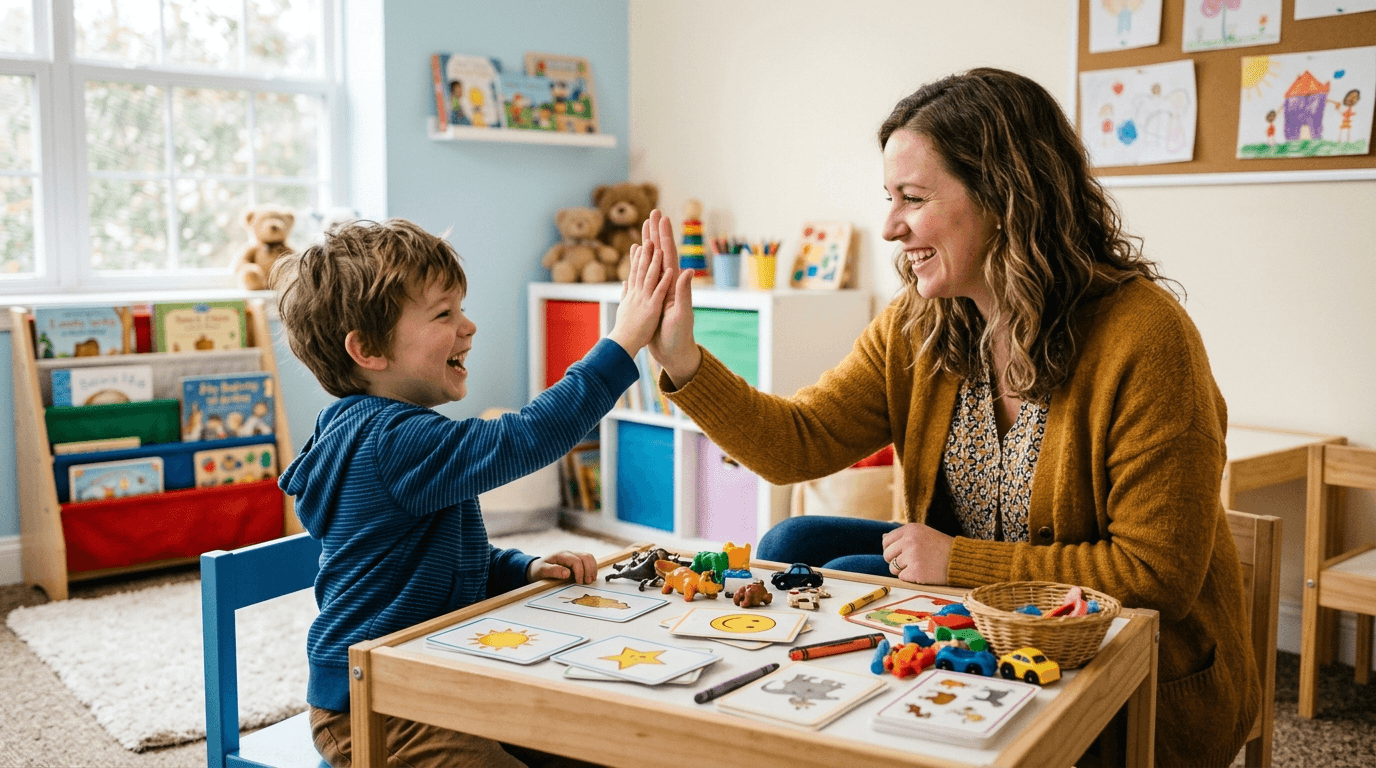
Board games are one of the most effective tools available. Games that involve winning and losing — even simple ones like Snakes and Ladders — create repeated, low-stakes opportunities to experience disappointment and practise moving on. The key is to play genuinely (let the outcome be real) while coaching the emotional response: naming the feeling, validating it briefly, and modelling matter-of-fact recovery. "I know, it's frustrating to land on a snake. It happens to me too. Your turn next." Over months of practice, this shapes a child's relationship with difficulty in ways that will serve them for their entire school career.
How These Skills Work Together
These five areas are not isolated checkboxes — they reinforce one another. A child who can regulate frustration is more willing to persist with a multi-step task. A child who can follow instructions is more confident in peer interactions because they understand the shared rules of a situation. Self-care independence reduces anxiety, which in turn supports attention. Building any one of these skills tends to support the others, which is why the pre-school year is such a worthwhile investment of focused family effort.
A Note on the UAE School Context
Dubai's schools follow a range of curricula — British, American, IB, and others — but virtually all of them begin formal structured learning earlier and more intensively than many parents expect. Class sizes, the pace of the school day, and the expectation of independent functioning can come as a surprise. Families who use the pre-school months to build these five skills consistently report that their children's first term feels calmer and more positive — not because school is easier, but because the child arrives genuinely equipped for it.
When Development Needs a Helping Hand
It is worth remembering that all children develop at different rates, and variation across single skills is entirely normal. What merits closer attention is a persistent pattern — across several months and multiple settings — where a child appears to be significantly behind in one or more of these areas despite consistent opportunity and support.
If you have concerns, a professional assessment does not mean something is wrong. It means you get a clear picture of where your child is, what is driving any difficulties, and what a realistic, personalised plan looks like. That clarity is far more useful than prolonged worry.
xlr8well offers speech and language therapy, occupational and sensory therapy, and broader developmental support delivered at home across Dubai — where young children often show their truest abilities in a familiar environment. Assessments and therapy sessions are also available at Bloom Autism Center (Office 702, Yes Business Tower, Al Barsha 1, Dubai).
This article is general information for parents and carers, not a diagnosis or a substitute for professional assessment of your child. If you have specific concerns about your child's development, please consult a licensed healthcare professional.