%2520(350%2520x%2520150%2520px)%2520(90%2520x%252040%2520px)%2520(4).png%3Falt%3Dmedia%26token%3Dbed5580f-de12-4061-ac20-36c16b313f14&w=384&q=75)
Online Speech Therapy vs In-Person: An Honest Comparison
Online vs In-Person Speech Therapy: An Honest Comparison for Parents
TL;DR: Teletherapy works surprisingly well for school-age language goals and parent coaching; it struggles with very young children, motor-speech work needing physical cues, and kids who need movement. Hybrid models capture both strengths.
If you have recently been exploring speech therapy for your child in Dubai, you have almost certainly faced this question: does it need to be in person, or can online sessions deliver the same results? The honest answer is — it depends on your child's age, their specific goals, and how involved you as a parent are prepared to be. This guide walks through the real differences so you can make an informed choice alongside your speech-language pathologist (SLP).
Understanding the Two Formats
What is teletherapy (online speech therapy)?
Teletherapy delivers speech and language sessions via a secure video platform. The therapist shares screen-based activities, games, and prompts in real time, while the child (and often a parent) participates from home. For older children with reliable attention spans, sessions can look remarkably similar to a clinic appointment. For younger children, the model typically shifts toward coaching the parent live, rather than directing the child through the screen.
What is in-person speech therapy?
In-person therapy takes place in a clinic, therapy centre, or — increasingly in the UAE — in the family home. The therapist has direct physical access to the child: they can model mouth positions, use tactile cues, observe posture and breath support, and use hands-on play materials. The sensory richness of a shared physical space is difficult to replicate digitally.
Where Online Therapy Tends to Work Well
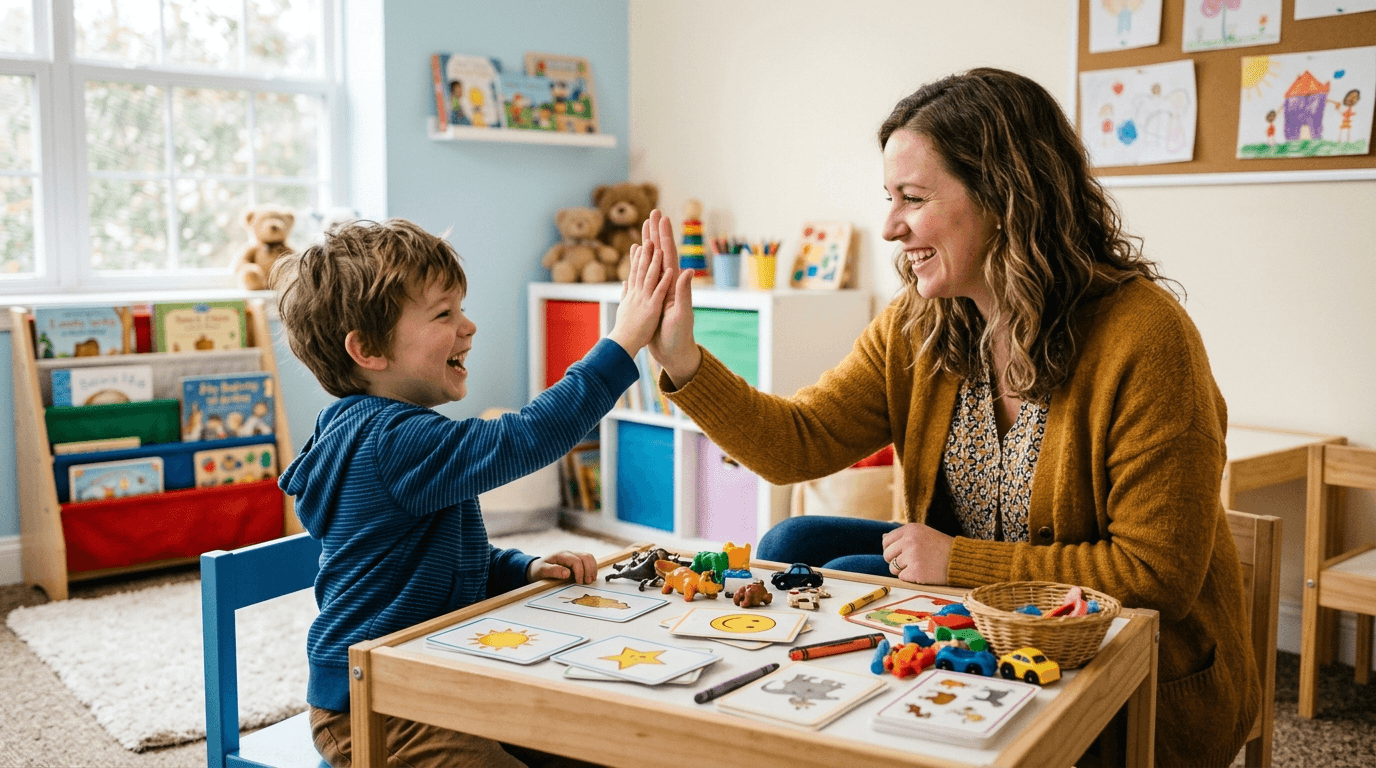
- School-age children (roughly 5 and above): Children who can sit at a screen, follow digital prompts, and sustain attention for 30–45 minutes often make strong progress online. Language comprehension, vocabulary building, narrative skills, and social communication goals translate well to video formats.
- Parent-coaching models for toddlers: When the therapist's primary focus is guiding you — the parent — to use specific strategies during everyday play, feeding, or book reading, the screen becomes a coaching tool rather than a therapy tool. Research broadly supports this approach for early language intervention, and it can work effectively online.
- Continuity while travelling: Families who travel frequently or split time between countries (a common reality in Dubai's expat community) can maintain session consistency online, which matters enormously for younger children whose progress depends on regular input.
- Social communication and pragmatics: Older children working on conversational turn-taking, topic maintenance, or reading social cues can practise these skills in a structured video interaction — and some find the slight "distance" of a screen less overwhelming than face-to-face contact.
- School readiness and literacy-linked language goals: Activities targeting phonological awareness, listening comprehension, or pre-literacy skills adapt well to shared digital materials.
Where In-Person Therapy Has a Clear Advantage
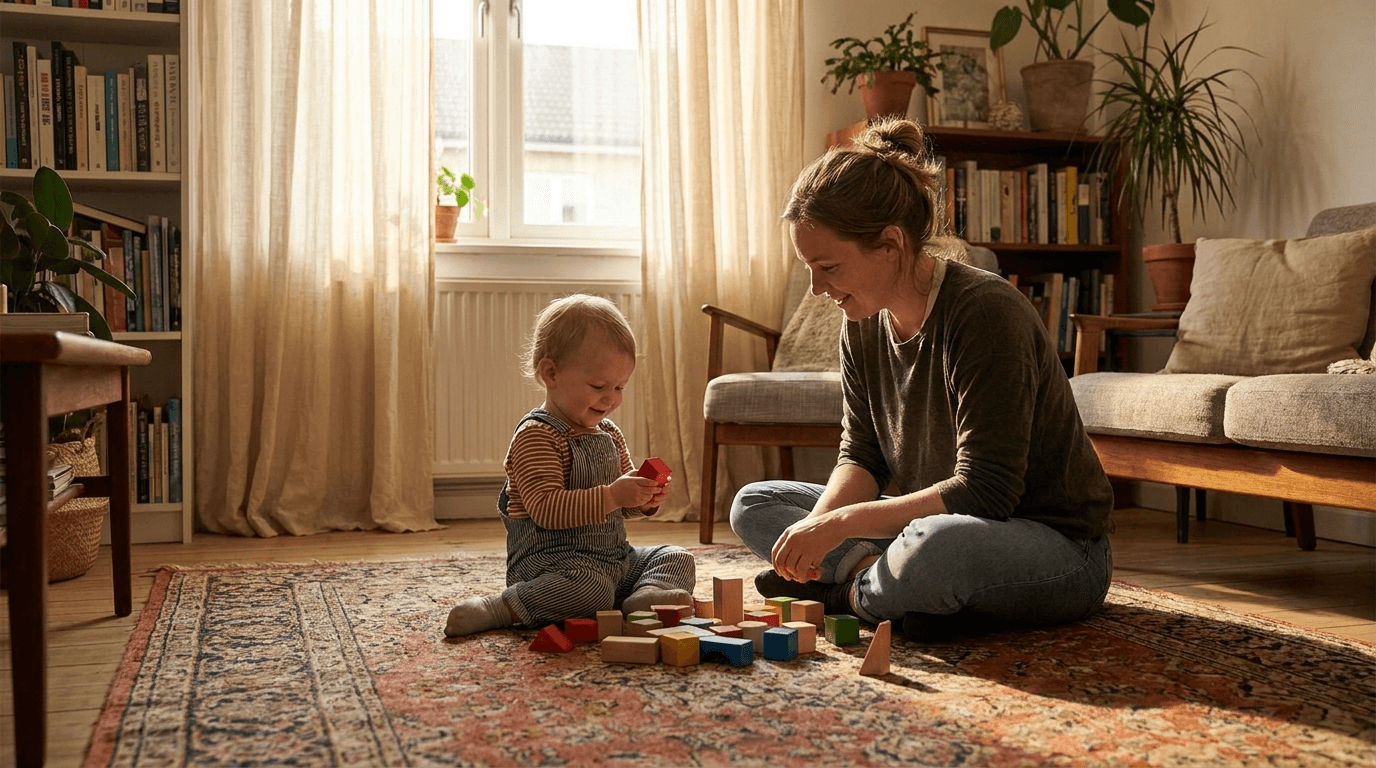
- Toddlers and very young children: Children under three rarely sustain meaningful engagement with a screen-based stranger. In-person sessions allow the therapist to follow the child's lead physically — sitting on the floor, joining their play, and building rapport through shared objects and movement.
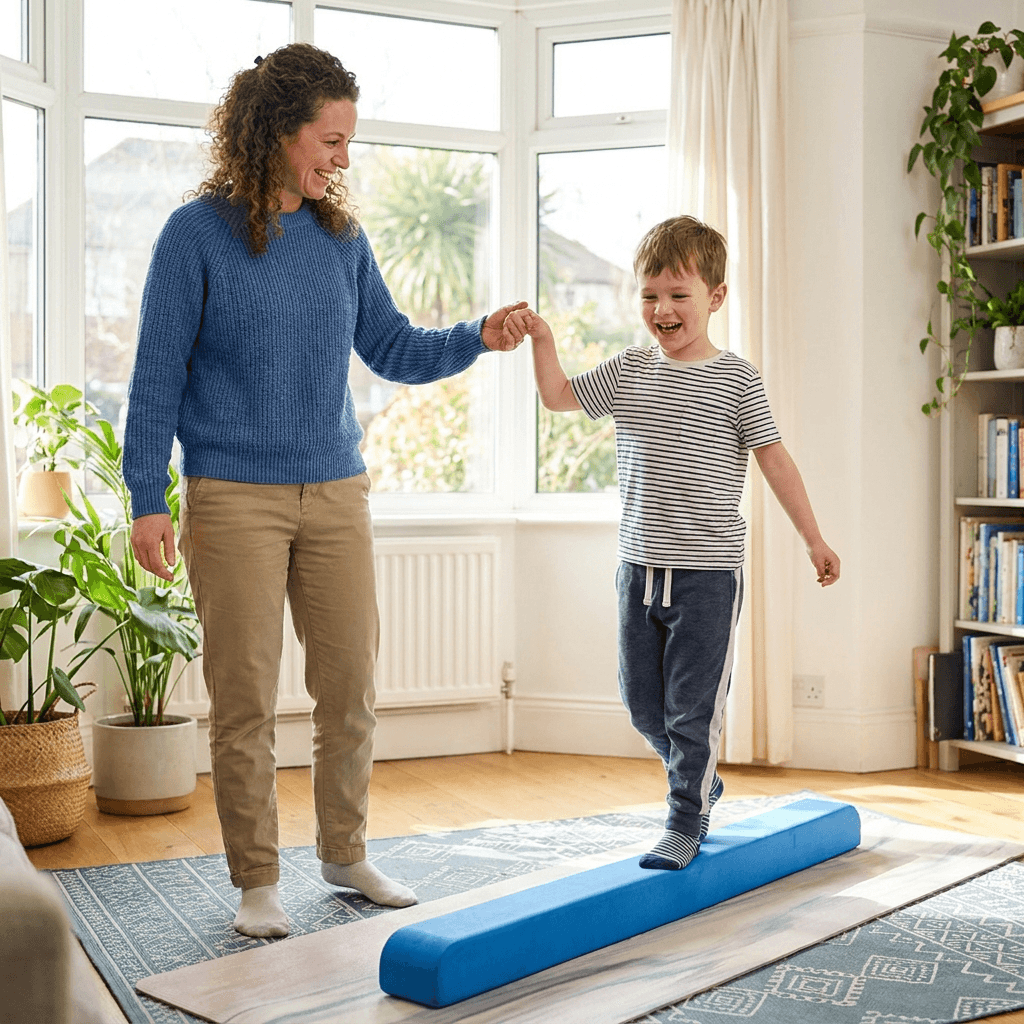
- Apraxia of speech and motor-speech disorders: Childhood apraxia of speech (CAS) and other motor-speech conditions often require intensive, face-to-face work. Therapists may use tactile-kinaesthetic cues — gentle touch at the jaw, lips, or cheeks — to help a child feel and reproduce correct movement patterns. This cannot be replicated through a screen.
- Articulation errors needing physical modelling: When a child needs to see exactly how a therapist's lips and tongue move to produce a target sound, and to receive real-time tactile feedback, proximity matters significantly.
- Children with sensory processing differences or limited screen tolerance: Some children — particularly those with autism, ADHD, or sensory sensitivities — engage far better in a rich, in-person environment. Movement breaks, manipulatives, and the therapist's physical presence can all support regulation and participation.
- Feeding and swallowing difficulties: Any work involving oral-motor function, texture transition, or dysphagia management should always be conducted in person by a suitably qualified SLP, with appropriate clinical oversight.
The Parent-as-Co-Therapist Principle
One of the most important ideas in modern early intervention is that the most powerful "therapy" a young child receives happens between sessions — in daily routines, mealtimes, bathtime, and play. Online therapy, at its best, leans into this reality. When a therapist coaches you live on screen while you play with your toddler on the floor, they can observe your interactions and give real-time, specific feedback: "pause there and wait," "follow his gaze," "repeat that word three times naturally." This is tele's genuine secret weapon for children under three. The goal is not the screen — it is you.
The Hybrid Model: A Practical Middle Ground
Many families in Dubai find that a hybrid approach suits them best. A child might attend fortnightly in-person sessions for hands-on motor-speech work, while weekly parent-coaching calls maintain momentum between visits. Or a school-age child might switch to online sessions during school exam periods or family holidays, then return to clinic for intensive blocks. The right balance is something to discuss honestly with your SLP at the outset — and to revisit as goals evolve.
Practical Considerations for Dubai Families
Dubai's geography, traffic, and summer heat make home visits and online therapy particularly appealing for many families. It is worth knowing that the UAE's healthcare regulatory environment requires speech-language pathologists to hold appropriate licences; if you are accessing therapy online, confirm your therapist is properly credentialled. Session frequency is also important: regardless of format, consistency tends to matter more than the platform.
xlr8well's licensed speech-language pathologists deliver speech and language therapy at your home anywhere in Dubai, as well as at Bloom Autism Center (Office 702, Yes Business Tower, Al Barsha 1, Dubai). Every plan begins with a structured assessment, sets measurable goals, and includes parent coaching as a core component of each session — not an afterthought.
Making the Decision: A Goal-by-Goal Framework
Rather than choosing "online" or "in-person" as a blanket policy, it helps to think goal by goal:
- Is this goal primarily about language (vocabulary, comprehension, social communication)? Online is often viable.
- Is this goal about motor speech, articulation, or feeding? In-person is generally recommended.
- Is my child under three? In-person or a parent-coaching online model is likely more effective than screen-directed therapy.
- Can I be present and actively involved in sessions? If yes, online parent coaching may deliver real gains even for young children.
- Does my child have significant sensory or attention needs? Discuss with your SLP before committing to either format.
The setting question is not all-or-nothing. It is goal-by-goal, child-by-child, and it should be revisited regularly as your child progresses.
This article is general information for parents and carers, and is not a diagnosis or a substitute for professional assessment of your child. If you have concerns about your child's communication development, please consult a licensed speech-language pathologist.