%2520(350%2520x%2520150%2520px)%2520(90%2520x%252040%2520px)%2520(4).png%3Falt%3Dmedia%26token%3Dbed5580f-de12-4061-ac20-36c16b313f14&w=384&q=75)
How to Test Your Biological Age in Dubai (And Actually Lower It)

TL;DR: Biological age is estimated from biomarker panels (inflammation, metabolic, hormonal), VO2 max, and body composition. In Dubai, xlr8well's Clinical Longevity Program measures all three at home and coaches a 90-day protocol to help move them in the right direction.
What Is Biological Age — and Why Does It Differ from Your Birthday?
Chronological age is simply how many years you have been alive. Biological age is a different concept altogether: it reflects how well — or how poorly — your cells, organs, and physiological systems are functioning relative to the average person of the same age. Two people born in the same year can have meaningfully different biological ages depending on their lifestyle, genetics, stress exposure, and health history.
Measuring biological age is not yet a single, universally agreed test. Instead, clinicians and longevity practitioners use a combination of validated biomarkers, functional fitness measures, and body composition data to build a picture of where you sit on the ageing curve — and, crucially, where you are heading.
This distinction matters because most conventional health checks in Dubai and across the UAE are designed to detect disease once it has already developed. A longevity assessment, by contrast, is designed to identify risk trajectories and functional decline while you are still — on paper — perfectly healthy.
The Three Measurements That Matter
1. Blood Biomarker Panel (120+ Markers)
A comprehensive longevity blood panel goes well beyond a standard full blood count. It examines the underlying chemistry of ageing across several systems:
- Inflammation: High-sensitivity C-reactive protein (hs-CRP) is a key marker of chronic low-grade inflammation — increasingly recognised as a driver of cardiovascular disease, metabolic dysfunction, and accelerated tissue ageing.
- Metabolic health: HbA1c (a three-month average of blood glucose), fasting insulin, and lipid sub-fractions such as ApoB give a far more detailed picture of metabolic risk than total cholesterol alone.
- Hormonal status: Testosterone, oestradiol, DHEA-S, IGF-1, and thyroid hormones all shift with age and meaningfully affect energy, body composition, cognitive function, and recovery capacity.
- Organ function: Liver enzymes, kidney markers (eGFR, cystatin C), and complete metabolic panels reveal how key organs are coping with the demands placed on them.
- Nutritional status: Vitamin D, B12, folate, ferritin, omega-3 index, and magnesium levels are commonly suboptimal in the UAE population — particularly vitamin D, despite year-round sunshine, due to indoor lifestyles and sun avoidance during extreme heat months.
No single biomarker tells the whole story. The value lies in interpreting the pattern across all of them together, ideally by a clinician experienced in preventive and longevity medicine.
2. VO2 Max
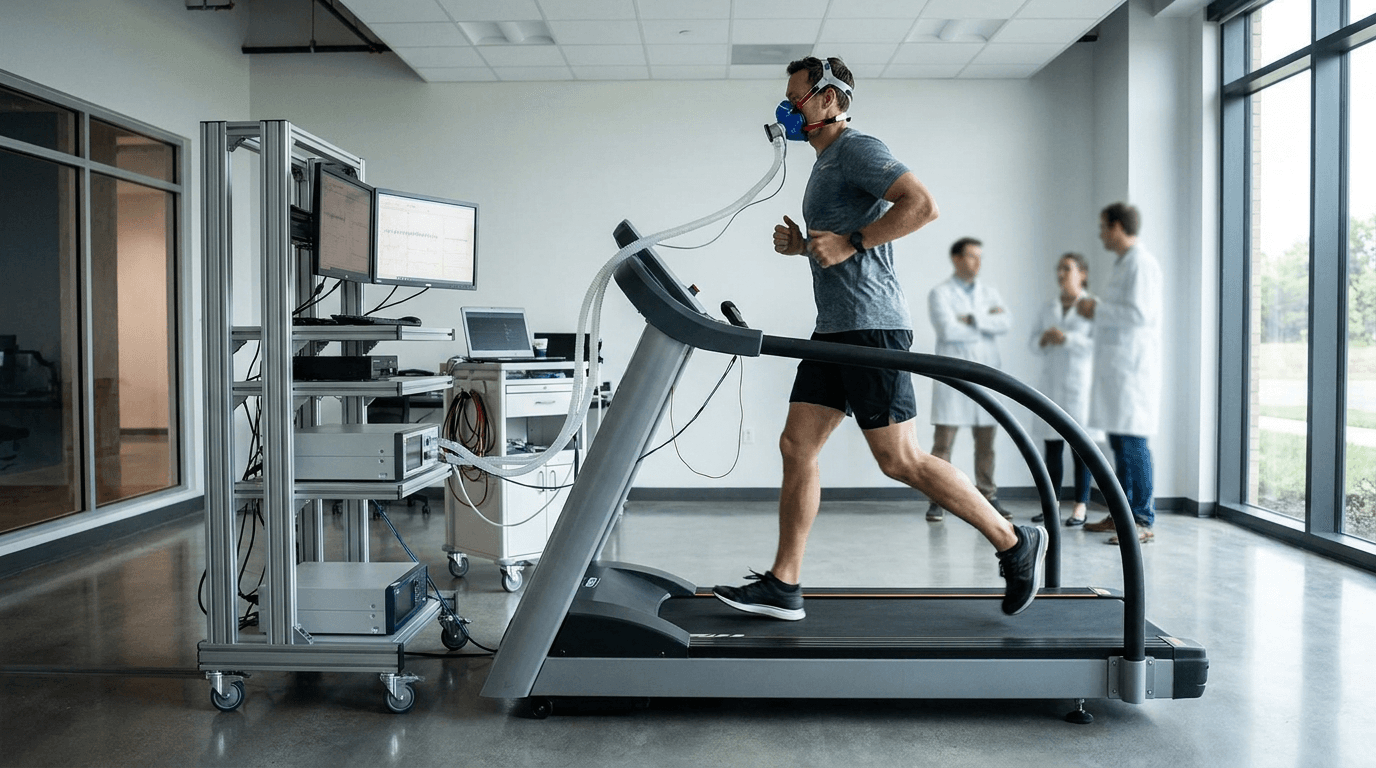
VO2 max — the maximum rate at which your body can consume oxygen during exercise — is widely considered the strongest single predictor of long-term mortality in population research. Individuals in the lowest fitness quartile for their age face substantially higher all-cause mortality risk compared with those in the highest quartile, independent of other risk factors.
VO2 max declines naturally from around the age of 30 onwards, but the rate of that decline is highly modifiable through training. Knowing your current VO2 max provides a concrete, objective benchmark — and tracking it over time is one of the clearest ways to quantify whether your exercise habits are actually working.
In a traditional clinical setting, VO2 max is measured via a formal maximal exercise test. Validated sub-maximal estimation protocols can also be used in home or clinic settings to provide a reliable approximation without requiring a full laboratory setup.
3. Body Composition
Stepping on a standard scale tells you very little about longevity. What matters far more is the ratio of lean muscle mass to fat mass — and, critically, where that fat is stored.
- Skeletal muscle mass is increasingly described as a longevity organ. It governs insulin sensitivity, metabolic rate, physical resilience, and the ability to recover from illness or injury. Muscle loss (sarcopenia) accelerates significantly from the mid-40s if not actively countered.
- Visceral fat — fat stored around the abdominal organs — is metabolically active in a harmful way, driving inflammation, insulin resistance, and cardiovascular risk. It is possible to have a normal BMI and carry a clinically significant burden of visceral fat.
Body composition is typically assessed using bioelectrical impedance analysis (BIA) or DEXA scanning, both of which can give meaningful data to guide targeted interventions.
What Actually Lowers Your Biological Age
This is where honest guidance matters more than headline-grabbing supplements or expensive gadgets. The interventions with the most consistent support across the longevity literature are, admittedly, not glamorous:
- Zone-2 cardiovascular training: Sustained, moderate-intensity aerobic exercise (a pace at which you can hold a conversation) performed regularly — typically 150 minutes or more per week — is one of the most effective tools for improving VO2 max, insulin sensitivity, and mitochondrial health.
- Resistance training: Progressive strength work, two to four times per week, is the primary defence against age-related muscle loss. It also supports bone density, hormonal balance, and metabolic rate.
- Adequate protein intake: Many adults — particularly those eating in the traditional Emirati or South Asian dietary patterns common in the UAE — may under-consume protein relative to what is needed to maintain muscle mass, especially when training. A longevity assessment can help clarify whether this is a factor.
- Sleep regularity: Consistent sleep and wake times, alongside adequate duration (typically seven to nine hours for adults), support hormonal rhythms, immune function, and cognitive repair. Dubai's late-night social culture can make this a genuine challenge to address.
- Visceral fat management: This is often the most impactful single change for individuals who carry excess abdominal fat. Reduction in visceral fat has a measurable downstream effect on inflammation markers, metabolic biomarkers, and cardiovascular risk.
The real value of comprehensive testing is not the numbers themselves — it is knowing which of these levers is most in need of attention in your specific case, rather than applying a generic protocol that may address your strong points and miss your actual vulnerabilities.
What to Expect from a Longevity Assessment in Dubai
For those living or working in Dubai, access to this level of assessment has traditionally required travel abroad or navigating multiple specialist appointments across different facilities. xlr8well's Clinical Longevity Program brings the assessment process to you at home, removing the friction of clinic visits in a busy city.
A typical programme involves an initial comprehensive blood draw, a functional fitness assessment including VO2 max estimation, and body composition measurement. Results are reviewed and a 90-day personalised protocol is developed — covering nutrition targets, exercise guidance, and any further specialist referrals where relevant. A retest at the end of the protocol period provides objective evidence of change.
All clinical decisions and interpretations should involve a licensed medical professional. If you have a pre-existing medical condition, always discuss any new health programme with your treating doctor before beginning.
How Often Should You Retest?
Biological ageing metrics move on a timescale of months, not weeks. For those actively working through a longevity protocol, quarterly retesting allows meaningful progress tracking and protocol adjustment. For those in a maintenance phase, twice-yearly assessments are generally sufficient to monitor trajectory and catch any emerging changes early.
Is This Different from a Regular Health Check-up?
Yes — in an important way. A standard health check-up is designed to detect disease: it looks for values outside a defined "normal" range. A longevity assessment operates in optimisation territory. It looks at where you sit within the healthy range, which direction you are trending, and what functional capacity you have — all while you are still, clinically speaking, "fine." The goal is to extend the period of robust health, not simply to identify illness once it has already arrived.
A Practical Starting Point
If you are based in Dubai or the wider UAE and are considering a longevity assessment, the most useful first step is simply to gather your baseline data. You cannot meaningfully track progress without knowing where you are starting from. From there, a structured, evidence-informed approach — with retesting built in — gives you the feedback loop needed to make changes that are actually measurable.
To explore how xlr8well's at-home Clinical Longevity Program works, visit the Clinical Longevity Program page for further information.