%2520(350%2520x%2520150%2520px)%2520(90%2520x%252040%2520px)%2520(4).png%3Falt%3Dmedia%26token%3Dbed5580f-de12-4061-ac20-36c16b313f14&w=384&q=75)
Biological Age vs Chronological Age: Which One Is Really Yours?

Two Ages, One Body
Your passport says one thing. Your cells say another. Chronological age is simply the number of birthdays you have accumulated — it moves in one direction, at one speed, for everyone. Biological age, by contrast, measures how efficiently your body is actually functioning at a cellular and systemic level. The two numbers can differ by a decade or more in either direction, and that gap matters enormously for your long-term health.
Think of it this way: two people can both be 45 years old by the calendar yet sit at very different points on the spectrum of cardiovascular resilience, metabolic health, hormonal balance, and cellular repair. One may have the physiological profile of someone in their mid-thirties; the other may already be presenting markers typical of someone in their mid-fifties. Same passport, very different biology.
What makes biological age the more meaningful number is that, unlike your date of birth, it is not fixed. The choices you make — and the interventions you pursue — can genuinely shift it. That is the central promise of modern longevity medicine, and it begins with measurement.
What Biological Age Is Actually Measuring
Biological age is not a single readout from a single test. It is a composite picture assembled from several interconnected systems in your body. Scientists and clinicians look at markers of cellular ageing, inflammation, metabolic function, organ efficiency, cardiovascular fitness, and body composition — then compare those figures against what is typical for a given chronological age group.
Some of the key processes that drive biological ageing include:
- Chronic low-grade inflammation — sometimes called "inflammageing", this slow background inflammation is linked to a wide range of age-related conditions and can be detected years before symptoms appear.
- Metabolic dysfunction — rising fasting insulin, declining insulin sensitivity, and creeping blood glucose all accelerate biological wear. These markers shift gradually and are often invisible without testing.
- Telomere dynamics — the protective caps on your chromosomes shorten with each cell division. Accelerated shortening is associated with faster biological ageing, though this field of research is still evolving.
- Epigenetic changes — chemical modifications to your DNA that affect gene expression can be used to estimate biological age through tools such as DNA methylation clocks, though these remain specialist assessments.
- Cardiovascular and muscular fitness — how efficiently your heart, lungs, and muscles work under demand is one of the most robust indicators of systemic health and longevity risk.
No single marker tells the whole story. A meaningful biological age assessment draws on multiple data streams and interprets them together.
How Biological Age Is Measured in Practice
Because biological age is multifactorial, any credible assessment should triangulate across several domains rather than relying on one convenient metric. At xlr8well, this assessment is conducted at your home in Dubai, removing the friction of clinic visits in a city where time is often the scarcest resource.
- Blood biomarkers — a comprehensive panel of 120 or more markers covering systemic inflammation (including hs-CRP), metabolic health (HbA1c, fasting insulin, lipid subfractions), hormone levels, kidney and liver function, thyroid status, micronutrient sufficiency, and more. This is the core language your biology speaks, translated into numbers you can act on.
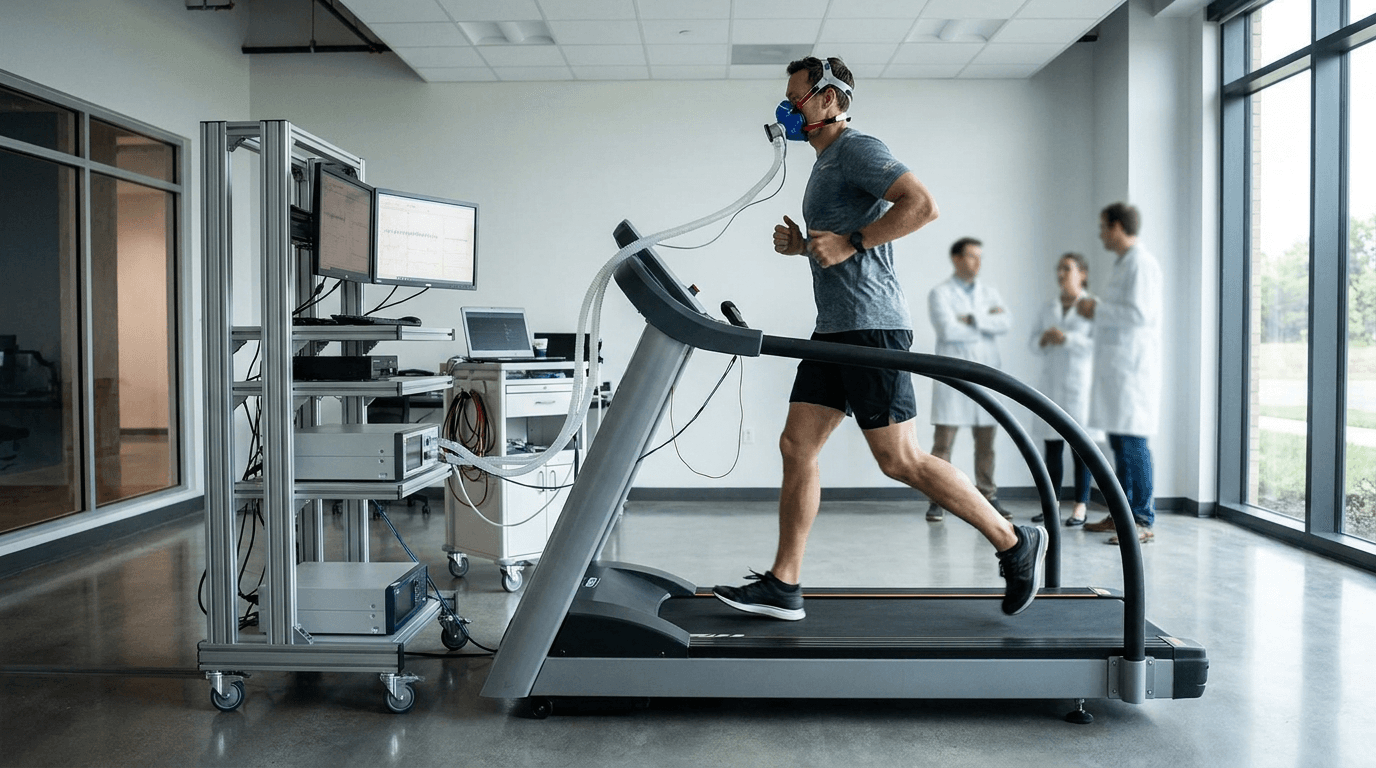
- VO2 max — your maximal oxygen uptake is among the strongest single predictors of long-term mortality identified in research to date. Wearable estimates are notoriously imprecise; a properly conducted VO2 max test provides a far more reliable figure and places you on a meaningful percentile for your age and sex.
- Body composition and resting metabolics — muscle mass is increasingly recognised as a form of longevity currency, particularly after the age of 40. The rate at which lean mass declines — and whether visceral fat is accumulating — offers important insight into both metabolic and hormonal health.
Together, these measurements build a picture that is both specific to you and comparable against population norms, giving clinicians a meaningful baseline from which to build an intervention plan.
The Levers That Actually Move Biological Age
Longevity medicine has a reputation for exotic interventions, but the evidence consistently points to a more foundational set of drivers. Understanding which of these is underperforming in your particular case is where a data-led programme adds real value over generic wellness advice.
- Cardiovascular training — zone-2 aerobic exercise (sustained, moderate-intensity effort) supports mitochondrial health, metabolic flexibility, and cardiovascular efficiency. It is one of the most consistently supported lifestyle interventions in longevity research.
- Resistance training — preserving and building skeletal muscle mass has downstream benefits for metabolic rate, insulin sensitivity, bone density, and functional independence as you age.
- Protein adequacy — many people, particularly those following calorie-restricted or plant-heavy diets, consume insufficient protein to support muscle protein synthesis. Requirements may be higher than general guidelines suggest, especially for active individuals.
- Sleep regularity and quality — poor sleep is one of the most reliable accelerants of biological ageing. Duration matters, but consistency of sleep timing may be equally important for circadian regulation and hormonal balance.
- Visceral fat management — excess visceral fat is metabolically active in ways that drive inflammation and insulin resistance. Reducing it can produce meaningful improvements across multiple biomarkers simultaneously.
- Stress and recovery balance — chronic psychological and physiological stress elevates cortisol and inflammatory markers over time. Structured recovery — whether through deliberate rest, breathwork, or other evidence-informed approaches — is not optional in a demanding environment like Dubai.
Advanced interventions such as specific supplementation protocols, peptide therapies, or hormone optimisation may have a role for certain individuals, but these should always be considered in the context of a full clinical picture and under appropriate medical supervision. What the biomarker panel reveals is precisely which lever is most restricted in your case — because targeted effort consistently outperforms generalised effort.
Why This Matters in a UAE Context
Dubai and the wider UAE present a distinctive environment for biological ageing. Intense heat limits outdoor exercise for much of the year, leading many residents into sedentary patterns that are difficult to disrupt. High-stress professional cultures, disrupted sleep from irregular schedules, frequent long-haul travel, and diets that blend ultra-processed convenience foods with irregular meal timing all create conditions where biological age can quietly outpace chronological age — often without any obvious warning signs.
At the same time, the UAE has a well-developed private healthcare infrastructure and a population that is increasingly engaged with preventive health. The concept of measuring and actively managing biological age fits naturally into a city where performance optimisation is a cultural norm in many professional spheres.
What to Expect from a Biological Age Assessment
If you are considering a formal biological age assessment for the first time, it helps to know what the process typically involves. A home-based assessment through xlr8well begins with blood collection and physical measurements conducted by a trained clinician at a time and location that suits you. VO2 max testing requires a period of graded physical exertion, so you should be prepared for a session that involves some genuine cardiovascular effort.
Results are interpreted in the context of your full health history, lifestyle, and goals — not simply returned as a printout. The most useful outcome is not a single number but a prioritised map of which areas of your biology are ageing most rapidly, and what a realistic 90-day intervention protocol looks like in response. Retesting at intervals then provides objective evidence of whether the chosen interventions are moving the markers in the right direction.
It is worth noting that biological age testing is a tool for health awareness and optimisation, not a diagnostic service. Any findings that suggest underlying medical conditions should be followed up with a licensed physician. If you experience urgent symptoms at any point, please call 999 or attend your nearest emergency department.
Where to Start
The most important step is simply getting an accurate baseline. Guessing at your biological age — or assuming it mirrors your chronological age — leaves the most actionable information off the table. Our Clinical Longevity Program begins with the full biomarker panel and VO2 max assessment conducted at your home, then builds a personalised 90-day protocol around your weakest markers — with scheduled retesting to confirm the needle has moved. Because in longevity medicine, what gets measured is what gets managed.