%2520(350%2520x%2520150%2520px)%2520(90%2520x%252040%2520px)%2520(4).png%3Falt%3Dmedia%26token%3Dbed5580f-de12-4061-ac20-36c16b313f14&w=384&q=75)
Cholesterol & Lipid Panel in Dubai: Price, What's Included & How to Book at Home (2026)
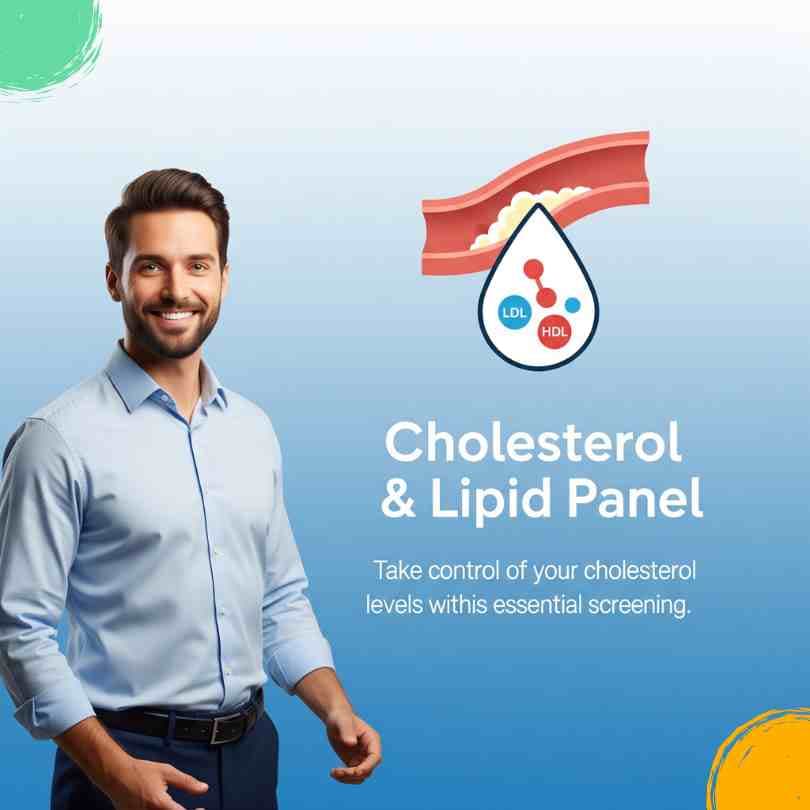
TL;DR: A Cholesterol & Lipid Panel is one of the most important routine health checks you can do. xlr8well offers at-home collection in Dubai by DHA-licensed professionals, with results delivered to a private online dashboard.
If you have been searching for a convenient way to check your cholesterol in Dubai, this guide covers everything you need to know: what the test measures, how to interpret your results, who should get tested, how to prepare, and what happens after you receive your report.
What Is a Cholesterol & Lipid Panel?
A cholesterol and lipid panel — sometimes called a lipid profile or lipid screen — is a blood test that measures the types and amounts of fatty substances (lipids) circulating in your bloodstream. It is one of the most widely recommended routine health investigations because imbalanced lipid levels are a key modifiable risk factor for cardiovascular disease, including heart attack and stroke.
Unlike a simple total cholesterol reading, a full lipid panel breaks the picture down into its individual components, giving you and your doctor a far more useful view of your cardiovascular health.
What Does the Panel Typically Measure?
- Total Cholesterol: The overall amount of cholesterol in your blood, combining all lipoprotein types.
- LDL Cholesterol (Low-Density Lipoprotein): Often called "bad" cholesterol, higher levels are associated with fatty build-up in artery walls.
- HDL Cholesterol (High-Density Lipoprotein): Often called "good" cholesterol, as it helps transport cholesterol away from the arteries towards the liver for removal.
- Triglycerides: A type of fat stored in the body; elevated levels — particularly when combined with low HDL — can increase cardiovascular risk.
- Non-HDL Cholesterol: Calculated from total cholesterol minus HDL, this figure captures all the potentially harmful cholesterol fractions in a single number.
- Total Cholesterol to HDL Ratio: A useful summary ratio that many clinicians use to quickly assess relative cardiovascular risk.
How Does the Test Work?
The test requires a small sample of blood, usually drawn from a vein in the arm. The sample is then analysed in an accredited laboratory using a process called spectrophotometry, which measures the concentrations of each lipid fraction. The entire blood draw takes only a few minutes, and because it is a well-established, standardised test, results are typically reliable and reproducible.
For the most accurate triglyceride reading, most guidelines recommend fasting for 9–12 hours before the test (water is fine to drink). Total cholesterol and HDL can often be measured without fasting, though your xlr8well professional will advise you based on your specific situation.
Who Should Get a Lipid Panel?
Cholesterol testing is relevant to a wide range of people. You may benefit from a lipid panel if:
- You have not had a cholesterol check in the past 1–5 years and are over 40 (or over 35 for those with additional risk factors).
- You have a family history of early heart disease or high cholesterol (familial hypercholesterolaemia).
- You have been diagnosed with diabetes, high blood pressure, or obesity.
- You lead a sedentary lifestyle or follow a diet high in saturated fats — both common in the UAE's urban environment.
- You smoke, or have recently quit smoking.
- You are pregnant or post-menopausal, as hormonal changes can significantly affect lipid levels.
- You are already on cholesterol-lowering medication and want to monitor your response to treatment.
- You simply want a baseline reading as part of a proactive, preventative health routine.
Younger adults without risk factors may still benefit from baseline screening. If you are unsure whether testing is appropriate for you, speak with a licensed doctor before booking.
Understanding Your Results
Reference ranges can vary slightly between laboratories and guidelines, and your result must always be interpreted in the context of your overall health, age, sex, and risk factors. That said, here is a general framework used in most clinical settings:
- Total Cholesterol: Below 5.0 mmol/L is generally considered desirable for most adults.
- LDL Cholesterol: Lower is generally better; targets vary depending on your cardiovascular risk profile — your doctor will advise on your personal target.
- HDL Cholesterol: Higher values are protective; low HDL (below 1.0 mmol/L in men or 1.2 mmol/L in women) is considered a risk factor.
- Triglycerides: Below 1.7 mmol/L is considered optimal; significantly elevated levels may warrant further investigation.
It is important not to self-diagnose based on a single result. A borderline reading does not necessarily mean you have heart disease, and a normal result does not mean risk is zero. Your results are best reviewed alongside a qualified clinician who can place them in context.
Key Benefits of Regular Lipid Monitoring
- Provides a clear, evidence-based picture of your cardiovascular health at any given point in time.
- Helps identify silent risk — high cholesterol typically causes no symptoms until serious damage has already occurred.
- Gives you a measurable baseline against which to track the impact of dietary changes, exercise, weight loss, or medication.
- Empowers informed conversations with your GP or cardiologist.
- Supports proactive, preventative healthcare — a growing priority in the UAE's public health agenda.
Preparing for Your At-Home Lipid Panel
Good preparation helps ensure accurate results:
- Fast for 9–12 hours before your appointment if you want a full fasting lipid panel including triglycerides. Morning slots are often easiest for this.
- Drink water freely during your fasting window — hydration actually makes the blood draw easier.
- Avoid alcohol for at least 24 hours before the test, as it can raise triglyceride levels.
- Continue any regular medications unless your doctor has specifically advised otherwise.
- Wear a top with easy access to the inner arm to make the sample collection comfortable.
- Avoid strenuous exercise in the 24 hours before the test, as intense physical activity can temporarily affect some lipid values.
Cholesterol & Lipid Panel Price in Dubai (2026)
xlr8well offers the Cholesterol & Lipid Panel at AED 99, with the appointment typically lasting 15–20 minutes. The price includes the home visit anywhere in Dubai — there are no additional call-out fees or hidden charges. Same-day and next-day slots are generally available, subject to nurse availability in your area.
How At-Home Booking Works in Dubai
xlr8well brings the test to you, removing the need to travel, wait in a clinic, or take time off work. Here is how the process works:
- Book online or via WhatsApp — select your preferred date, time, and location anywhere in Dubai.
- A DHA-licensed healthcare professional arrives at your home, office, or hotel at the agreed time.
- The blood sample is collected in a calm, private setting in around 15–20 minutes.
- Your sample is sent to an accredited laboratory for analysis.
- Results are uploaded to your private xlr8well dashboard, where you can view and download your report securely.
- Optional doctor review — a clinician can be added to any service to help you interpret your results and discuss next steps.
Safety, Limitations & When to See a Doctor
A lipid panel is a very low-risk procedure. The most common side effects of a blood draw are minor bruising, brief discomfort, or light-headedness, all of which resolve quickly. Serious complications are rare.
It is important to understand the limitations of the test: it measures lipid levels at a single point in time, and values can fluctuate with recent diet, illness, stress, or hormonal changes. A single borderline result should always be confirmed with a follow-up test before any significant clinical decision is made.
If your results show significantly abnormal values, or if you experience chest pain, shortness of breath, or other symptoms of a cardiac event, call 999 immediately and seek emergency care. Do not rely on any wellness test as a substitute for urgent medical attention.
All results should ideally be reviewed with a licensed doctor, particularly if you have existing health conditions or are considering changes to medication.
Related Options
A lipid panel is an excellent starting point, but depending on your health goals you may wish to consider a broader panel. Browse all At-Home Blood Testing services, or explore options such as the STD Advanced (73 parameters) and the Women's Essential Weight Loss Panel for more comprehensive insights.