%2520(350%2520x%2520150%2520px)%2520(90%2520x%252040%2520px)%2520(4).png%3Falt%3Dmedia%26token%3Dbed5580f-de12-4061-ac20-36c16b313f14&w=384&q=75)
Hormone Testing at Home: The Complete Guide for Men and Women

The System That Runs Every Other System
Energy, mood, sleep, libido, weight, skin, digestion, bone density — pull any of these threads and you find hormones. These chemical messengers, produced by glands throughout the body, regulate virtually every physiological process. Yet most adults have never seen their actual hormone numbers, and even when they have, a standard "within normal range" result can mask a great deal of suboptimal function. Understanding what is being measured, when, and why can make the difference between feeling merely acceptable and genuinely well.
At-home hormone testing removes several of the practical and physiological barriers that make clinic-based testing imperfect. This guide explains what a comprehensive hormone panel includes for men and women, what each marker means, how to prepare, and what to do with your results.
What Hormones Are and Why They Matter
Hormones are signalling molecules released into the bloodstream by glands such as the thyroid, adrenal glands, ovaries, testes, pituitary, and hypothalamus. They travel to target cells and trigger specific responses — stimulating growth, regulating metabolism, governing the reproductive cycle, or modulating how you respond to stress.
Because these systems are deeply interconnected, a disruption in one gland rarely stays contained. Low thyroid output, for example, can suppress sex hormone levels and impair cortisol regulation. Elevated stress hormones can suppress reproductive function. This is why a thorough hormone assessment looks at multiple axes together rather than a single isolated value.
Hormone Testing for Men: Beyond a Single Testosterone Number
Total testosterone is the figure most men have heard of, but on its own it tells only half the story. A proper male hormone panel typically includes the following markers:
- Total testosterone: The overall amount circulating in the blood, both bound and unbound.
- Free testosterone: The biologically active fraction not bound to carrier proteins. Two men with identical total testosterone can have very different free testosterone levels — and therefore very different experiences of energy, drive, and recovery.
- SHBG (sex hormone-binding globulin): The protein that binds testosterone and makes it unavailable for use. High SHBG is a common and underappreciated cause of low-testosterone symptoms despite "normal" total levels.
- Estradiol (E2): Men convert a portion of testosterone into oestrogen. An imbalance — in either direction — can contribute to mood changes, water retention, reduced libido, and other symptoms.
- LH and FSH: These pituitary hormones send the signal to produce testosterone and sperm respectively. Measuring them helps distinguish between a testicular problem and a pituitary or hypothalamic one — a clinically important distinction that affects management.
- Prolactin: Elevated prolactin can suppress testosterone production and is worth measuring when libido or fertility is a concern.
- Thyroid function (TSH, free T3, free T4): Thyroid dysfunction in men is less discussed but not uncommon, and its symptoms — fatigue, weight gain, low mood, reduced libido — overlap extensively with low testosterone.
- DHEA-S and cortisol: These adrenal markers provide context about stress load and overall hormonal reserve.
Understanding which part of this system is underperforming is essential before considering any intervention. A licensed doctor should always interpret results and guide next steps.
Hormone Testing for Women: Timing Is Everything
Female hormone profiles are dynamic. Unlike many blood tests where the day of collection is irrelevant, female sex hormones fluctuate across a monthly cycle, which means testing on the wrong day can produce misleading results.
Key Timing Guidelines
- Days 2–4 of the cycle (early follicular phase): The best window for baseline FSH, LH, and oestradiol. FSH in particular is used to assess ovarian reserve and to evaluate pituitary function.
- Days 19–21 (mid-luteal phase, assuming a 28-day cycle): Progesterone should peak here following ovulation. A low mid-luteal progesterone may suggest the ovulatory phase was suboptimal.
- Any day (or multiple time points for full picture): Thyroid markers, prolactin, androgens, AMH, cortisol, and DHEA-S do not require cycle-specific timing.
What a Comprehensive Female Panel Includes
- FSH and LH: Pituitary signals governing the menstrual cycle and ovulation.
- Oestradiol (E2): The principal active oestrogen, critical for bone health, cardiovascular function, mood, and reproductive tissue.
- Progesterone: Often overlooked, this hormone balances oestrogen and supports sleep, mood stability, and cycle regularity.
- AMH (anti-Müllerian hormone): A marker of ovarian reserve. Unlike FSH, AMH is relatively stable across the cycle and can be measured on any day.
- Testosterone and DHEA-S: Women produce and need androgens too. Elevated levels may point toward PCOS; low levels can contribute to low energy and reduced libido.
- SHBG: As in men, this protein affects how much active hormone is available.
- Thyroid (TSH, free T3, free T4): Thyroid dysfunction is significantly more common in women and can mimic or worsen most hormonal complaints — irregular cycles, weight changes, fatigue, mood disturbance, hair thinning.
- Prolactin: Relevant for cycle irregularity, fertility concerns, and unexplained galactorrhoea.
- Cortisol: Chronic stress affects ovarian function and progesterone output. Morning cortisol is a useful indicator of adrenal activity.
Perimenopause: When Symptoms Come Before the Numbers
One of the most important things to understand about perimenopause is that symptoms — disrupted sleep, mood shifts, cycle changes, brain fog, and vasomotor symptoms — can precede textbook laboratory changes by several years. A single "normal" FSH result does not rule out the perimenopausal transition. Serial testing, symptom correlation, and clinical assessment together give a much more complete picture. If you suspect you may be in perimenopause, discuss the appropriate testing timing and panel with a doctor.
Why At-Home Collection Can Produce Better Results
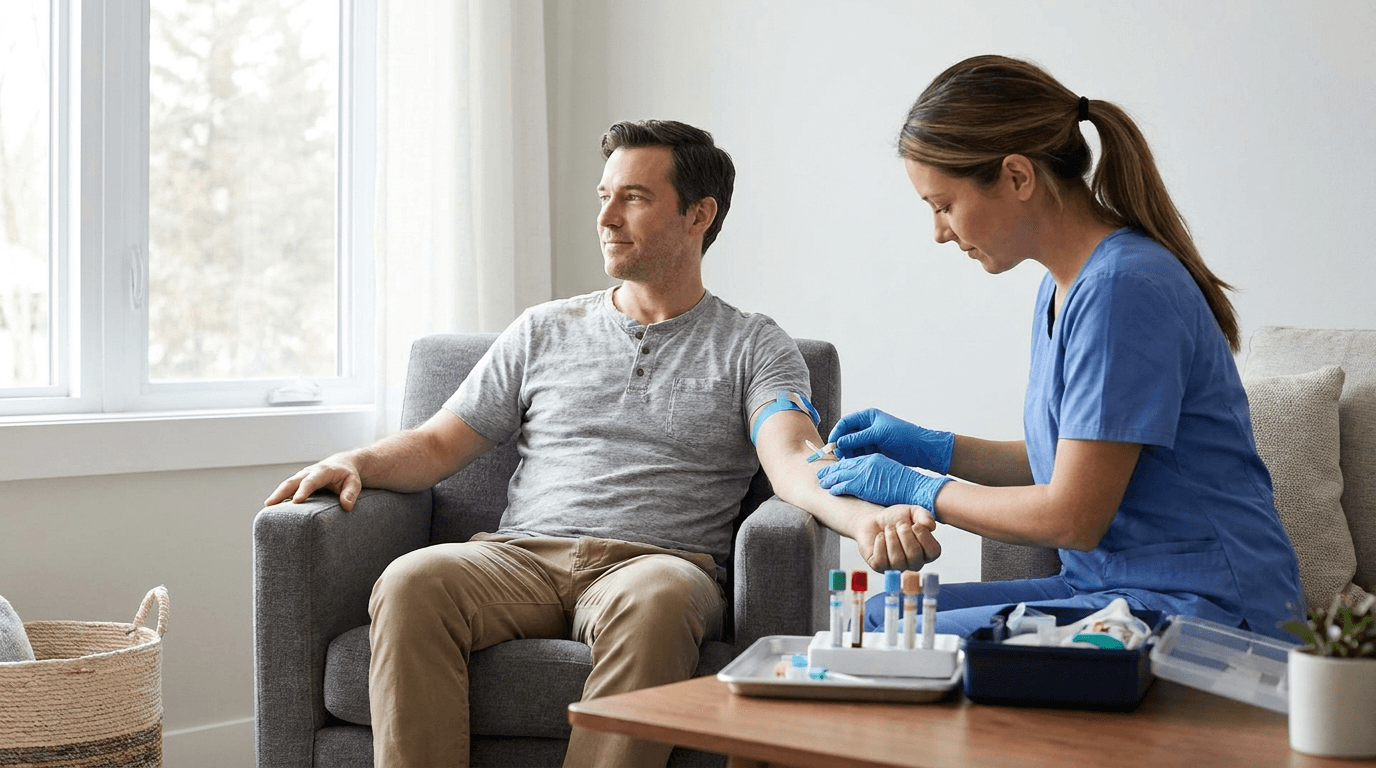
For certain hormones, the conditions under which blood is collected genuinely affect the result. Cortisol is the clearest example: it rises measurably in response to stress — including the stress of commuting, parking, navigating a clinic, and sitting in a waiting room. Collecting a morning cortisol sample in your own home, shortly after waking, avoids this confounding effect and reflects a more authentic baseline.
There is also a practical dimension that is particularly relevant in a busy city like Dubai: testing that can be completed in fifteen minutes at home, without scheduling time off or navigating traffic, is testing that actually gets done. Repeated procrastination of clinic appointments is one of the most common reasons adults never obtain their baseline hormone data.
xlr8well provides at-home hormone testing across Dubai and the UAE, where a DHA-licensed nurse visits your home to collect the sample. Results are delivered to a personal dashboard with flagged values explained in plain language, and a doctor review is available for interpretation and guidance.
Understanding Your Results: What "Normal" Really Means
Laboratory reference ranges are based on statistical distributions of a tested population — typically, they represent the middle 95% of results from people who presented for testing, which is not the same as the optimal range for feeling and functioning well. A result at the low end of "normal" may still be suboptimal for you as an individual. Conversely, a result outside the reference range is not automatically a cause for concern without clinical context.
This is why results should always be interpreted by a licensed medical professional alongside symptoms, health history, lifestyle, and ideally previous test results for comparison. Hormone testing is a starting point for a conversation, not a self-diagnosis tool.
How to Prepare for Hormone Testing
- Timing: Most hormone panels are collected in the morning (roughly 7–9 am), particularly cortisol and testosterone, which follow circadian rhythms and peak in the early morning.
- Fasting: A fast of 8–12 hours is typically recommended for comprehensive panels, as food intake can influence certain results. Water is fine.
- Cycle day (for women): Note the first day of your last period so you can schedule collection on the appropriate cycle day as outlined above.
- Medications and supplements: Inform your nurse and doctor of any medications, hormonal contraceptives, or supplements you are taking. These can significantly affect hormone readings.
- Stress and sleep: Try to ensure a reasonably normal night's sleep before testing. Acute illness, extreme exercise the day before, and significant sleep deprivation can all shift hormone levels.
Advanced Testing: The DUTCH Panel
Beyond standard blood tests, dried urine testing — most commonly known by the DUTCH (Dried Urine Test for Comprehensive Hormones) methodology — offers a more detailed view of hormone metabolism. Rather than measuring circulating hormone levels at a single point in time, it maps out how hormones are broken down and processed, which can be relevant for understanding symptoms that standard blood panels do not fully explain. A doctor can advise whether this level of detail is appropriate for your situation.
A Practical Starting Point
If you have never had a comprehensive hormone panel, starting with an essential profile appropriate for your sex and age is a reasonable first step. From there, you and your doctor can decide whether deeper investigation — thyroid antibodies, adrenal function, metabolic markers — adds value. The key is to begin with a clear picture rather than guessing in the dark.
You can explore the hormone panels available through xlr8well, from essential profiles to more comprehensive assessments, via our hormone testing page. A DHA-licensed nurse will come to your home, and results are returned to your personal dashboard with clear explanations and the option of a doctor review.